skip to Main Content

China Top 10 Hydraulic Control Valve Manufacturers?

China’s hydraulic industry has expanded from component supply into complete fluid-control solutions. Today, many manufacturers produce hydraulic control valves for excavators, injection-molding machines, agricultural equipment, and industrial presses. Their capabilities differ considerably, even when product photos look similar.

This guide examines ten notable Chinese manufacturers through practical and verifiable criteria. These include product range, pressure performance, machining capacity, testing procedures, certification records, export experience, and technical support. Factory scale matters, but it does not tell the whole story. A smaller specialist may offer tighter quality control or faster customization. A large supplier may provide stronger supply stability and broader after-sales service.

Real operating details deserve attention. Buyers should ask how valve bodies are tested, how spool clearances are controlled, and how replacement parts are supplied. Lead time can matter as much as price. So can communication after installation.

No ranking is permanent.

Market data changes. Some public information is limited, and supplier claims require careful verification. Therefore, this overview should support due diligence, not replace it. Readers should confirm current certifications, production capacity, warranty terms, and application experience directly with each company.

The selected manufacturers are presented for engineers, distributors, equipment builders, and procurement teams. The goal is practical comparison. Not empty promotion. By combining technical evidence with real-world purchasing considerations, this article helps readers identify reliable partners for demanding hydraulic systems.
China Top 10 Hydraulic Control Valve Manufacturers?

What Are Hydraulic Control Valves and How Do They Work?

Hydraulic control valves regulate fluid pressure, flow, and direction inside a hydraulic circuit. They act like traffic controllers for pressurized oil. A directional valve moves a cylinder forward or backward. A pressure valve limits force when resistance rises. A flow-control valve adjusts actuator speed. The operator may turn a spool, while a pilot stage uses fluid pressure to move it. Small leaks matter.

A typical circuit begins with a pump sending oil through a valve block. The valve opens, restricts, or redirects that flow. Pressure sensors and electronic controls can adjust the response during operation. For example, a lifting cylinder may move slowly near the floor, then accelerate safely. Grand View Research estimated the global hydraulic equipment market at about USD 49.1 billion in 2023. Its report forecasts a compound annual growth rate of roughly 4.8% from 2024 to 2030.

Choosing a valve requires more than matching port size. Engineers check rated pressure, flow capacity, fluid cleanliness, response time, and temperature range. ISO 4413 provides widely used safety principles for hydraulic systems. Real installations are less tidy. Contaminated oil, incorrect hose sizing, or unstable loads can cause heat, noise, and drifting motion. A valve may pass a bench test yet perform poorly in the field. That is why commissioning should include pressure readings, cycle tests, and inspection after several operating hours.

How to Evaluate China’s Hydraulic Control Valve Manufacturers

Evaluating China’s hydraulic control valve manufacturers requires more than comparing prices. A polished catalog is not proof. MarketsandMarkets’ 2024 hydraulic equipment report projects the sector to grow from about USD 44 billion in 2023 to over USD 54 billion by 2028. This expansion increases supplier choice, but it also makes technical screening essential.

Start with operating evidence. Request pressure, flow, leakage, response-time, and endurance-test records for the exact valve series. Check whether tests follow ISO 4413 and whether quality systems meet ISO 9001 requirements. Ask for material certificates, heat-treatment records, calibration dates, and serial-number traceability. A reliable factory should explain how it controls contamination during assembly. Look for clean benches, capped ports, and measured particle limits. Small details matter.

Supplier evaluation should also include production consistency. Compare samples from different batches, not one carefully selected unit. Verify machining tolerances, seal compatibility, surface treatment, and performance at low temperatures. The Hydraulic Institute and other industry research repeatedly emphasize reliability, efficiency, and lifecycle cost over purchase price. That matters in mining, molding, and mobile machinery. Still, public reports rarely reveal every factory’s real defect rate. I would keep some doubt. An on-site audit, independent inspection, and a controlled pilot order can expose weaknesses that brochures hide. A cheap valve can become expensive through downtime, rejected assemblies, and field repairs.

China’s Top 10 Hydraulic Control Valve Manufacturers

China’s Top 10 Hydraulic Control Valve Manufacturers are increasingly judged by engineering evidence, not catalog size. MarketsandMarkets estimates the global hydraulic valves market will grow from about USD 10.5 billion in 2023 to USD 14.2 billion by 2028, at roughly 6.2% annually. This growth reflects demand from construction equipment, factory automation, agriculture, and energy projects.

A practical review of leading Chinese manufacturers should examine pressure ratings, flow stability, response time, and leakage control. Factory experience matters here. A reliable supplier should provide test-bench records, material certificates, cleanliness data, and traceable serial numbers. Many top-tier producers use CNC machining, proportional control testing, and endurance cycles exceeding hundreds of thousands of operations. Yet brochures often hide maintenance limits. That deserves attention.

Grand View Research reports that Asia-Pacific remains the largest regional market for hydraulic valves, supported by industrial expansion and infrastructure investment. The top ten Chinese manufacturers typically compete through custom manifolds, compact cartridge valves, servo-hydraulic solutions, and export support. Certification can help, but it is not proof of field performance. No ranking is perfect. Buyers should compare real samples, oil-temperature behavior, replacement lead times, and technical response. One overlooked detail can stop an entire production line.

China’s Top 10 Hydraulic Control Valve Manufacturers

Common nominal pressure classes used in hydraulic control valve specifications

The chart presents widely used nominal pressure classes for industrial hydraulic control valves. The values are technical reference points rather than company rankings, market-share figures, or brand-specific data.

Comparing Products, Technologies, Certifications, and Industries

China’s hydraulic control valve manufacturers serve mobile equipment, presses, injection machines, energy systems, and process plants. Comparing them requires more than checking rated pressure. A dependable review examines spool design, leakage limits, response time, contamination tolerance, and replacement support. Directional valves suit straightforward motion control. Proportional and servo valves offer finer regulation, but they demand cleaner oil and stronger commissioning skills. Compact cartridge valves can save space, although field repairs may become more complicated.

Technology matters at the machine level. Look for tested flow curves, pressure-compensation behavior, corrosion-resistant materials, and stable performance during temperature changes. Digital control options can improve diagnostics, yet software compatibility deserves careful testing. I have seen impressive prototypes perform poorly after dust entered the system. Small details matter. Port geometry, seal selection, and accessible manuals often decide uptime. Mining equipment needs rugged protection, while food-processing systems require suitable materials and easier cleaning.

Certifications help establish manufacturing discipline, but certificates should match the exact factory and product range. ISO 9001 supports process control, while CE documentation may apply to the complete machine rather than the valve alone. Ask for inspection reports, pressure-test records, traceability data, and sample units. My comparisons are not flawless; field conditions change quickly. A valve performing well in a clean workshop may struggle beside a hot steel press.

China Top 10 Hydraulic Control Valve Manufacturers? - Comparing Products, Technologies, Certifications, and Industries

Rank Anonymous Manufacturer Profile Core Product Categories Control Technologies Typical Pressure Capability Common Certifications and Standards Primary Industries Served Key Differentiators
1 Profile 01 Directional valves Pressure valves Modular valves Solenoid control, proportional control, manual override, integrated monitoring Commonly up to 315 bar for industrial hydraulic applications ISO 9001 quality management; CE marking where applicable; ISO 12100 safety design principles Machine tools, industrial automation, material handling, general manufacturing Broad product range, interchangeable mounting patterns, compact modular assemblies
2 Profile 02 Cartridge valves Manifold systems Logic valves Screw-in cartridge technology, hydraulic logic circuits, custom block integration Typically 250–350 bar, depending on cartridge size and application ISO 9001; CE for applicable assemblies; material and pressure testing documentation Mobile equipment, agricultural machinery, construction machinery, lifting systems High circuit density, reduced piping, application-specific manifold engineering
3 Profile 03 Proportional valves Servo valves Electro-hydraulic controls Closed-loop control, digital amplifiers, position and pressure feedback Often available from 210 to 315 bar for precision industrial systems ISO 9001; EMC compliance for electronic control units; CE where required Injection molding, metal forming, test equipment, precision motion control Fine flow regulation, repeatability, fast response, compatibility with PLC systems
4 Profile 04 Monoblock valves Sectional valves Load-sensing valves Open-center, closed-center, load-sensing, pressure-compensated control Commonly 160–315 bar for mobile hydraulic equipment ISO 9001; CE for complete applicable products; hydraulic pressure testing procedures Tractors, excavators, loaders, forestry equipment, municipal vehicles Multiple spool configurations, high flow capacity, field-serviceable designs
5 Profile 05 Pressure relief valves Sequence valves Counterbalance valves Direct-acting and pilot-operated pressure control, anti-cavitation protection Frequently rated between 210 and 420 bar, depending on model and port size ISO 9001; CE where applicable; documented calibration and pressure test records Presses, lifting platforms, winches, hydraulic power units, industrial machinery Stable pressure control, overload protection, compact threaded and subplate options
6 Profile 06 Flow-control valves Check valves Throttle-check valves Needle adjustment, pressure compensation, pilot operation, anti-shock control Usually 160–315 bar in standard industrial and mobile configurations ISO 9001; CE for applicable products; dimensional compliance with relevant ISO mounting standards Packaging equipment, conveyors, agricultural machinery, automation systems Accurate speed control, low leakage options, simple maintenance and installation
7 Profile 07 High-flow valves Water-glycol compatible valves Special-service valves Large-port flow paths, corrosion-resistant materials, remote hydraulic actuation Commonly 100–315 bar, with ratings dependent on fluid and temperature ISO 9001; CE where applicable; fluid compatibility and pressure-cycle test documentation Steel mills, marine equipment, energy systems, heavy industrial machinery High flow capacity, enhanced sealing options, material selection for demanding environments
8 Profile 08 Hydraulic manifolds Valve blocks Integrated power units 3D circuit design, CNC-machined manifolds, integrated sensors and electronics Typically up to 250–350 bar for custom manifold applications ISO 9001; CE for complete applicable units; functional and leakage testing Automotive production lines, robotics, machine tools, special-purpose machinery Reduced footprint, fewer leak points, customized circuit integration and testing
9 Profile 09 Directional control valves Pneumatic-hydraulic interfaces Pilot valves Electro-pilot operation, pneumatic actuation options, fail-safe and redundant circuits Generally 210–315 bar for industrial hydraulic control systems ISO 9001; CE where applicable; electrical safety and EMC conformity for powered versions Automated assembly, process equipment, factory hydraulics, safety-related machinery Flexible actuation methods, remote control capability, modular system architecture
10 Profile 10 Custom hydraulic valves OEM assemblies Replacement components Application-specific spool design, simulation-assisted sizing, customized seals and ports Usually engineered within 160–350 bar according to customer specifications ISO 9001; CE where applicable; customer-specific inspection and traceability requirements OEM machinery, mining equipment, marine systems, specialized industrial applications Short customization cycles, low-volume production, reverse engineering and replacement support
Comparison basis: The profiles are anonymized and represent common capability groupings in China's hydraulic control valve manufacturing sector. Pressure ratings, certifications, materials, flow rates, and application suitability should be verified against the official datasheet and project-specific quotation for each actual supplier.

How to Choose the Right Chinese Manufacturer for Your Needs

China Top 10 Hydraulic Control Valve Manufacturers?

How to Choose the Right Chinese Manufacturer for Your Needs

Choosing a Chinese hydraulic control valve manufacturer requires more than comparing prices. Define your operating conditions clearly, including pressure, flow rate, fluid type, temperature, port size, and control method. Ask for pressure-test records, material certificates, dimensional drawings, and product traceability. A capable engineering team should explain why a valve suits your system, not simply recommend its most popular model.

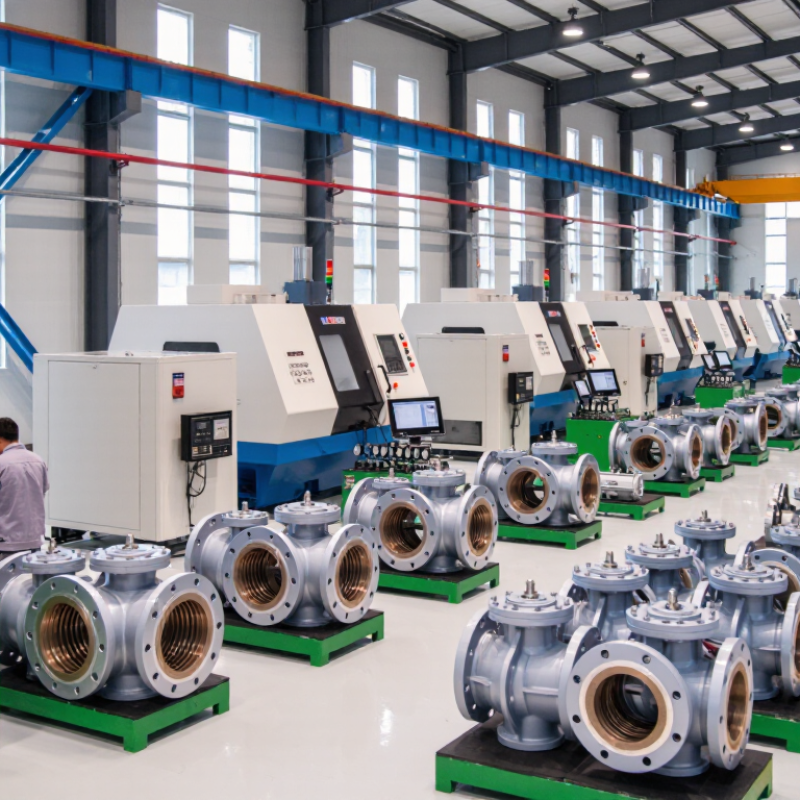
Factory verification matters. Review machining equipment, assembly areas, calibration practices, and final inspection procedures. Request a sample valve before placing a large order. Test its response time, leakage, pressure stability, and connection accuracy under realistic conditions. Check whether the manufacturer follows a documented quality system, such as ISO 9001, and whether inspection reports match the delivered parts. Small details matter.

Look beyond the catalogue. Ask how design changes, replacement parts, warranty claims, and technical questions are handled. Clear communication often reveals operational maturity. A low quotation may hide weaker materials or inconsistent testing. That can become expensive later. In practical sourcing work, I would also compare at least three factories and record every technical assumption. My own judgment can still be wrong, especially when specifications are incomplete. Independent testing remains wise, even when the supplier appears experienced and cooperative.

Back To Top