skip to Main Content
China’s pressure control valves sector is expanding with industrial automation, energy projects, and tighter process requirements. Grand View Research estimates that the global industrial valves market reached approximately USD 78.7 billion in 2022. It projects continued growth through 2030. MarketsandMarkets reports a similar trend, although its figures vary because product definitions differ. Some studies include safety valves, regulators, and actuators. Others measure only process valves.
The practical question is not simple.
A reliable supplier must prove more than production capacity. Buyers should examine pressure ratings, body materials, trim design, leakage testing, calibration records, and after-sales support. A valve may look excellent in a catalog. Its performance can change under corrosive media, rapid cycling, or unstable upstream pressure. Factory audits and sample testing remain valuable, especially for overseas procurement. Certifications also need verification, not assumption.
Béla G. Lipták, editor of the Instrument Engineers’ Handbook, described the control valve as “the final control element in most process control loops.” This observation explains its importance. A poorly selected valve can disturb an entire process line. The following China Top 10 Pressure Control Valves Suppliers overview therefore considers engineering capability, manufacturing experience, quality systems, export performance, customization, and technical service. Rankings should not be treated as absolute. Public information can be incomplete, and supplier strengths may change by application. A refinery may prioritize alloy resistance. A water plant may value fast delivery and simple maintenance. This guide offers a practical starting point for comparing pressure control valves suppliers in China.
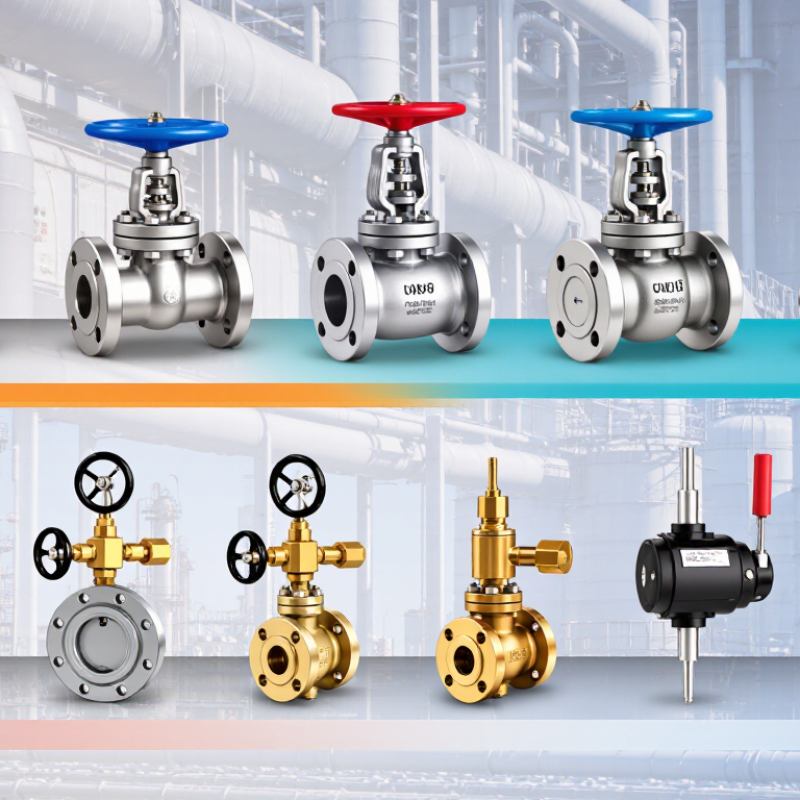
Pressure control valves maintain a target pressure by sensing changes and adjusting flow. A spring-loaded diaphragm compares process pressure with a preset force. When downstream pressure rises, the diaphragm moves and reduces the opening. When pressure falls, the valve opens wider. Simple, but not effortless.
Pilot-operated designs use a small pilot valve to control the main valve. They respond more accurately in high-flow pipelines. Common applications include water treatment, gas distribution, steam systems, and process plants. IEC 60534 provides guidance for industrial control valve sizing and testing, while ISA-75.01.01 supports flow-capacity calculations. In practice, engineers also check cavitation, noise, temperature, fluid compatibility, and actuator failure position. A valve can be correctly sized and still perform poorly.
According to MarketsandMarkets, the global control valve market was valued at about USD 7.2 billion in 2023 and may reach roughly USD 9.8 billion by 2028. This growth reflects wider automation and stricter process control requirements. The report does not measure every pressure-control application separately, so the figure needs careful interpretation. The U.S. Department of Energy also identifies industrial motor-driven systems and process equipment as major energy users, where stable pressure can reduce waste. Supplier selection should therefore examine tested flow coefficients, response time, certification, maintenance records, and real operating references. Catalog claims alone are not enough. Field conditions often disagree.
Maximum allowable working pressure at 100°F (38°C) for WCB carbon-steel valve bodies
Pressure control valves regulate upstream or downstream pressure by using a sensing element, actuator, and throttling mechanism. The ASME pressure classes shown here are standardized ratings commonly used to specify valve pressure capability. Actual allowable pressure depends on valve material, operating temperature, body design, trim, and applicable standards.
Reference basis: ASME B16.34 pressure-temperature ratings for Group 1.1 carbon steel WCB at 100°F (38°C). Values are converted from psi to bar and rounded.
China’s pressure control valve industry is not a single, uniform market. It is organized as a layered manufacturing network. Engineering firms define pressure classes, media compatibility, and control requirements. Specialized factories machine bodies, stems, seats, and actuator parts. Assembly companies then configure valves for water treatment, power, chemicals, industrial air, and process systems. This structure explains why a “top 10” list can vary by application. A supplier trusted for steam service may not suit corrosive fluids.
The strongest suppliers often operate within industrial clusters. Foundries, CNC workshops, seal producers, testing laboratories, and logistics providers may work nearby. This proximity can shorten sampling cycles and simplify corrective work.
Many factories sell directly to overseas buyers. Others work through system integrators or export distributors. Their capabilities differ sharply. Some focus on standard sizes. Others produce high-pressure, cryogenic, sanitary, or automated assemblies.
Buyers should review pressure-test records, material certificates, traceability, response times, and spare-part plans. A polished catalog is not proof of stable production. Neither is a low quotation.
In practice, supplier evaluation should follow the valve’s operating reality. Ask for drawings, inspection points, cycle-test data, and sample approval procedures. Visit the production line when the project is critical.
Examine machining marks, packing adjustment, and nameplate consistency. These details reveal process discipline. I have seen technically correct designs fail because installation tolerances were ignored. That weakness deserves attention.
China’s supplier landscape is broad, capable, and uneven, so rankings should remain a starting point rather than a final decision.
When researching China’s top 10 pressure control valve suppliers, rankings should not replace technical checks. A supplier must show relevant experience with steam, water, gas, or corrosive media. Ask for project records, pressure ranges, temperature limits, and valve materials. Clear answers matter. During a factory visit, inspect machining areas, calibration benches, welding controls, and traceability labels. A clean floor alone proves little. I have seen attractive samples hide weak documentation, so evidence should guide the decision.
Evaluate engineering competence through drawings, sizing calculations, and failure analysis. The supplier should explain flow coefficients, leakage classes, actuator selection, and emergency shutdown requirements clearly. Request material certificates, pressure-test reports, inspection plans, and serial-number tracking. Independent testing can strengthen confidence, especially for critical applications. Delivery performance also matters. Review lead times, spare-parts support, warranty handling, and communication after installation. A low quotation may become expensive when calibration or replacement parts are delayed.
Tips: Compare at least three suppliers using one scoring sheet. Weight safety, quality records, response speed, customization, and total ownership cost. Ask for a sample inspection before placing a large order. Keep acceptance criteria written and measurable. Do not rely on glossy brochures. One weakness should not cancel every strength, but repeated vague replies deserve attention. Even experienced buyers can miss small details, such as seal compatibility or local service coverage. Recheck assumptions before signing.
China’s top ten pressure control valve suppliers serve oil and gas, chemical processing, water treatment, and power projects. A dependable supplier usually offers forged or cast bodies, pneumatic or electric actuation, and adjustable pressure ranges. The strongest factories also support custom connections, sealing materials, and control signals.
In practice, supplier quality depends on more than production volume. Buyers should review ISO 9001 records, material certificates, calibration data, and pressure-test reports. Ask for shell tests, seat-leakage results, and flow-coefficient measurements. Factory visits can reveal machining accuracy, warehouse discipline, and how clearly workers identify valve components. These details matter during installation.
A serious supplier should explain failure modes before quoting. Some provide spring-return designs, position feedback, and emergency shutoff options. Others focus on compact valves for smaller pipelines. The top ten may look similar online, yet their engineering support can differ sharply. No ranking stays permanent. A lower-cost factory may perform well on standard orders but struggle with corrosive media or unusual temperatures. I would request a sample inspection and a clear spare-parts schedule before approval. Even experienced buyers sometimes overlook response time after delivery. That mistake becomes expensive when a control valve sticks during commissioning.
China’s top ten pressure control valve suppliers serve demanding sectors, including oil and gas, chemical processing, power generation, water treatment, and mining. Their products commonly include pressure-reducing, relief, control, and safety valves. Some suppliers also customize trim materials for corrosive fluids, steam, or abrasive slurry.
Certification matters in real projects. Many manufacturers maintain ISO 9001 quality systems, while selected product lines may follow API, ASME, CE, or SIL-related requirements. Buyers should verify each certificate’s scope, issuing body, and validity date. A factory claiming compliance is not enough. Witness testing, material traceability, hydrostatic records, and documented calibration provide stronger evidence.
Export activity reaches Southeast Asia, the Middle East, Europe, Africa, and North and South America. Suppliers experienced in these markets usually understand pressure ratings, flange standards, language requirements, and local inspection procedures. They may support remote factory acceptance tests and provide installation guidance. Details matter. A valve can meet the drawing yet fail because its actuator, gasket, or coating does not suit the site. Some supplier comparisons also overlook after-sales response time. That weakness deserves attention. A lower purchase price may become expensive when spare parts arrive slowly or technical documents contain gaps.
Anonymized supplier comparison based on common product capabilities, industrial applications, certification frameworks, and export destinations.
| Rank / Profile | Main Pressure-Control Products | Primary Industries Served | Typical Certification / Compliance Areas | Typical Pressure and Temperature Scope | Common Materials | Export Markets Commonly Served |
|---|---|---|---|---|---|---|
| 01 Profile A |
Ball, gate, globe, check, and pressure-reducing valves for oil and gas service | Oil and gas pipelines, refineries, petrochemical plants, gas processing | ISO 9001; API 6D applications; ASME B16.34 design references; NACE MR0175/ISO 15156 options; PED documentation for applicable orders | Class 150–2500; approximately -29°C to 200°C, depending on trim and sealing materials | Carbon steel, stainless steel, duplex stainless steel, alloy steel | Middle East, Southeast Asia, Central Asia, Africa, South America |
| 02 Profile B |
Floating and trunnion-mounted ball valves, emergency shutdown valve packages | LNG, natural gas, transmission pipelines, offshore platforms | ISO 9001; API 6D; API 607 or API 6FA fire testing; ISO 15848 fugitive-emission testing where specified; SIL documentation for actuator packages | Class 150–1500; cryogenic designs may reach approximately -196°C; elevated-temperature limits depend on seat design | Austenitic stainless steel, carbon steel, duplex, nickel-based alloys | Europe, Middle East, Australia, Southeast Asia, North America through project contractors |
| 03 Profile C |
High-pressure gate, globe, choke, and control valves for wellhead and production systems | Upstream oil and gas, well testing, drilling, wellhead equipment | ISO 9001; API 6A; API 16C for applicable choke and kill equipment; NACE MR0175/ISO 15156; pressure-test records | Working pressures commonly 2,000–20,000 psi; temperature ratings vary by elastomer and metal-seal configuration | Low-alloy steel, stainless steel, high-strength alloy steel, tungsten-carbide coated trim | Middle East, North Africa, Central Asia, Latin America, Southeast Asia |
| 04 Profile D |
Pressure-reducing, pressure-sustaining, surge-control, and axial-flow control valves | Municipal water, wastewater, irrigation, building services | ISO 9001; EN 1074 or equivalent water-valve requirements; WRAS, ACS, NSF/ANSI/CAN 61, or local potable-water approvals where required | PN10–PN40 or Class 150–300; commonly 0°C to 80°C for water-service elastomeric designs | Ductile iron, cast steel, stainless steel, bronze, EPDM-lined components | Southeast Asia, Africa, Latin America, Middle East, Eastern Europe |
| 05 Profile E |
Steam conditioning valves, desuperheaters, globe control valves, and severe-service trims | Power generation, district energy, boilers, industrial steam networks | ISO 9001; ASME B16.34 design references; IEC 60534 testing references; PED compliance for applicable European projects | Class 150–2500; steam applications may exceed 500°C depending on body, trim, and pressure class | Carbon steel, chrome-moly steel, stainless steel, cobalt- or carbide-enhanced trim | South Asia, Southeast Asia, Middle East, Africa, Eastern Europe |
| 06 Profile F |
Butterfly, eccentric plug, pinch, and lined control valves for corrosive media | Chemical processing, mining, pulp and paper, water treatment | ISO 9001; ISO 14001 manufacturing systems; EN 593 or API 609 references for butterfly valves; material compatibility testing | PN6–PN25 or Class 150–300; commonly -20°C to 180°C, subject to lining and seat materials | Ductile iron, carbon steel, stainless steel, PTFE, PFA, rubber-lined bodies | Europe, South America, Africa, Southeast Asia, Middle East |
| 07 Profile G |
Cryogenic globe, ball, check, and pressure-control valves for low-temperature service | LNG terminals, industrial gases, air separation, cryogenic storage | ISO 9001; ISO 15848 fugitive-emission options; PED documentation; cryogenic performance and vacuum-jacket testing where specified | Approximately -196°C to 80°C; pressure classes commonly PN16–PN100 or Class 150–600 | 304L/316L stainless steel, duplex stainless steel, nickel alloys, extended-bonnet assemblies | East Asia, Europe, Middle East, Australia, North America through EPC channels |
| 08 Profile H |
Sanitary diaphragm, pinch, regulating, and back-pressure valves | Food and beverage, dairy, pharmaceutical, biotechnology | ISO 9001; 3-A Sanitary Standards or EHEDG-related requirements where applicable; FDA-compliant elastomer documentation; hygienic surface-finish records | Typically 0–16 bar; approximately -10°C to 150°C, depending on diaphragm and process fluid | 316L stainless steel, EPDM, PTFE, FKM, silicone, sanitary clamp connections | Europe, North America, Southeast Asia, Australia, Middle East |
| 09 Profile I |
Metal-seated ball, eccentric plug, anti-cavitation, and high-noise-reduction valves | Refining, petrochemicals, chemical plants, high-pressure process systems | ISO 9001; IEC 60534 control-valve references; API 607/API 6FA fire-testing options; ISO 15848 emissions testing; ATEX documentation for applicable actuated assemblies | Class 150–2500; approximately -46°C to 550°C, depending on pressure class and trim selection | Carbon steel, stainless steel, duplex, hardened stainless trim, tungsten-carbide coatings | Middle East, Europe, South Korea, Southeast Asia, India, South America |
| 10 Profile J |
Compact pressure regulators, relief valves, instrument valves, and skid-mounted control assemblies | Industrial gas, instrumentation, hydrogen-related systems, laboratories, OEM skids | ISO 9001; PED 2014/68/EU for applicable pressure equipment; ATEX 2014/34/EU for applicable equipment; IEC 61508/SIL assessment when included in a safety-instrumented package | Instrument and process ranges from vacuum service to approximately 420 bar; temperature commonly -40°C to 200°C | 316/316L stainless steel, brass, carbon steel, nickel alloys, PTFE and elastomer seals | Europe, North America, Japan, South Korea, Southeast Asia, Middle East |