skip to Main Content
Customers often remember the moment their phone battery reaches five percent. A dead device can interrupt payments, directions, bookings, and communication. A Power Bank Rental Station offers a practical response by placing portable charging near real customer needs.
Industry specialist Marcus Lee explains, “The best charging service feels invisible until the customer urgently needs it.” That idea matters for cafés, hotels, shopping centres, airports, gyms, and event venues. A guest can scan a clear code, collect a charged power bank, and return it at a convenient location. The process should take less time than ordering a coffee.
Convenience is only part of the business case. A visible station can create another customer touchpoint without requiring extra counter space. It may also support longer visits. A hotel guest might charge beside the lobby sofa, while a shopper continues browsing instead of leaving early. Small details influence trust, including cable condition, screen brightness, payment clarity, and return instructions.
Still, the model is not automatically successful. Poor placement can make the station easy to overlook. Weak maintenance can damage customer confidence. Usage may also vary sharply between weekdays, weekends, and special events. These limitations deserve honest attention.
A thoughtful operator should test one location first. Track rentals, return times, support requests, and repeat usage. Then adjust the number of units and placement. The strongest Power Bank Rental Station strategy combines reliable equipment, simple access, visible pricing, and responsive service. It is a useful business tool, but not a magic solution.
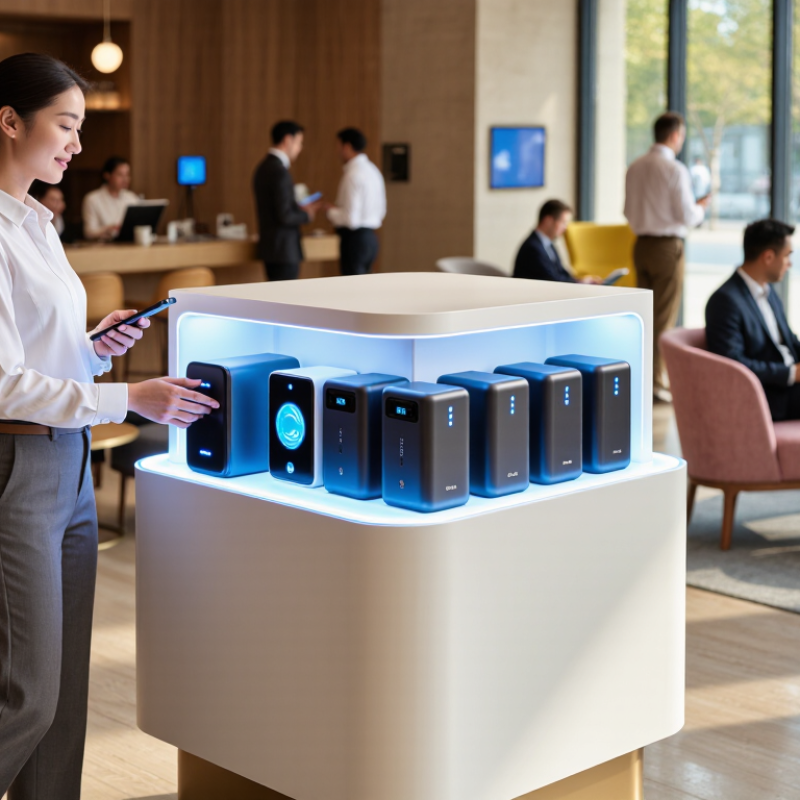
A power bank rental station is a self-service cabinet for borrowing portable phone chargers. Users scan a QR code, choose a payment method, and release a charged power bank. They can recharge a phone while shopping, dining, working, or travelling. The cabinet stays visible.
Most stations include charging slots, digital locks, payment software, and several connector types. Some models let customers return the unit to another station. This changes the service from ownership to temporary access. In practice, placement matters greatly. A station near a checkout counter may solve a real problem, while one hidden behind furniture may be ignored.
The need is measurable. GSMA’s Mobile Economy 2024 report estimated 4.7 billion people used mobile internet in 2023. That means a dead phone can interrupt navigation, payments, communication, or work. Grand View Research valued the global power bank market at about 13.55 billion dollars in 2023, showing strong demand for portable energy. However, market demand does not guarantee rental success. Battery health, cable compatibility, cleaning, and return tracking require daily attention.
It is not completely automatic. Staff may still need to reset locks, replace damaged cables, and explain fees. Users may also forget returns. That weakness deserves honest planning. A business should test foot traffic, average charging needs, and customer habits before installation. A small pilot may reveal more than an attractive sales forecast.
A power bank rental station gives customers quick access to portable charging while they shop, dine, or wait. The process is simple and visible. A visitor scans the station’s QR code, checks the rental terms, and completes a secure payment step. An available power bank then unlocks from its slot.
Most stations use clear lights and screen instructions. The customer removes the battery, connects a suitable cable, and continues using the device. Some units support several common connectors, which reduces the need to carry extra accessories. Rental details should remain easy to read, including pricing, return instructions, and contact information.
Returning the power bank is equally important. The user places it into an open slot at another compatible station. Sensors check whether the unit is inserted correctly, while the system records the return and updates availability. Staff can review station status remotely, identify empty slots, and arrange routine cleaning or maintenance. These small checks influence trust more than flashy features.
For a business, placement matters. A station near a checkout counter, seating area, or reception desk is easier to notice and use. It can also keep visitors connected during longer stays. The system is not flawless. A damaged cable, weak network signal, or unclear instruction can interrupt the experience. Regular inspections and honest pricing help address those problems before they become complaints.
A power bank rental station can solve a small but costly problem: a visitor’s phone reaches 8% before checkout. For cafés, restaurants, and hotels, charging access can extend customer visits and support mobile ordering, digital tickets, and contactless payments. Worldpay’s Global Payments Report 2024 found digital wallets represented about 50% of global e-commerce value in 2023. A dead phone can interrupt that journey. Hotels can place stations near reception, while cafés may position them beside seating areas. The benefit feels practical, not promotional.
Retail centres, airports, event venues, and tourist attractions gain different advantages. IATA reported an expected 4.96 billion air passengers in 2024, creating many travellers who depend on phones for boarding passes, maps, and messages. Stations near queues or information desks can reduce staff requests for emergency charging. For event organisers, rentals may improve visitor experience without installing permanent charging furniture. GSMA reported 4.6 billion mobile internet users in 2023, showing how deeply mobile access supports everyday activity. Still, the model is not flawless. Stations need visible placement, clear pricing, regular cleaning, and reliable cable maintenance. Poorly maintained equipment can damage trust quickly. Smaller businesses should test one location first, measure usage, and question whether demand justifies the floor space. Convenience matters, but operational discipline matters more.
A power bank rental station can solve a visible problem: a customer’s phone drops to 8% before checkout. The opportunity is substantial. GSMA’s State of Mobile Internet Connectivity 2024 reports that 4.7 billion people used mobile internet in 2023. More connected visitors also create stronger demand for dependable charging.
Location deserves careful testing. A station near entrances, food counters, transport areas, or waiting seats usually gains better visibility. However, foot traffic alone is not enough. Review hourly demand, dwell time, nearby outlets, and customer behavior for at least four weeks. A busy corner can still produce weak rentals. That surprised me during small retail trials.
Technical fit matters. Check connector compatibility, charging speed, battery capacity, screen clarity, and return procedures. The International Energy Agency reported that electric vehicle sales exceeded 14 million globally in 2023, showing how quickly rechargeable technology is entering daily life. Customers may expect similar convenience from charging services. Choose stations with remote status monitoring, overload protection, temperature control, and clear fault alerts. Safety documentation should be available and easy for staff to understand.
Calculate more than rental revenue. Include installation, electricity, payment processing, cleaning, lost units, repairs, and customer support. Ericsson’s Mobility Report, November 2024, projects continued growth in mobile data traffic, increasing dependence on functioning smartphones. Still, demand will vary by season and venue. A simple pilot is wiser than a confident guess. Track utilization, average rental duration, return rates, and complaints weekly. Tenants may value convenience, but they will not forgive unreliable equipment.
Suggested decision weights for evaluating a rental station before deployment. Higher percentages indicate greater impact on customer adoption and business performance.
Consider convenience, commercial value, reliability, operating cost, security, and service scalability when selecting a station.
Why Choose a Power Bank Rental Station for Your Business?
How to Launch and Manage a Rental Station Program
A power bank rental station can add practical value to cafés, hotels, shopping centers, and event venues. Customers often need power when outlets are occupied or unavailable. Choose a visible location near reception desks, entrances, or seating areas. Keep the station close to staff, but never block walkways or emergency access. A clear screen and simple instructions reduce hesitation.
Before launch, measure daily visitor traffic and expected charging demand. Start with a small number of stations. Our first layout was too ambitious. It occupied valuable floor space and needed frequent checking. A pilot period can reveal better locations, peak hours, and common user questions. Record rental volume, return rates, damaged units, and customer feedback. These details support practical decisions instead of guesses.
Management requires a routine. Staff should inspect charging ports, cables, screens, and payment functions each day. Clean the station regularly, especially in busy public areas. Keep spare units available during lunch hours and evening events. Set clear usage fees and display them before checkout. Explain what happens when a unit is returned late or not returned. Do not hide the difficult parts. Technical failures happen. A written response process helps staff act calmly and consistently. Review performance every week, then adjust inventory, placement, or operating hours when the numbers disagree with assumptions.
| Program Dimension | Practical Benchmark or Requirement | Why It Matters | Management Action |
|---|---|---|---|
| Initial pilot scope | Start with 3–10 stations in locations that have steady visitor traffic and visible waiting areas. | A limited pilot reduces installation risk and creates enough usage data for pricing and placement decisions. | Review usage, returns, support requests, and revenue weekly before expanding. |
| Station capacity | Select units according to demand; compact stations commonly hold about 6–12 removable power banks, while larger units can hold more. | Capacity affects availability, floor space, replenishment frequency, and upfront investment. | Use larger capacity in transport, hospitality, and entertainment venues; use compact units in smaller retail spaces. |
| Power-bank battery size | A common consumer range is approximately 5,000–10,000 mAh, subject to local safety and transport requirements. | Higher capacity can support longer use, but it generally increases product weight, charging time, and replacement cost. | Choose capacity based on customer dwell time, device mix, and portability expectations. |
| Charging connectors | Support the connector types most commonly used by customers, typically USB-C plus other locally relevant connectors. | Connector compatibility directly affects successful rentals and customer satisfaction. | Track failed charging attempts and replace damaged or outdated cables promptly. |
| Recommended placement | Place stations near entrances, reception desks, checkout areas, food courts, seating zones, or transport waiting points. | High visibility and customer dwell time improve discovery and rental conversion. | Avoid obstructing exits, fire equipment, accessible routes, or emergency paths. |
| Rental duration | Offer a short-term rental model with pricing by time, day, or a combination of both. | Flexible duration accommodates quick top-ups as well as longer visits. | Use a clear maximum-charge policy and communicate late-return or loss fees before checkout. |
| Payment process | Provide a mobile-friendly checkout supporting widely used digital payment methods and clear receipts. | A fast payment flow reduces abandoned rentals and support requests. | Test payment, deposit, refund, and receipt workflows before public launch. |
| Availability target | Set an internal target of at least 95% station online availability during operating hours. | Frequent outages reduce trust and create lost rental opportunities. | Monitor connectivity, power supply, payment status, and slot failures remotely where possible. |
| Inventory availability | Maintain enough charged units for peak periods and keep several empty return slots available. | A full station cannot accept returns, while an empty station cannot satisfy new demand. | Set low-stock and full-capacity alerts and schedule replenishment based on hourly demand. |
| Maintenance cycle | Inspect stations and power banks at least weekly during the pilot; increase frequency at high-volume locations. | Regular inspection identifies damaged cables, dirty ports, charging faults, and missing units. | Use a checklist covering physical condition, charging performance, labels, and connectivity. |
| Customer support | Display a support contact, rental instructions, return guidance, and refund rules at every station. | Clear instructions reduce confusion and shorten resolution time for payment or return issues. | Log every complaint by station, issue type, response time, and final outcome. |
| Core performance metrics | Track rentals per station per day, utilization rate, average rental duration, return rate, revenue, and maintenance cost. | These measures show whether demand, pricing, placement, and operating costs are sustainable. | Compare results by location and time period rather than relying only on total rentals. |
| Break-even review | Calculate break-even using installation cost, hardware cost, payment fees, revenue share, maintenance, losses, and support labor. | Gross rental revenue alone does not show whether a station is profitable. | Review contribution margin monthly and relocate or redesign underperforming stations. |
| Safety and compliance | Use certified electrical equipment, suitable chargers, battery protection, and site-specific fire and electrical procedures. | Lithium-ion batteries and mains-powered equipment require controlled handling and appropriate local compliance. | Document inspections, incident procedures, disposal processes, and staff training requirements. |
Planning note: Benchmarks are general operating guidelines. Final station capacity, pricing, safety controls, payment methods, and compliance requirements should be adapted to local laws, venue conditions, and measured customer demand.
