skip to Main Content
Why Choose a Bath Towel Making Machine?
The bath towel market is changing through material costs, labor shortages, and stricter quality expectations. Textile Exchange’s Materials Market Report 2024 recorded approximately 124 million tonnes of global fiber production in 2023. Polyester represented about 57% of that volume, while cotton accounted for roughly 19%. These figures highlight a practical challenge: towel manufacturers must control different yarn behaviors, absorbency levels, and finishing requirements. A Bath Towel Making Machine can support this control through repeatable weaving, cutting, stitching, and edge-finishing operations.
Consistency matters on the factory floor. A well-adjusted machine can help maintain stable towel dimensions, loop density, and border alignment. Operators can also monitor fabric tension, production speed, and material waste more precisely. The ITMF International Textile Machinery Shipment Statistics 2023 shows continued worldwide investment in textile production equipment. This trend suggests that automation remains important, although equipment alone cannot solve every production problem. Poor yarn selection still creates weak loops. Incorrect tension still causes uneven edges.
The strongest reason to choose this machine is measurable process improvement. Manufacturers can compare output per shift, defect rates, energy use, and maintenance hours before purchasing. A realistic evaluation should include towel sizes, GSM, cotton quality, recycled fibers, and expected order volume. The machine is not magic. Skilled operators, preventive maintenance, and reliable after-sales support remain essential. Buyers should request factory trials, inspect sample towels, and verify spare-part availability. These steps turn a machinery purchase into a controlled investment, rather than an attractive but uncertain promise.
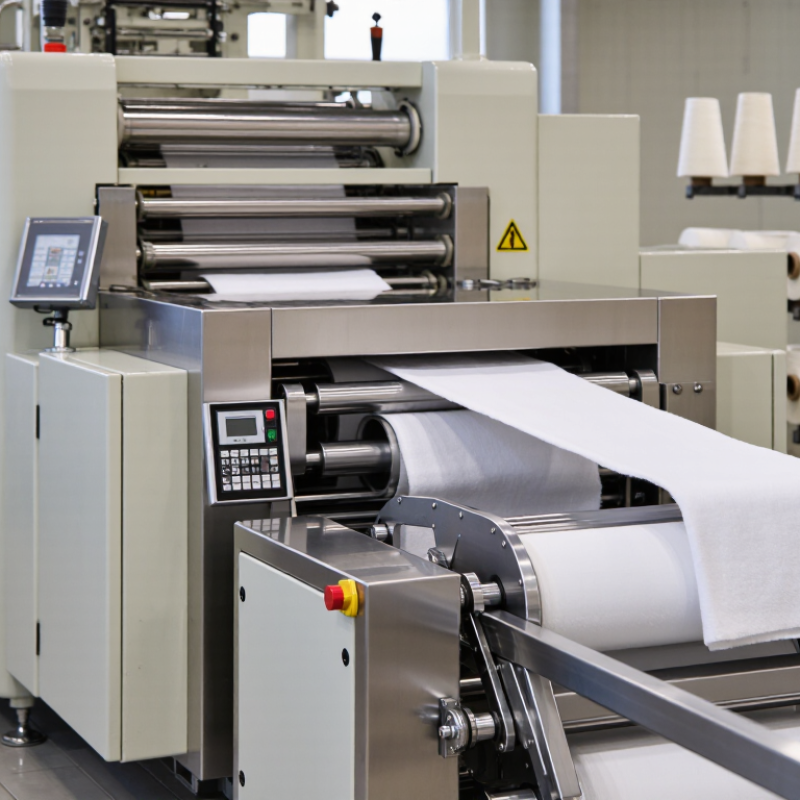
A bath towel making machine is industrial equipment used to produce towels from yarn or prepared fabric. It may include a terry weaving machine, cutting unit, hemming system, and quality inspection tools. Together, these machines form a controlled production process. They create the towel’s loops, shape its edges, and prepare it for packing.
In practical production, operators set yarn tension, fabric weight, loop height, and towel dimensions. These settings affect softness, absorbency, drying speed, and durability. A well-adjusted machine can produce consistent towels at a much higher speed than manual work.
However, consistency is not automatic. Workers still check loose threads, uneven borders, fabric holes, and incorrect sizes during each production shift. Small defects can become expensive if inspection starts too late.
The machine also supports customization through different sizes, patterns, edge finishes, and fabric densities. Some systems handle cotton, blended yarns, or recycled fibers, but each material behaves differently. Experience matters here. A setting suitable for thick cotton may damage a lighter fabric. Machines require cleaning, lubrication, calibration, and safety checks. They can reduce labor pressure, yet they cannot replace careful judgment.
In my view, the most reliable production comes from combining precise equipment with trained operators and honest quality records. Mistakes still happen. The real question is how quickly the team detects and corrects them.
A bath towel making machine turns yarn into a soft, absorbent textile through several controlled stages.
The process usually begins with yarn feeding and tension adjustment. The machine then forms loops through weaving or knitting, depending on its design. These loops create the towel’s familiar pile surface. Some systems add borders, labels, or decorative patterns during production.
In practical production, operators monitor yarn tension, loop height, fabric width, and machine speed. A small tension error can create thin areas or uneven edges.
The unfinished towel may then receive washing, dyeing, drying, and softening treatments. These steps improve absorbency and hand feel.
However, the process is not perfectly smooth. Humidity, yarn quality, and maintenance can affect the final result. Experienced teams still inspect samples instead of trusting automatic settings completely.
Tips: Check yarn tension before running a full batch. Clean lint from guides and cutting areas regularly. Test absorbency after finishing, not only after weaving. Keep production records for speed, defects, and fabric weight. One overlooked setting can waste many meters. A short trial often prevents a costly mistake.
A bath towel making machine must handle more than standard cotton loops. In production trials, the key variables are fiber length, yarn twist, absorbency, and fabric weight. Combed cotton usually produces soft, durable piles. Recycled polyester improves drying speed, but it does not absorb water like cotton. Bamboo viscose can feel smooth, although its wet strength and processing behavior require careful testing. Textile Exchange’s Materials Market Report 2024 reported that cotton represented about 19% of global fiber production in 2023, while polyester reached approximately 57%. These figures explain why modern equipment increasingly needs flexible yarn and tension settings.
Machine capability also depends on towel construction. A reliable system should support different GSM ranges, pile heights, border patterns, and towel widths. Low-twist yarn can create a plush surface, while tighter yarn improves resistance to repeated washing. Jacquard or dobby functions allow logos, stripes, and textured edges without adding separate decoration steps. Some machines can manage blended yarns, but performance may change between cotton-polyester ratios. That assumption can fail.
From practical quality checks, loop density matters as much as weight. A 600 GSM towel is not automatically more absorbent than a 450 GSM towel. Poor loop formation can leave thin patches, loose edges, or slow drying zones. Industry testing should therefore include wash shrinkage, water absorbency, colorfastness, and tensile strength. The American Society for Testing and Materials publishes relevant textile test methods, including absorbency and breaking-strength procedures. Operators still need to verify settings on actual yarn lots. Machines are precise, but materials are not perfectly consistent.
A bath towel making machine helps manufacturers control production speed, fabric quality, and order consistency. It can handle repeated weaving, cutting, stitching, and edge finishing tasks with fewer manual interruptions. This matters when buyers expect soft towels with stable dimensions across every shipment. Modern equipment also supports different towel weights, loop heights, and sizes. Manufacturers can adjust settings for hotels, retailers, or household customers. From practical factory experience, smoother automation often reduces material waste and prevents uneven edges. However, a machine does not remove every production problem. Poor yarn selection or incorrect tension can still create weak loops and visible defects.
Tips: Check the machine’s tension control, maintenance access, and output records before purchasing. Request test production with your actual cotton yarn. Measure absorbency, shrinkage, seam strength, and surface softness after washing. A detailed inspection is more useful than relying on advertised speed. Operators also need clear training, because small setting errors may affect hundreds of towels. Keep spare needles, cutting parts, and approved lubricants available. This can reduce unexpected downtime during urgent orders.
A reliable machine may lower labor pressure and make production planning easier. It can also improve workplace consistency when repetitive stitching becomes tiring for employees. Energy use should be reviewed carefully, especially in factories running multiple shifts. Some manufacturers focus only on capacity and overlook cleaning time. That is a mistake worth reconsidering. A balanced choice considers quality, service support, operating cost, and the machine’s fit with existing workflows.
Choosing the right bath towel making machine starts with production facts, not attractive brochures. Textile Exchange’s Materials Market Report 2024 estimates that global fiber production reached 124 million tonnes in 2023. It may rise to 160 million tonnes by 2030. This growth increases pressure on mills to improve speed, consistency, and material efficiency.
Buyers should compare towel width, pile height, loop density, output capacity, and compatible yarn types. Ask for verified test results using your actual cotton or blended yarn. Check electrical consumption, noise levels, spare-part availability, and operator training. A machine that runs fast but wastes yarn is not truly efficient.
That mistake is easy to make. Maintenance access also matters. Technicians need safe access to needles, cutters, sensors, and lubrication points without long shutdowns.
Tips: Request a sample run before purchase. Record power use, defect rates, and changeover time. Build a maintenance schedule around daily cleaning, weekly tension checks, and monthly sensor inspections. Keep critical parts labelled and protected from humidity. The ISO 50001 energy-management framework can guide energy monitoring, even when certification is not planned. Do not trust one demonstration. Test several towel designs, because a smooth showroom sample may hide difficult settings. No checklist is perfect. Allow room for operator feedback and revise the schedule after the first production month.
