skip to Main Content

What Is Paper Cup Raw Material Made Of?

What Is Paper Cup Raw Material Made Of? The answer looks simple, but it involves several carefully selected layers. Most paper cups begin with food-grade paperboard made from bleached virgin wood pulp. The fibers must provide strength, smoothness, and resistance to hot liquids. Recycled fiber may appear in some products, but food-contact requirements can limit its use. The exact choice depends on the cup’s purpose, temperature range, and manufacturing process.

Paper Cup Raw Material usually includes a thin barrier coating. Traditional cups often use polyethylene, or PE, to prevent water from soaking through the paper. Some newer products use plant-based PLA coatings. These alternatives sound automatically greener, but that conclusion can be too quick. Their real environmental performance depends on sourcing, production energy, collection systems, and industrial composting access. A cup may look natural while still creating disposal challenges.

Packaging specialist Susan Selke has expressed the core principle clearly: “Packaging is a system, not simply a material.” That view helps explain why responsible manufacturers examine more than paper content. They also check fiber origin, coating thickness, chemical safety, print inks, adhesives, and production waste. A small cup contains many decisions. Even a thin inner layer matters. In practice, no single material solves every performance and sustainability concern. Buyers should request technical data, food-contact documentation, and credible sourcing evidence. Marketing language alone is not enough. The most reliable answer begins with the cup’s full material structure, not its appearance.
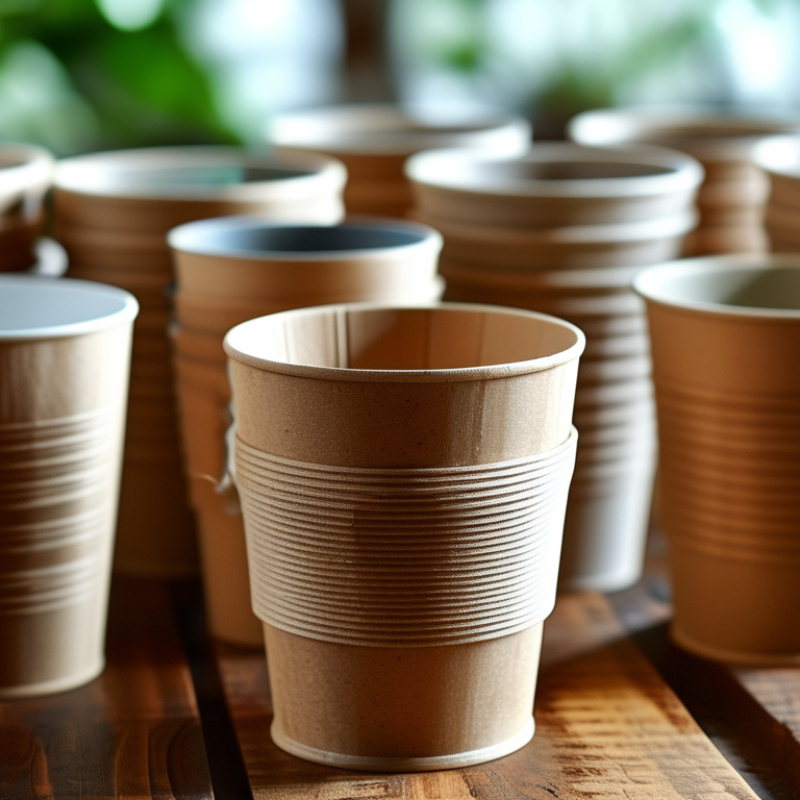
What Is Paper Cup Raw Material Made Of?

What Materials Are Used to Make Paper Cups?

What Materials Are Used to Make Paper Cups?

A paper cup is not made from paper alone. Its main structure uses cupstock, a stiff paperboard produced from bleached virgin wood pulp. The fibers create strength, smoothness, and a clean white surface. Some manufacturers also blend recycled fiber, although food-contact requirements and cup performance can limit its share.

FAO’s Global Forest Products Facts and Figures 2022 recorded about 415 million tonnes of paper and paperboard production worldwide, showing the scale of this fiber-based industry.

The inner surface needs protection. A thin polyethylene coating commonly prevents hot drinks from soaking through the board. Some newer cups use polylactic acid, made from plant-based feedstocks, or water-based barrier coatings. These options sound simpler, but performance depends on heat, storage, sealing, and local recycling systems.

The European pulp and paper industry’s 2023 statistics indicate that recovered paper provides roughly half of its fiber furnish. Cups, however, often require stronger virgin fibers for reliable forming and liquid resistance.

The rim may include a narrow sealing layer. Printing inks cover the outside, while adhesives join the side seam and bottom. Small details matter: a weak seam can leak beside your hand, and excessive coating can complicate fiber recovery. Material claims also need caution. “Plant-based” does not automatically mean home-compostable, and “recyclable” depends on available collection and processing equipment.

That part remains imperfect.

How Paper Cup Raw Materials Are Processed

What Is Paper Cup Raw Material Made Of?

How Paper Cup Raw Materials Are Processed

Paper cups usually begin with food-grade paperboard made from wood pulp. The board provides stiffness, while a thin polymer coating helps resist water and hot liquids. Some cups use plant-based coatings, but performance depends on heat, storage, and sealing conditions. The raw material must be clean, stable, and suitable for direct food contact.

Processing starts with pulping, where wood fibers are mixed with water and refined. The fiber mixture is then formed into sheets, pressed, and dried under controlled heat. After drying, the paperboard passes through a coating line. The coating must spread evenly without blocking the paper’s natural flexibility. Technicians test thickness, moisture, stiffness, and seal strength. A small coating gap can cause leakage. That detail is easy to underestimate. The coated board is cut into printed blanks and sidewall pieces. Forming machines curl the paper around a heated mold, then seal the side seam and bottom disk. Quality checks often include visual inspection, compression testing, and liquid-holding trials.

Tips: Keep paperboard in a dry, clean room before processing. Moisture can weaken the sheet and create uneven folds. Check coating adhesion after storage, not only immediately after production. Results may vary. Even skilled teams should review failed samples, because minor defects can reveal larger process problems.

The Role of Paperboard in Cup Manufacturing

Paper cups are made mainly from paperboard, not ordinary printing paper. The board starts with cellulose fibers from responsibly managed wood sources or recovered fiber. Manufacturers refine these fibers, form a wet sheet, and dry it under controlled pressure. The result must balance stiffness, smoothness, and food-contact safety.

Paperboard gives a cup its shape. A typical cup blank may weigh roughly 180–350 grams per square metre, depending on size and design. Higher basis weight usually improves rigidity, but it also increases material use. CEPI’s 2023 preliminary statistics place European paper and board production at about 80 million tonnes. FAO forestry data also record global paper and paperboard output at more than 400 million tonnes annually. These figures show the scale of the fiber industry, although they do not represent cup stock alone.

Paperboard alone cannot reliably hold hot coffee or cold drinks. A thin moisture barrier is applied, commonly polyethylene or a water-based coating. The barrier prevents liquid from reaching the fibers, while the board supplies the cup’s structure. During production, operators check caliper, moisture, edge quality, and seal strength. A small weak point can cause leakage near the bottom seam. In practice, recycled fiber can improve resource efficiency, but it may reduce brightness or stiffness. That trade-off is often underestimated. Material selection must also consider collection systems, because a technically recyclable cup may still be rejected where fiber recovery facilities lack suitable separation equipment. Industry assessments from the Confederation of European Paper Industries and Smithers emphasize this gap between material design and real-world recycling performance.

What Is Paper Cup Raw Material Made Of? – The Role of Paperboard in Cup Manufacturing
Material Dimension Typical Data Role in Cup Manufacturing Technical Notes
Primary Fiber Cellulose fiber from wood pulp Forms the main structural network of the paperboard. The fibers are bonded into a sheet through papermaking, pressing, drying, and finishing processes.
Paperboard Grammage Approximately 170–350 g/m² Determines sheet weight, stiffness, and part of the cup’s mechanical strength. The selected grammage depends on cup size, wall design, forming method, and required rigidity.
Paperboard Thickness Approximately 0.25–0.50 mm Contributes to bending resistance, insulation, and dimensional stability. Thickness varies with fiber composition, board density, calendering, and the number of layers.
Board Structure Single-layer or multi-layer construction Balances printability, stiffness, surface quality, and cost. Multi-layer boards can use different fiber or surface characteristics in the top, middle, and back layers.
Moisture Content Commonly about 5–8% at standard conditioning Affects flexibility, dimensional stability, and converting performance. The actual value changes with storage conditions, ambient humidity, and the paperboard specification.
Liquid-Barrier Layer Polyethylene, aqueous dispersion, or other approved barrier coating Prevents beverages from soaking through the cellulose-based board. The barrier may be applied to the inside, outside, or both sides depending on the cup design and intended use.
Barrier Coating Weight Often around 10–20 g/m² for a polymer coating Provides liquid resistance while limiting added material and cup weight. The required coating weight depends on coating type, application method, beverage temperature, and sealing performance.
Surface Finish Smooth, coated, and printable surface Supports graphics, ink adhesion, and consistent appearance. Surface smoothness also helps improve die cutting, blank feeding, and accurate side-seam sealing.
Wet Strength Designed to retain integrity during beverage contact Helps the cup resist softening, deformation, and leakage when exposed to liquids. Wet performance comes from the combination of paperboard structure, sizing, barrier coating, and sealed seams.
Stiffness Specified by bending resistance in machine and cross directions Allows the cup to stand upright and withstand handling, filling, and drinking. Higher grammage, optimized fiber orientation, and suitable board thickness generally improve stiffness.
Heat Resistance Selected according to hot- or cold-beverage requirements Maintains shape and barrier performance during intended use. Hot-drink cups require board and coatings that tolerate elevated temperature without excessive softening or delamination.
Recycled Fiber Content Varies by product specification and food-contact requirements Can reduce reliance on virgin fiber when permitted by applicable regulations and performance needs. Food-contact applications require controlled sourcing, cleanliness, migration compliance, and suitable barrier protection.
Virgin Fiber Content Commonly used for food-contact cupboard grades Provides consistent strength, cleanliness, and converting performance. Virgin fiber selection can support high stiffness and reliable forming, especially for thin or high-performance cup designs.
Cup-Forming Performance Controlled folding, curling, and heat-sealing behavior Enables the flat paperboard blank to become a leak-resistant three-dimensional cup. Board moisture, coating compatibility, stiffness, and edge quality all influence forming and seam reliability.
Food-Contact Compliance Must meet the requirements of the target market Ensures that paperboard, coatings, inks, adhesives, and processing aids are suitable for intended contact. Compliance requirements differ by jurisdiction and should be verified through supplier documentation and testing.
Note: Values are typical industry ranges or general material characteristics. The final specification depends on cup size, beverage type, temperature, coating system, forming equipment, and applicable food-contact regulations.

Why Cups Need a Polyethylene or PLA Coating

What Is Paper Cup Raw Material Made Of?

A paper cup usually starts with food-grade paperboard made from processed wood fibres. The board provides shape, strength, and a smooth surface for printing. Yet paper alone cannot safely hold coffee, juice, or water for long. It absorbs moisture quickly. It is not simply paper.

This is why manufacturers apply a thin polyethylene or PLA coating to the inside. Polyethylene forms a continuous barrier that limits leakage and protects the paper from hot liquids. It also helps the rim stay firm during drinking. PLA is a plant-based polymer, commonly produced from renewable resources such as corn starch or sugar-based materials. It can provide similar moisture resistance under suitable conditions.

The coating choice affects cup performance and end-of-life handling. Polyethylene generally offers reliable heat and liquid resistance, but it can make fibre recovery more difficult when facilities lack suitable separation equipment. PLA may support industrial composting in specific systems, but it does not automatically break down in ordinary soil or home compost. Conditions matter greatly.

In practical use, I have found that a well-made cup feels dry outside, even when filled with a hot drink. However, coating thickness, sealing quality, and storage conditions can change that result. A thinner coating may reduce material use, but it leaves less tolerance for manufacturing errors. That trade-off deserves more careful testing.

How Raw Materials Affect Paper Cup Performance

What Is Paper Cup Raw Material Made Of?

How Raw Materials Affect Paper Cup Performance

Paper cups usually begin with food-grade paperboard made from wood fibers. Virgin fibers provide strength, while recycled fibers can reduce resource use but may need stricter quality control. The paperboard must resist bending, tearing, and moisture during forming. Its thickness also matters. A thin sheet feels flexible in the hand. A heavier sheet gives better stiffness and support for hot drinks.

The inner coating controls liquid resistance. Polyethylene is widely used because it forms a reliable moisture barrier. Compostable cups may use plant-based coatings, but performance depends on heat, storage, and disposal conditions. Poor coating coverage can create tiny leaks around the bottom seam. Nobody wants that. Fiber length, coating weight, and sealing temperature all affect cup reliability. In testing, I would check a filled cup after ten minutes, not only when it leaves the machine.

Heat transfer also depends on raw materials. Dense paperboard can slow heat movement, while a thin wall may become uncomfortable to hold. For cold drinks, the cup must resist condensation without losing shape. Food-safe inks and adhesives are equally important, even though customers rarely see them. Material selection is not perfect. A stronger cup may use more fiber, while a lighter cup may need better design. Real performance comes from balancing safety, stiffness, barrier protection, and practical manufacturing conditions.

Back To Top
