What Are the Top Single Layer PCB Manufacturers?
Choosing the top Sinle Layer Pcb manufacturers requires more than comparing glossy websites or low quotations. Reliable evaluation begins with production evidence, engineering capability, and consistent delivery performance.
A strong manufacturer should provide clear material specifications, controlled etching, clean drilling, and dependable solderability. Details matter. A copper trace that looks sharp under inspection can still fail after thermal cycling. Experienced buyers should examine board thickness, copper weight, surface finish, tolerance control, and electrical testing methods. Factory certifications, sample reports, and traceable quality records also deserve attention.
Not every large PCB supplier is ideal for simple boards. Some focus on multilayer products and may treat single-layer orders as low priority. That can create delays, inconsistent communication, or unnecessary costs. A smaller specialist may offer better attention, especially for prototypes, LED panels, power-control boards, and basic consumer devices.
This guide reviews leading manufacturers through practical criteria, including manufacturing experience, equipment, quality systems, customization, minimum order quantities, pricing, and international support. Public claims are useful, but they are not proof. Independent samples and direct technical questions reveal more.
There is no perfect supplier.
Even careful comparisons have limits. Factory conditions can change, and online information may become outdated. Readers should request current certificates, production samples, and written specifications before placing an order. The best choice depends on volume, tolerance requirements, delivery location, and the consequences of failure. A low price may look attractive, but dependable performance usually saves more than it costs.
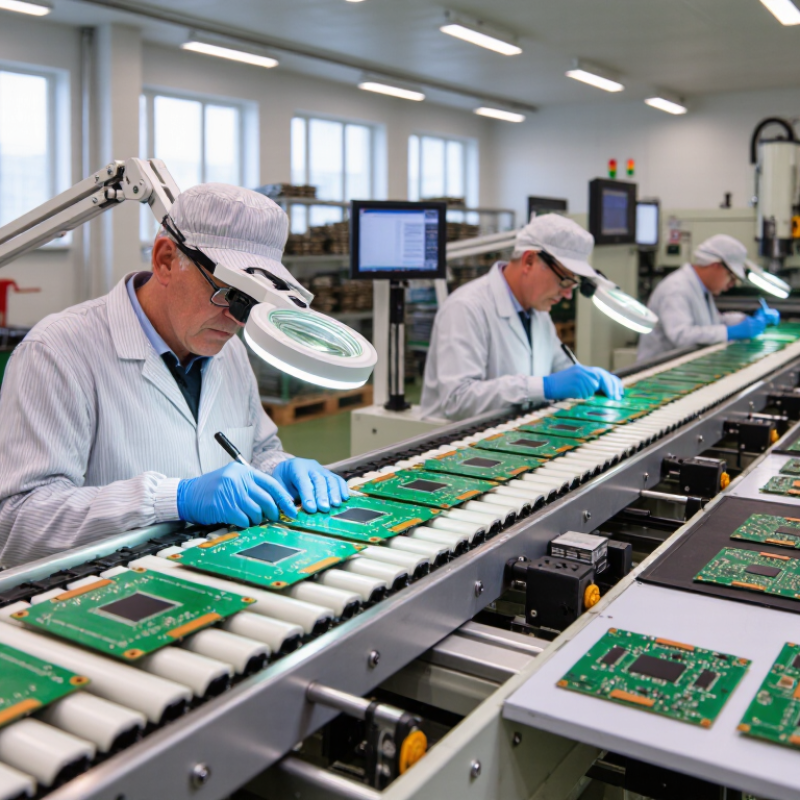
Definition and Role of Single-Layer PCBs
A single-layer PCB is a circuit board with conductive copper traces on one side of its insulating substrate. The opposite surface usually carries components, solder joints, or protective material. Its structure is simple. This simplicity makes the board easier to design, inspect, and produce in high volumes. Common materials include fiberglass-reinforced epoxy, copper foil, solder mask, and silkscreen markings. Together, these layers support electrical paths without the routing complexity found in multilayer boards.
In practical products, single-layer PCBs control uncomplicated circuits in LED lighting, alarms, toys, timers, and basic power equipment. They suit designs with modest connection density and limited signal interaction. Manufacturers value their lower fabrication cost, shorter production cycle, and straightforward quality checks. A technician can often trace a failed path visually before using a meter. That matters during repair. However, low complexity does not mean low responsibility. Poor spacing, thin traces, weak solder joints, or insufficient heat management can still cause early failure.
When evaluating a manufacturer, engineers should review material control, drilling accuracy, copper thickness, electrical testing, and process records. Ask for sample data, not only attractive claims. From production experience, clear drawings and realistic tolerances prevent many avoidable defects. I have also seen simple boards become troublesome when connector stress or moisture was ignored. The design seemed adequate. It was not. A reliable supplier should explain limitations honestly and verify each batch against approved specifications.
Key Criteria for Evaluating Single-Layer PCB Manufacturers
Choosing a single-layer PCB manufacturer requires more than comparing unit prices. Production experience matters because simple boards still fail through poor drilling, uneven copper, or weak solder masks. Ask how long the factory has produced single-layer boards and request samples from similar applications.
Technical control should be visible in the details. Review the stated copper thickness, board tolerance, hole diameter, and material options. A reliable supplier should explain whether it uses 1.6 mm FR-4, flame-retardant materials, or alternative substrates. Check inspection methods, including automated optical inspection and electrical testing. Test records should identify batch numbers, operators, and defect rates. Clear evidence builds trust.
Look for quality systems supported by recognized certifications and documented corrective actions. Also examine delivery performance, packaging, and communication during design changes. A good engineering team will flag narrow traces or crowded solder pads before production. That saves rework. However, certifications do not guarantee perfect boards. Samples may be cleaner than routine orders, and published defect rates can lack context. Request recent reports, ask difficult questions, and compare answers carefully. Visiting the facility, when practical, can reveal storage conditions, cleanliness, and process discipline. One overlooked detail can affect an entire shipment.
Leading Single-Layer PCB Manufacturers by Region and Specialty
Single-layer PCB manufacturers remain important in cost-sensitive, compact electronic products. Grand View Research valued the global PCB market at approximately US$87 billion in 2023, with steady growth expected through 2030. However, public reports rarely separate single-layer revenue clearly. That limitation matters when comparing suppliers.
Regional strengths differ. East Asian manufacturers generally support high-volume orders, automated drilling, and short production cycles. European suppliers often focus on industrial controls, automotive electronics, and traceability. North American manufacturers are stronger in prototypes, engineering support, and aerospace-related documentation. Southeast Asian production sites are gaining attention for cost-efficient assembly and export capacity. These patterns are broad, not absolute.
Specialization may matter more than location. LED lighting projects often require aluminum-backed single-layer boards for heat dissipation. Power supplies need reliable copper thickness and controlled insulation distances. Simple control panels may prioritize rapid sampling and stable hole quality. IPC’s 2024 technology guidance emphasizes process control, material consistency, and measurable reliability. Buyers should request test records, cross-section samples, and certificates such as ISO 9001 or IATF 16949 where relevant. A low quotation can hide weaker solderability or inconsistent surface finish. I have seen supplier comparisons overvalue price and undervalue packaging damage during shipment. That mistake deserves more attention.
Single-Layer PCB Manufacturers: Regional Specialty Comparison
Typical continuous operating-temperature ratings for widely used single-layer PCB substrate specialties.
FR-4 and CEM-1 are commonly selected for general-purpose and cost-sensitive electronics. Aluminum-backed boards are widely used for LED and thermal-management applications, while polyimide is preferred for flexible or high-temperature designs. Actual ratings vary by laminate grade, copper weight, and manufacturer qualification.
Manufacturing Capabilities, Quality Standards, and Certifications
Top single-layer PCB manufacturers distinguish themselves through controlled production, not attractive claims. Experienced facilities use verified copper-clad laminates, stable etching lines, and calibrated drilling equipment. They should manage common materials such as FR-4, aluminum-backed boards, and flame-retardant laminates. Clear trace widths, hole tolerances, and board thickness limits must appear in the manufacturing documentation.
Quality begins before fabrication. Engineers review Gerber files, inspect incoming materials, and check exposed copper after etching. Automated optical inspection can identify shorts, gaps, and incomplete patterns. Electrical testing adds another safeguard. For high-volume orders, process capability data and retained samples help reveal gradual changes. Small details matter.
Reliable manufacturers commonly operate under ISO 9001 quality systems and may hold environmental or safety certifications, depending on their markets. Their products should align with relevant IPC acceptance and performance standards. Certification scope requires careful checking; a certificate alone proves little. Ask for current documents, audit records, test methods, and traceability examples. During factory assessments, I would also examine storage humidity, chemical control, and operator training. These areas are easy to overlook. No production line is flawless, and even strong suppliers may need corrective action after a failed test. Their response shows more professionalism than a perfect brochure.
How to Select the Right Single-Layer PCB Manufacturer
How to Select the Right Single-Layer PCB Manufacturer
Choosing a single-layer PCB manufacturer requires more than comparing quoted prices. Grand View Research valued the global PCB market at approximately USD 89.7 billion in 2023, with continued growth expected through 2030. That expansion increases supplier choices, but it also makes verification essential. Ask for evidence of ISO 9001 certification, IPC-A-600 inspection practices, and controlled material traceability. A polished website proves little.
Check whether the factory matches your actual design requirements. Review minimum trace width, copper thickness, hole tolerances, panel utilization, and solder-mask accuracy. Request sample inspection records and a first-article report. For prototypes, confirm lead times and engineering support. For volume orders, examine capacity planning, electrical testing, packaging, and change-control procedures. Small details matter.
Mordor Intelligence reports that consumer electronics remain a major PCB demand segment, where cost and delivery pressure can be intense. That pressure may encourage shortcuts. Do not accept vague claims such as “high quality.” Ask how defects are measured, whether rework is documented, and how complaints are handled. A lower price can become expensive after delays or field failures. I would also compare three suppliers using the same drawing and bill of materials. However, this approach is imperfect; communication quality and realistic delivery promises are harder to score. Human judgment still matters.
 skip to Main Content
