skip to Main Content
For global buyers, selecting a pressure valve supplier is a technical decision, not just a price comparison. Pressure valves help control flow and protect equipment across applications such as water systems, process lines, and industrial machinery. A mismatch in pressure rating, material, or connection size can create installation delays and performance concerns. Details matter.
This guide introduces suppliers for buyers comparing product range, manufacturing capability, documentation, and service support. It highlights practical checks: pressure and temperature limits, material compatibility, inspection records, and the availability of technical data. Buyers can also ask about sample testing, production lead times, replacement parts, and support across different time zones. A polished catalog can still leave important questions unanswered. Request clear specifications and confirm that each model suits the actual operating conditions.
No supplier is the right fit for every project. Some buyers prioritize custom configurations, while others need standard products delivered consistently. A low quote may not include testing documents, packaging requirements, or after-sales help. Compare the full offer, not only the unit price. This overview is intended to help purchasing teams build a shortlist and ask better questions before requesting quotations. Final selection still depends on verified product data and the needs of the installation.
Pressure class is not a universal pressure limit. ASME B16.34-2020, Table 2-1, rates Group 1.1 carbon-steel valves at about 100°F: Class 150 is 285 psi, Class 600 is 1,480 psi, and Class 2500 is 6,170 psi. Ratings change with material and temperature. Hot steam can reduce the allowable pressure substantially.
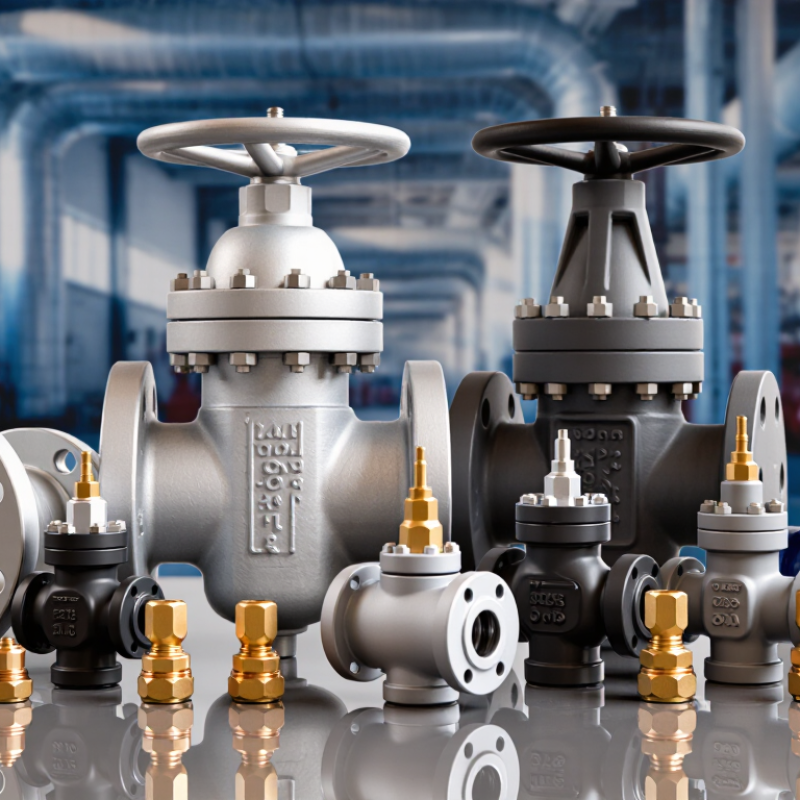
Valve type matters as much as class. Gate valves typically isolate flow with low pressure loss; globe valves support throttling; ball valves provide quick shutoff; and check valves prevent reverse flow. Classes 150–600 commonly serve utility and process lines, while 900–2500 may suit higher-pressure duties. These are not rigid rules. A Class 2500 label alone does not confirm suitability for a specific fluid, temperature, or cycling rate.
Tip: Check the exact material, temperature rating, end connection, and pressure-temperature table before comparing quotes. Ask for documented testing and design data. The class number is useful, but it cannot replace application review.
The chart shows approximate pressure ratings at 100°F for Group 1.1 carbon steel under ASME B16.34. Actual allowable pressure depends on the valve’s material and operating temperature. Valve duties also differ: gate and ball valves are commonly used for on/off isolation, globe valves for throttling, and check valves to prevent reverse flow. Confirm the applicable standard and rating with the valve manufacturer for each service.
For global buyers, a valve’s pressure class is only the starting point. ASME B16.34-2020 covers standard classes from 150 through 2500 and pressure–temperature ratings for listed materials. Its tables link allowable pressure to both material group and operating temperature. A Class 300 valve, therefore, does not carry one fixed pressure limit across every service condition. Ratings generally decrease as temperature rises. That matters.
A practical review starts with the exact material specification, design temperature, and pressure, then checks the matching ASME table—not just the class stamped on the body. For example, a buyer comparing carbon-steel and stainless-steel valves should verify each material group separately, even when both valves share a class designation. ASME B16.34 also sets construction and examination requirements, but the project’s piping code and service conditions still need review. Keep the selected rating and its source in the purchase record. Small detail, big consequence. One easy mistake is treating a catalogue’s “maximum pressure” as valid at every temperature; it may not be. Check the current edition and confirm any borderline operating point with a qualified engineer.
| Comparison Area | What ASME B16.34 Defines | What Buyers Should Verify with Suppliers | Why It Matters |
|---|---|---|---|
| Standard scope | Requirements for specified flanged, threaded, and welding-end valves, including pressure–temperature ratings, materials, dimensions, marking, examination, and testing provisions. | Confirm the valve type, end connection, size range, and design are within the standard’s scope and are identified on the quotation and documentation. | A standards reference is useful only when it applies to the actual valve design and configuration being purchased. |
| Pressure class | Uses class designations such as 150, 300, 600, 900, 1500, and 2500 for applicable standard-class valves. | Request the pressure–temperature rating for the specific class, material group, and design temperature—not just the class number. | A class designation is not a universal pressure value; allowable pressure depends on the applicable rating table and material. |
| Material group | Assigns pressure–temperature ratings by material group. Different materials can have different allowable ratings at the same class and temperature. | Check the stated body, bonnet, closure, and pressure-retaining material grades against the purchase specification and material certificates. | Substituting a material can change the applicable rating and suitability for the service. |
| Temperature effect | Provides ratings across specified temperature ranges for the relevant class and material group; allowable pressure can change as temperature changes. | Confirm the maximum and minimum design temperatures and the corresponding allowable pressure for the selected material and class. | Operating pressure must be checked at the design temperature, rather than inferred from an ambient-temperature value. |
| Rating selection | The applicable pressure–temperature rating is selected using the standard’s relevant material group and rating provisions. | Ask for the exact rating basis and supporting technical documents. Check that the project piping code and service requirements are also satisfied. | ASME B16.34 ratings do not replace project-specific checks for design conditions, corrosion allowance, or other applicable code requirements. |
| Testing and inspection | Includes requirements related to examination and testing for valves within its scope. | Clarify the specified inspection, test documentation, traceability, and any additional project or purchaser requirements before order placement. | Standard compliance and additional purchaser requirements should be clearly distinguished in the inspection and test documentation. |
| Supplier qualification | Defines technical requirements for covered valves; it does not publish a ranking of manufacturers or suppliers. | Compare demonstrated experience with the required valve type, quality-system documentation, material traceability, technical support, delivery capability, and export documentation. | A structured qualification process helps buyers compare suppliers without treating a standards reference as a supplier endorsement. |
For global buyers, supplier credentials matter most when they match the valve and its intended service. API 6D relates to pipeline valves, but a certificate image alone proves little. Check the certificate’s validity, product scope, and stated size or pressure range. Ask whether the offered valve configuration falls within that scope. Check the scope.
ISO 9001 indicates that a quality management system has been assessed; it does not certify every valve as suitable for a particular project. Request inspection plans, test records, and clear links between the purchase order and the delivered valve. A practical check is to compare the valve’s nameplate, serial number, and inspection report before dispatch. Small details matter.
EN 10204 3.1 documentation can connect material test results to identified components, such as a body casting or pressure-containing part. Check that heat numbers on the certificate match the markings and traceability records. The certificate should include relevant test results and be validated by the manufacturer’s authorized inspection representative, independent of the production department. Keep it traceable.
Even a neat document pack can contain a mismatch, so buyers should review the actual records rather than rely on a supplier’s summary. That takes time, and it is easy to miss one field.
For global buyers, pressure-valve selection requires separate checks for stem leakage and fire performance. ISO 15848-1 evaluates fugitive emissions through specified mechanical and thermal cycles. Review the report for valve size, pressure class, packing, test medium, temperature, cycle count, and leakage class. A test result applies to the tested configuration. Even a packing change can affect performance. Ask suppliers to connect the offered valve directly to its test evidence.
API 607 covers fire testing for applicable quarter-turn valves and valves with nonmetallic seats. It assesses leakage during and after controlled fire exposure. Request the complete report, including the tested design and pressure conditions. “Fire-safe” does not mean zero leakage in every real-world fire. Test conditions are controlled, and installation details still matter. This distinction is easy to overlook.
Tips: Compare certificates with the exact materials and trim offered. Check revision dates and test scope. If a report leaves a gap, ask for clarification before purchase. A neat certificate alone is not enough.
Capacity matters, but headline output can hide constraints. Ask whether quoted volume covers the exact pressure class, body material, testing, and trim you need. Small orders differ. A supplier with a large factory may still have limited capacity for a specialized configuration. Request a production schedule tied to your drawings, not a general estimate. Check how the supplier handles inspection records and changes during production.
Delivery depends on more than distance. Compare the stated lead time with the time needed for engineering approval, testing, packing, and export handling. Ask what happens if a casting arrives late or a test fails. Service quality shows in specifics: a named technical contact, clear responses to drawing questions, and accessible spare-part information. A polished brochure is less useful than a precise answer about a seat material or actuator interface.
Total cost should include more than the unit price. Add freight, inspection, commissioning support, spare parts, and the cost of keeping extra stock. A low quote can become expensive if dimensions differ and installation is delayed. Build a comparison sheet, but treat it as a guide, not a verdict; assumptions are easy to miss. Verify capacity claims, delivery commitments, and service arrangements in writing before placing an order.