skip to Main Content
Hydraulic Regulation Joystick selection is no longer a simple parts comparison. Construction equipment, agricultural machinery, and material-handling vehicles depend on accurate operator input to control hydraulic functions. MarketsandMarkets’ hydraulic equipment market research identifies these sectors as important application areas, while industry forecasts continue to track demand for equipment productivity and automation. That context matters. A joystick links the operator’s hand to a valve or electronic control system, so small differences in feel, response, and durability can affect daily work.
This 2026 supplier overview compares manufacturers by practical criteria: control type, operating force, proportional accuracy, environmental protection, customization, and technical support. A lever should return consistently. Connectors should suit the machine’s wiring. Not glamorous, but important. Buyers should also review product drawings, test conditions, and rated service life rather than relying on catalog claims alone. ISO 4413 provides safety requirements for hydraulic systems; it is a useful reference when assessing how a control component fits into the wider circuit. Still, no supplier is best for every machine. Application details can change the choice, and published specifications may not describe real operator feel. The aim here is a clear shortlist of Hydraulic Regulation Joystick suppliers, with enough context to help engineers and procurement teams ask better questions before requesting samples or quotations.
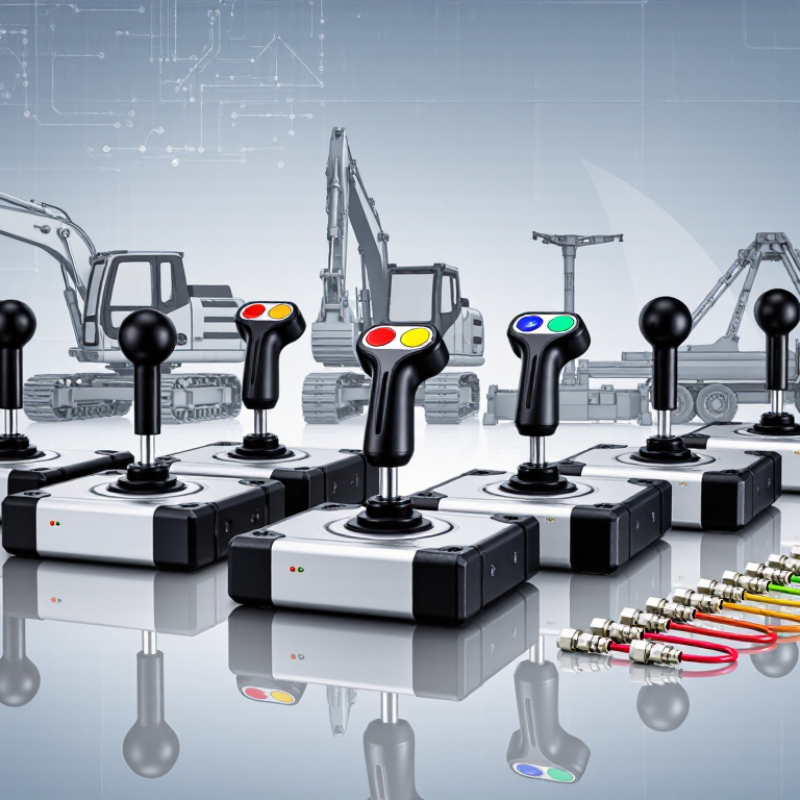
A hydraulic regulation joystick lets an operator control hydraulic functions with measured hand movements. Instead of moving a heavy valve directly, the joystick sends a command to the hydraulic system. In a pilot-operated design, its movement meters pilot pressure. That pressure shifts a larger control valve, directing oil to a cylinder or motor. In an electrohydraulic design, a sensor reads joystick position and sends an electrical signal to a controller. The controller then operates a proportional valve. Small movement matters. The exact response depends on valve design, oil temperature, pressure, and system condition.
The operator’s hand should feel a clear, repeatable change in machine movement. Springs, damping, and hydraulic or electronic feedback shape that feel. A slight input may produce slow, fine motion; a larger input can allow more flow and faster movement. There is a catch: similar-looking joysticks may use different signal types, so compatibility should be confirmed from equipment documentation. Inspection also matters. Look for loose connections, damaged wiring or hoses, and inconsistent response, then follow the machine maker’s service guidance. It is easy to oversimplify joystick control. The joystick gives a command; the valve, pump, load, and fluid condition determine what the machine actually does.
Hydraulic regulation joysticks let operators meter oil flow with small, controlled hand movements. Proportional response can help a loader lift smoothly, a crane slew steadily, or an excavator position its bucket with care. Common features include adjustable spring return, sealed housings, and Hall-effect or potentiometric sensing. The right setup depends on valve compatibility, voltage, mounting space, and the number of control axes. Feel matters, too. A stiff lever can tire an operator during a long shift.
Tips: Check the joystick’s output signal against the machine’s control system. Test lever travel with gloves on. Small differences matter.
These joysticks are used in construction equipment, agricultural machinery, forestry machines, and material-handling systems. In each application, smooth control can reduce abrupt movements and make fine adjustments easier. When evaluating suppliers, ask for clear specifications, wiring details, and environmental ratings. Requesting a sample for hands-on testing can reveal awkward reach or uneven resistance before installation. A specification sheet cannot tell you everything; real machine testing is still worth the effort.
2026 Top Hydraulic Regulation Joystick Suppliers
How to Evaluate Hydraulic Regulation Joystick Suppliers
A supplier’s catalogue is only a starting point. Compare rated pressure, flow capacity, spool travel, control force, and electrical output against your machine’s actual duty cycle. Ask for test results across temperature ranges, not just a single room-temperature reading. Small details matter. A joystick that feels smooth on a bench may behave differently when oil is cold or the operator wears gloves.
MarketsandMarkets’ Hydraulic Equipment Market report estimated a market value of USD 42.5 billion in 2023, with a projection of USD 52.8 billion by 2028. This broad market forecast signals ongoing equipment demand, but it does not prove any joystick supplier’s quality. Treat it as context, not a purchasing shortcut. Request traceable inspection records, service-life test methods, and clear warranty terms. For hydraulic cleanliness, check whether recommendations refer to ISO 4406 codes and match your system’s filtration plan.
During supplier audits, inspect a sample unit and ask how the maker controls return-to-neutral accuracy, leakage, and wear after repeated cycling. Confirm spare-part availability and technical response times in writing. An awkward gap often remains: buyers compare prices closely but overlook the cost of recalibration or machine downtime. I would question any performance claim that lacks a stated test setup, even if the datasheet looks polished.
Use this supplier-neutral scorecard to compare candidates. The weights below are suggested evaluation priorities, not measured market data. Confirm all product ratings and certifications against current documentation for the specific joystick model.
| Evaluation dimension | What to check | Evidence to request | How to assess | Suggested weight |
|---|---|---|---|---|
| Application and control fit | Confirm whether the joystick provides hydraulic pilot control, electrical output, or a specified combination. Check axis count, direction of operation, detents, return-to-neutral behavior, and operator interface requirements. | Model-specific datasheet, circuit diagram, interface drawing, and application questionnaire. | Compare the documented configuration with the machine’s hydraulic circuit and operator-control requirements. | 15% |
| Pressure and flow ratings | Check rated and maximum pressure, flow capacity, port arrangement, and any pressure or flow limits that apply to individual functions. | Technical datasheet showing operating limits, port details, and test conditions. | Verify that the ratings cover the machine’s specified operating conditions with appropriate engineering margin; do not rely on a product-family headline rating alone. | 15% |
| Control performance | Review metering behavior, controllability, neutral characteristics, hysteresis, response, and repeatability where these are relevant to the application. | Performance curves, test reports, and agreed acceptance criteria for the proposed model. | Compare results under stated test conditions and, when practical, evaluate a sample on the intended hydraulic circuit. | 12% |
| Mechanical and hydraulic compatibility | Check mounting dimensions, shaft or handle interface, port connection type, sealing arrangement, envelope, and available installation orientations. | Dimensioned drawings, port and thread specifications, and installation instructions. | Cross-check drawings against the machine layout and connection standards; confirm any adapters or custom interfaces in writing. | 10% |
| Materials and operating environment | Verify compatible hydraulic fluids, fluid-temperature limits, ambient-temperature limits, corrosion protection, and resistance to the expected dust, moisture, and vibration conditions. | Operating and storage limits, materials information, environmental test reports, and installation guidance. | Match every declared limit to the machine’s duty cycle and environment. Treat unlisted conditions as requiring written confirmation. | 10% |
| Durability and validation | Ask how the supplier validates cycle life, wear, leakage, vibration resistance, and performance stability for the offered configuration. | Model-specific validation summary, test methods, sample size where disclosed, and warranty terms. | Assess whether testing reflects the application and whether acceptance criteria and warranty exclusions are clearly stated. | 10% |
| Quality management and traceability | Review the supplier’s quality-management processes, production controls, change management, and ability to trace supplied parts or batches. | Current quality-system certificates, certificate scope and validity, inspection plan, and traceability statement. | Verify certificate status and scope with the issuing body where applicable; confirm that the relevant production site and product are covered. | 10% |
| Customization and engineering support | Evaluate support for configuration changes, prototypes, drawings, interface questions, troubleshooting, and design changes. | Written technical response, customization scope, engineering-change process, and sample-development plan. | Use a consistent technical inquiry and compare response completeness, clarity, and ownership of follow-up actions. | 8% |
| Documentation and compliance | Check availability of installation, operation, maintenance, safety, and compliance documentation for the intended market and application. | Current manuals, declarations or certificates applicable to the product, and a document revision list. | Confirm that documents match the offered model and destination market; verify regulatory claims rather than assuming they apply to every configuration. | 5% |
| Supply continuity and service | Assess quoted lead time, production capacity, spare-parts availability, repair options, and communication channels for technical or quality issues. | Written quotation, delivery assumptions, parts-support policy, and escalation contacts. | Compare commitments for the same order quantity and delivery terms; distinguish quoted estimates from contractual guarantees. | 3% |
| Total cost and commercial clarity | Consider unit price alongside tooling, customization, testing, freight, spare parts, and lifecycle support costs. | Itemized quotation, payment and delivery terms, warranty conditions, and any non-recurring charges. | Compare equivalent configurations and commercial terms; record assumptions and exclusions before making a selection. | 2% |
| Total suggested evaluation weight | 100% | |||
Suggested scoring: rate each dimension from 1 (does not meet requirements) to 5 (fully meets requirements with appropriate evidence), then apply the stated weight. Treat mandatory safety, regulatory, and operating limits as pass/fail requirements rather than offsetting them with a high score elsewhere.
In 2026, leading hydraulic regulation joystick suppliers distinguish themselves through dependable control, not polished catalogs. Operators feel the difference when a machine responds smoothly to small lever movements. A well-tuned joystick can reduce abrupt changes in flow and make repetitive work less tiring. Cold starts reveal weaknesses. So do long shifts.
Suppliers should provide clear specifications for operating force, travel, mounting dimensions, and hydraulic compatibility. Ask for test data, service intervals, and guidance on replacement parts. Check whether the control response can be adjusted for the machine and task. A useful supplier can explain these details without relying on vague claims. Documentation matters.
Still, specifications cannot predict every field condition. Dust, vibration, operator habits, and installation quality all affect performance. During trials, record how the lever feels under load and whether neutral returns consistently. One small hesitation may deserve another test. This part is often overlooked. Even experienced buyers can focus too much on price or delivery time. Comparing samples in realistic working conditions takes effort, and sometimes the first choice needs revisiting.
Hydraulic joystick supply in 2026 is being shaped by tighter integration between operator controls, valves, and machine electronics. More equipment uses proportional input, letting operators meter flow with smaller, steadier movements. Demand is shifting. Suppliers are responding with configurable handles, sealed connectors, and sensor options for different cab layouts. A joystick on a compact loader may need different travel, grip texture, and return force than one in a forestry cab. Small details matter. Diagnostics are also gaining attention, although added sensors can complicate repairs in remote locations.
Tips: Compare rated life, ingress protection, connector availability, and replacement lead times—not just the quoted unit price. Ask for test data under vibration and temperature conditions close to your machine’s duty cycle. Keep it practical.
Supply planning is becoming more flexible. Some buyers are seeking modular assemblies and regional inventory to reduce downtime when specifications change. Yet customization can extend validation and delivery; faster is not guaranteed. That trade-off deserves scrutiny. A clear interface drawing, agreed response curve, and early sample review can prevent costly mismatches between joystick feel and hydraulic behavior. Even then, real operators may prefer slightly different resistance than bench tests suggest.
