Top 10 Hydraulic Check Valves You Should Know About?
Hydraulic check valves play a critical role in fluid systems. They prevent backflow, ensuring efficiency and safety. According to a report from Markets and Markets, the hydraulic valves market is projected to reach $15 billion by 2025. This growth emphasizes the demand for essential components like hydraulic check valves.
The design of hydraulic check valves varies widely. They come in various sizes and materials. Each type serves specific applications, from industrial machinery to mobile equipment. Despite their reliability, some users may overlook their maintenance needs. Regular inspection is crucial, as neglect can lead to system failures.
Understanding the top hydraulic check valves available can help in making informed choices. Researching products based on performance data and user feedback is beneficial. Let's explore the most significant options in the market today.
Overview of Hydraulic Check Valves and Their Functions
Hydraulic check valves play a crucial role in fluid control systems. They allow fluid to flow in one direction while preventing backflow. This function is essential for maintaining system pressure and protecting equipment. These valves are typically used in hydraulic machinery, pipelines, and various industrial applications where fluid movement is key.
It's vital to understand the mechanisms behind hydraulic check valves. Most of them operate based on a simple design. They consist of a movable element that opens with forward flow and closes under reverse conditions. This design helps ensure efficiency and reliability.
Tip: Regular maintenance is essential. Check valves need periodic inspection to ensure they function correctly. Minor wear can lead to malfunction and increased costs.
The selection of a hydraulic check valve can impact system performance. Various factors, such as pressure, size, and fluid type, should be considered. Overlooking these details can cause inefficiencies or system failures.
Tip: Always consult with an expert if unsure about which valve to choose. They can provide valuable insight based on specific needs. This can save time and resources in the long run.
Top 10 Hydraulic Check Valves You Should Know About
| Model |
Material |
Pressure Rating (bar) |
Flow Area (cm²) |
Temperature Range (°C) |
Connection Type |
| HV-101 |
Stainless Steel |
350 |
5 |
-20 to 120 |
Threaded |
| HV-202 |
Brass |
300 |
7 |
-10 to 80 |
Flanged |
| HV-303 |
Aluminum |
250 |
6 |
-40 to 100 |
Threaded |
| HV-404 |
Nylon |
150 |
4 |
0 to 60 |
Push-On |
| HV-505 |
Brass |
400 |
8 |
-20 to 90 |
Flanged |
| HV-606 |
Stainless Steel |
500 |
10 |
-50 to 150 |
Threaded |
| HV-707 |
Aluminum |
300 |
9 |
-20 to 70 |
Flanged |
| HV-808 |
Nylon |
100 |
3 |
0 to 50 |
Push-On |
| HV-909 |
Brass |
350 |
6 |
-10 to 80 |
Threaded |
| HV-1010 |
Stainless Steel |
450 |
7 |
-20 to 100 |
Flanged |
Importance of Hydraulic Check Valves in Fluid Control Systems
Hydraulic check valves play a critical role in fluid control systems. They are essential for ensuring the proper flow of fluids. These valves prevent backflow, maintaining system efficiency. When fluid flows in the desired direction, the valve opens. If it tries to flow backward, the valve closes. This mechanism is vital in many applications, including hydraulic machinery.
In practice, selecting the right check valve can be tricky. Not all check valves serve every purpose. Indications of wear and tear may not be obvious. Regular inspections are necessary to avoid failures. Even small leaks can lead to significant issues down the line.
Tips: Always consider the fluid type and system pressure when choosing a valve. This choice can affect system longevity. Proper installation and regular maintenance are crucial. Monitor your systems for unexpected behavior. Being proactive can save time and resources later.
Key Features to Consider When Selecting a Hydraulic Check Valve
When selecting a hydraulic check valve, key features become paramount. Start with the material. Stainless steel, aluminum, and plastic are common choices. Each material has its pros and cons.
Stainless steel resists corrosion but can be heavy. Plastic is lightweight but may not handle extreme pressures well.
Next, consider the pressure rating. Choose a valve that can withstand the system's maximum pressure. An underrated valve can lead to catastrophic failures.
Additionally, the size of the valve is crucial. A valve that is too small may block flow. A valve that is too large might create turbulence.
Another aspect is the installation orientation. Some valves work better in vertical positions, while others are designed for horizontal use. Ensure you know your system's layout.
Regular maintenance is also vital. Check for leaks and ensure that the valve operates smoothly. Ignoring these details can lead to functionality issues.
Reflecting on these points can guide you toward making a better choice.
Top 10 Hydraulic Check Valves: Specifications and Applications
Hydraulic check valves play a crucial role in fluid control systems. They prevent backflow and maintain system pressure. Understanding the specifications of these valves is essential for optimal performance. Common materials include brass and stainless steel. Choose a valve that offers durability and resistance to corrosion.
Applications of hydraulic check valves vary. They are widely used in industrial machinery, hydraulic presses, and automotive systems. The valve size and flow rate must match the system requirements. A mismatch can lead to inefficiency or damage.
Tip: Regular maintenance checks can prevent failures. Inspecting seals and body integrity is vital. Do not ignore abnormal noises or vibrations during operation.
Tip: Consider the environment where the valve will be used. Factors like temperature and fluid type can affect performance. Selecting the right specifications can save future headaches.
Future Trends in Hydraulic Check Valve Technology and Innovation
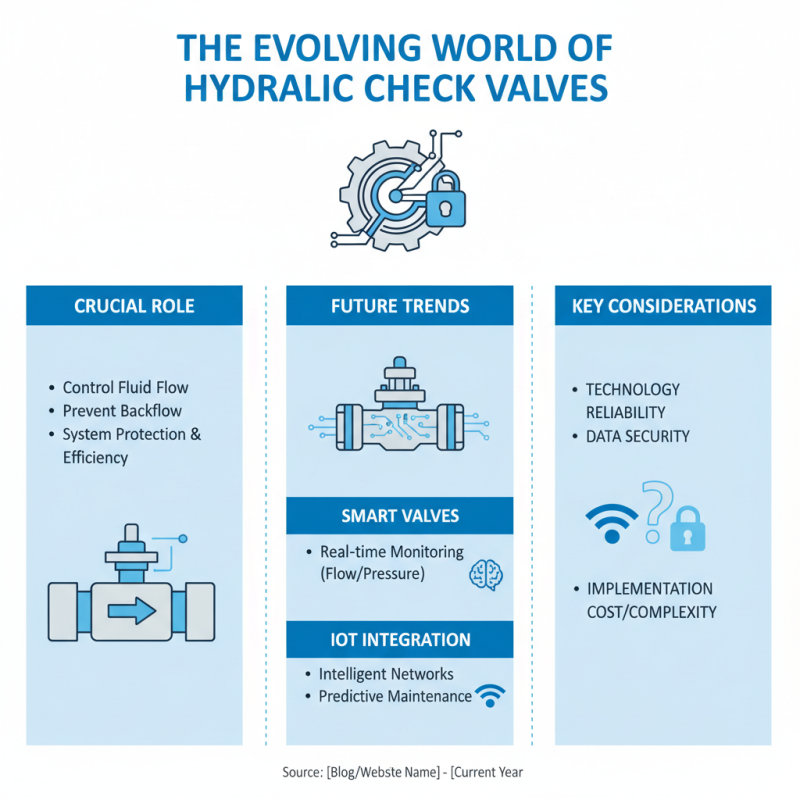
Hydraulic check valves are crucial in controlling fluid flow and preventing backflow. As technology advances, the future of hydraulic check valves shows exciting trends. Innovations like smart valves will enhance performance. These valves can monitor flow and pressure in real time. It allows for better control and efficiency. Their integration with IoT can transform hydraulic systems into intelligent networks. This may sound promising, yet the reliability of such technology is still in question.
Materials are evolving too. Composite materials are becoming popular due to their strength and weight benefits. Lightweight valves can significantly reduce energy consumption. However, manufacturers must ensure that these materials withstand high pressures and harsh environments. A potential pitfall is the durability of these products. It’s essential to consider long-term impacts and maintenance needs.
Tips for choosing hydraulic check valves include assessing the application requirements. Understand flow rates, pressure drops, and installation environment. Pay attention to the material compatibility with fluids. Investing in quality solutions is crucial for safety and performance. Remember, the cheapest option may lead to higher maintenance costs over time. Regular maintenance checks can prevent failures and prolong valve life.
 skip to Main Content