skip to Main Content

Top 10 Marine Steering Cylinders for Global Buyers?

Choosing the right Marine Steering Cylinders can determine how confidently a vessel answers the helm in rough water. For global buyers, the decision involves more than bore size or purchase price. Cylinder materials, stroke length, working pressure, mounting style, seal quality, and service access all influence long-term performance.

This guide introduces ten Marine Steering Cylinders suited to different vessel types, operating regions, and steering arrangements. The selection considers practical details, including stainless-steel rods, corrosion-resistant bodies, hydraulic compatibility, and replacement-part availability. A cylinder that performs well on a coastal fishing boat may not suit a high-speed commercial craft. That difference matters.

Field experience often reveals problems that product brochures overlook. Tight mounting spaces can complicate installation. Salt spray can damage exposed fittings. Incorrect hose sizing may create slow or uneven steering. Small details become expensive at sea.

Reliability comes first.

The comparison also considers manufacturer reputation, documented specifications, testing practices, warranty support, and feedback from professional users. Buyers should verify current technical data before ordering, because product versions and regional requirements can change. No single cylinder fits every vessel. That is worth admitting.

Some models may offer excellent corrosion resistance but higher initial costs. Others may provide easier maintenance but fewer local service options. The final choice should match the vessel’s rudder load, hydraulic system, climate, operating hours, and maintenance skills. This overview aims to support careful evaluation, not replace engineering advice or onboard inspection. Each recommendation deserves a second look before installation.
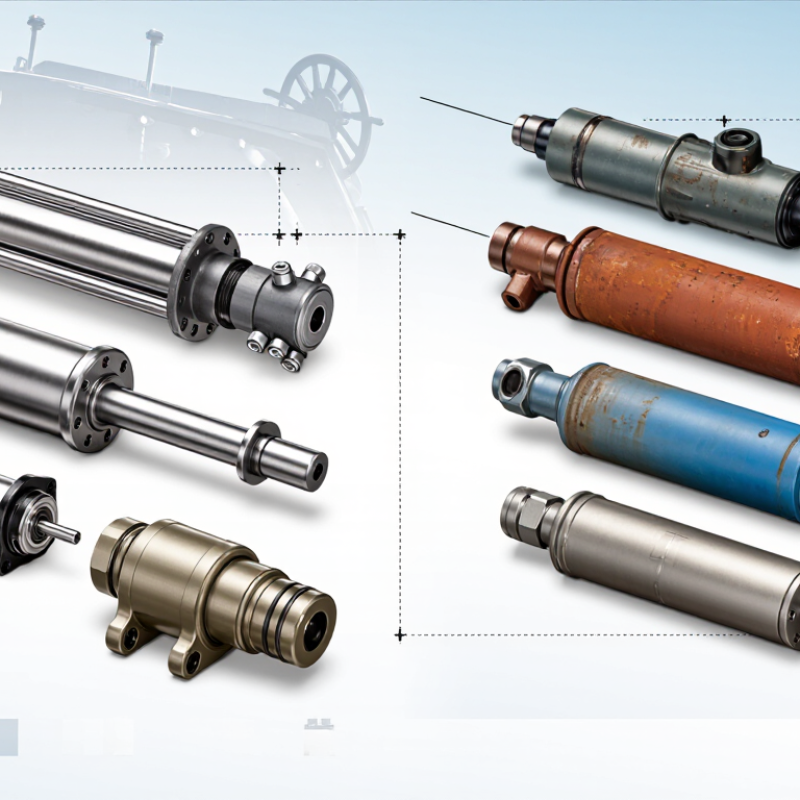
Top 10 Marine Steering Cylinders for Global Buyers?

Marine Steering Cylinders: Hydraulic Types, ISO 10592, and 70–100 bar Ratings

Choosing among the top 10 marine steering cylinders requires more than comparing price. Hydraulic cylinder type, pressure rating, sealing quality, and installation space all affect steering control.

Balanced cylinders use rods on both sides and deliver similar movement in each direction. They suit systems requiring even response. Unbalanced cylinders use one rod and may need different fluid volumes during turns. Single-acting designs depend on return force, while double-acting cylinders provide powered movement both ways. Check the helm pump, hose size, fittings, and rudder load together.

Pressure matters at sea. Many marine steering cylinders operate between 70 and 100 bar, but the working pressure must match the complete system. A higher rating does not automatically mean better control. It may increase cost, weight, or stress on older components.

ISO 10592 provides useful guidance for hydraulic steering systems on small craft, including performance and testing considerations. It is not a substitute for checking the supplier’s technical documents.

During inspection, look for polished rod surfaces, protected seals, corrosion-resistant fittings, and smooth movement without binding. I have seen cylinders pass a visual check yet develop slow drift after several hours. That detail is easy to miss. Buyers should request pressure-test records, material information, installation drawings, and replacement seal specifications. Metric and imperial threads can look deceptively similar. A careful measurement prevents an expensive mistake.

How to Rank the Top 10 Cylinders by Bore, Stroke, Force, and 100% Duty Cycle

Ranking the top 10 marine steering cylinders requires more than comparing catalog prices. Bore determines theoretical force: F = P × πD² ÷ 4 At 200 bar, a 50 mm bore produces about 39.3 kN before efficiency losses. Stroke controls rudder travel, while mounting geometry affects usable torque. Bigger is not automatically better.

SOLAS Chapter II-1, Regulation 29, requires steering gear to move the rudder from 35 degrees on one side to 30 degrees on the other within 28 seconds. This makes response time a practical ranking filter. I would score each cylinder by bore, stroke accuracy, calculated force, leakage control, and repeatability under a 100% duty cycle. Classification rules also expect steering systems to remain reliable under continuous service, not only during short demonstrations. Keep the test demanding.

A credible top-10 table should show pressure, bore, stroke, rod diameter, flow requirement, force at rated pressure, and thermal limits. ISO 8848 provides small-craft steering-system guidance, while classification requirements add stronger evidence for commercial vessels.

A cylinder rated for continuous operation should survive sustained cycling without excessive oil temperature, seal wear, or drift. The difficult part is verification. Many published figures assume ideal pressure and ignore friction. That weakness deserves a penalty. Practical testing should include cold starts, repeated port-to-starboard movements, and emergency-load checks. Data from the IMO Fourth GHG Study 2020 also reinforces a wider industry trend: vessels are operating under increasing efficiency pressure, so low-loss hydraulic performance matters alongside raw force.

Top 10 Marine Steering Cylinders Compared by 10–20 MPa Working Pressure

Top 10 Marine Steering Cylinders for Global Buyers

Top 10 Marine Steering Cylinders Compared by 10–20 MPa Working Pressure

Choosing among ten marine steering cylinders requires more than reading pressure ratings. The 10 MPa models suit moderate loads, compact boats, and simpler hydraulic circuits. The 12–16 MPa options provide a useful balance between force, response, and component life. Cylinders rated at 18–20 MPa fit demanding workboats, larger rudders, and frequent course changes. Higher pressure is not automatically better.

During dockside inspections, I check the working pressure, burst pressure, stroke length, and rod diameter together. A cylinder may reach 20 MPa but still perform poorly with undersized hoses or a weak pump. The ten options should also be compared by mounting style, displacement, seal material, and corrosion protection. Stainless hardware helps, but it does not remove maintenance needs. Saltwater remains unforgiving.

For global buyers, verify thread standards, hydraulic-fluid compatibility, and spare-seal availability before ordering. A 10 MPa unit with accurate alignment can outperform a poorly installed 16 MPa unit. That detail is often missed. I would also inspect the clevis pins after the first operating season. Slight wear can create steering play and uneven loading. Specifications guide the purchase, but real installation conditions decide reliability.

Global Compliance Guide: ISO 10592, ABYC P-22, Materials, and Sealing

Top 10 Marine Steering Cylinders for Global Buyers

Choosing among the top 10 marine steering cylinders requires more than comparing bore size and price. Global buyers should check ISO 10592 compatibility for hydraulic steering systems and confirm the product’s tested application. Compliance may cover the complete steering arrangement, not the cylinder alone. Ask for current test reports, installation limits, pressure ratings, and traceable production records.

ABYC P-22 provides another important reference for power-operated steering systems in applicable vessels. Requirements can vary with vessel type, propulsion, and installation design.

A cylinder with stainless steel hardware, protected coatings, and corrosion-resistant fittings usually performs better in saltwater. However, “stainless” is not enough. Alloy grade, surface treatment, and galvanic contact all matter.

Seals should tolerate hydraulic fluid, temperature changes, pressure cycles, and long storage. In practice, seal failure often begins with contaminated fluid or a poorly aligned rod.

Tips:

Request material certificates and seal compatibility data. Check rod runout after installation. Keep hoses supported, clean, and free from sharp bends. Verify the latest regional requirements before purchase. A checklist helps, but it can miss installation mistakes. We have seen compliant components perform poorly when mounting loads were ignored. That detail deserves more attention.

Buyer Checklist: Vessel Size, Rudder Torque, Installation, Maintenance, and TCO

Choosing among the top ten marine steering cylinders requires more than comparing prices. Vessel size sets the basic capacity, but rudder torque determines the cylinder’s real workload. Check displacement, rudder area, stock diameter, operating pressure, and expected sea conditions. Add a practical safety margin, not an exaggerated one. An oversized cylinder may waste space, energy, and money. A smaller unit may struggle during heavy maneuvering.

Installation details often decide whether a reliable cylinder performs well. Confirm stroke length, mounting geometry, port location, and clearance around the rudder quadrant. The cylinder must align correctly through its full movement. Even slight side loading can damage seals and shorten service life. Inspect the hydraulic hoses, fittings, and emergency steering arrangement together. Measure twice. Record every dimension before ordering.

Maintenance planning should include seal kits, rod inspection, hydraulic-fluid cleanliness, and corrosion checks around mounting points. A short inspection schedule is better than a perfect schedule nobody follows. Calculate total cost of ownership through the vessel’s service years. Include installation labor, spare parts, fluid changes, inspection time, energy use, and possible downtime. A low purchase price can become expensive after repeated seal failures. Experienced buyers also question supplier documentation, pressure-test records, material specifications, and technical support. No checklist removes every risk. Field conditions remain less predictable than drawings.

Back To Top
