 skip to Main Content

China Top 10 Insulating FRP Profiles Manufacturers?
China’s insulating FRP profiles market has developed rapidly, serving power distribution, rail systems, substations, and industrial equipment. This article introduces ten manufacturers that deserve closer technical and commercial attention. The focus is not simply on production size. It examines resin quality, glass-fiber architecture, dielectric performance, dimensional control, surface finish, and documented testing.
Dr. Steve Tsai, a respected composites researcher, has said, “The key to composites is not the material alone, but how it is designed and manufactured.” That principle matters when comparing Insulating FRP Profiles. A pultruded channel may look flawless, yet hidden voids can weaken electrical insulation and mechanical reliability. Small details matter.
Real projects expose differences. One supplier may offer excellent epoxy profiles for high-voltage environments, while another may perform better with cost-sensitive polyester applications. Some manufacturers provide stable tolerances across long production runs. Others need closer inspection. This is where buyers should remain careful.
The ranking considers manufacturing experience, laboratory capability, quality systems, export performance, customization, and technical support. It also reviews whether companies explain test methods clearly, rather than presenting vague performance claims. Certification alone is not enough. Field experience matters.
The list is not a permanent verdict. Product grades change, factories invest, and customer service can vary by project. That uncertainty deserves attention. Readers should request samples, test reports, drawings, and application references before signing a contract. A strong supplier should welcome those questions, not avoid them.
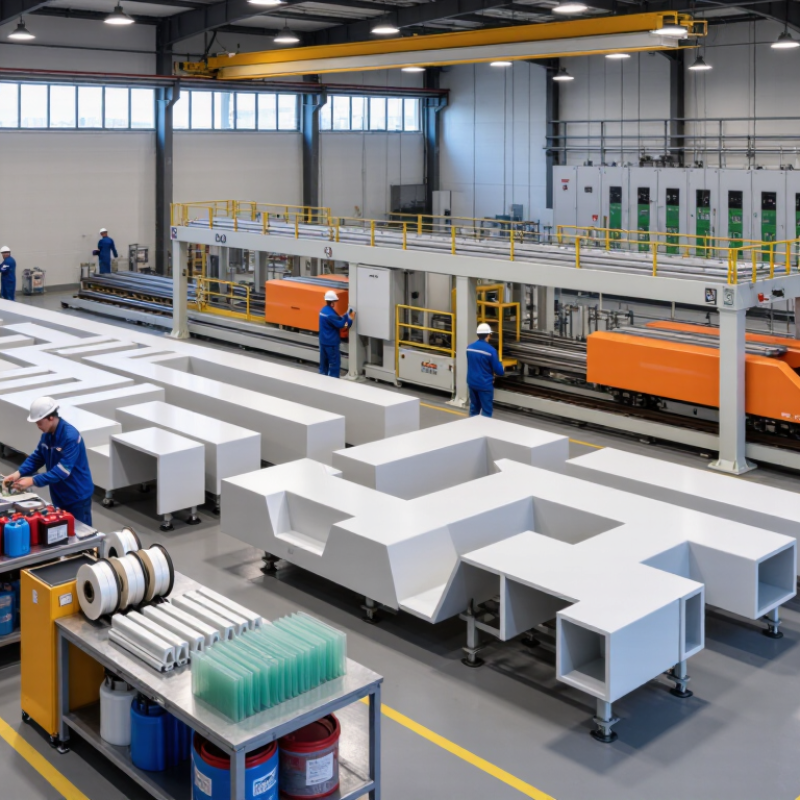
China’s FRP Insulating Profile Market: Standards, Applications, and Demand
China Top 10 Insulating FRP Profiles Manufacturers?
China’s FRP insulating profile market is expanding with demand from substations, rail transit, transformers, switchgear, and renewable energy equipment. In practical sourcing, buyers should examine dielectric strength, flexural strength, water absorption, flame behavior, and dimensional stability. These properties matter when profiles face heat, vibration, moisture, or continuous electrical stress.
Reliable manufacturers normally provide batch records, technical data sheets, and traceable test reports. Standards may include relevant GB/T, IEC, ASTM, and ISO requirements, depending on the application and export destination. However, compliance labels alone are not enough. A profile can meet a laboratory target yet perform poorly after drilling, cutting, or long outdoor exposure. This point is often underestimated. Demand is moving toward pultruded sections with tighter tolerances, better surface insulation, and customized shapes. The top ten manufacturers should therefore be compared by process control, testing capacity, mold accuracy, and technical support, not only by price.
Tips: Request samples before bulk orders. Test the actual finished shape, not only the raw resin. Check edge quality, hole strength, and insulation resistance after humidity conditioning. Ask how suppliers control glass-fiber alignment and curing temperature. Keep drawings and inspection records.
Some assumptions fail. A thicker profile is not always safer. Excess resin may reduce reinforcement efficiency and increase cracking risk. Field conditions should guide the final selection.
China Top 10 Insulating FRP Profiles Manufacturers? — China’s FRP Insulating Profile Market: Standards, Applications, and Demand
Market reference table covering major non-brand application segments, commonly used standards, technical requirements, and demand conditions for insulating glass-fiber-reinforced polymer profiles in China.
| No. | Application Segment | Typical FRP Profile Forms | Key Performance Requirements | Commonly Referenced Standards | Primary Demand Drivers in China | Demand Level |
|---|---|---|---|---|---|---|
| 1 | Electrical Insulation and Switchgear | Flat bars, angles, channels, support rails, spacer profiles, and custom pultruded sections | High dielectric strength, low moisture absorption, dimensional stability, tracking resistance where required, and mechanical rigidity | IEC 60243-1 for electric strength; ASTM D149 for dielectric breakdown voltage; ASTM D257 for volume and surface resistivity | Expansion of medium-voltage and low-voltage distribution equipment, compact switchgear, substations, and electrical control systems | High |
| 2 | Transformer and Busbar Support Systems | Insulating blocks, T-sections, U-channels, spacers, laminated support members, and mounting profiles | Electrical insulation, compressive strength, low creep, thermal endurance, and resistance to transformer oil or operating contaminants when applicable | IEC 60243-1; ASTM D149; ASTM D257; application-specific transformer and switchgear specifications | Modernization of distribution networks, renewable-energy substations, and demand for lighter internal support components | High |
| 3 | Railway and Urban Transit Equipment | Handrail sections, cable-support profiles, equipment brackets, insulating beams, and interior structural sections | Low smoke and flame performance, mechanical durability, low mass, electrical insulation, and resistance to vibration | EN 45545-2 for railway fire protection; IEC 61373 for railway equipment shock and vibration testing where applicable | High-speed rail, metro construction, rail-car refurbishment, and requirements for lightweight non-metallic components | High |
| 4 | Electrical Cable Trays and Cable Support | Tray rails, ladder sections, support channels, brackets, covers, and pultruded structural members | Flame performance, load-bearing capacity, corrosion resistance, UV resistance for outdoor use, and electrical non-conductivity | IEC 61537 for cable management systems where applicable; IEC 60695-11-10 for small-flame testing; ASTM D635 for horizontal burning behavior | Industrial plant construction, data centers, power projects, chemical facilities, and replacement of corrosion-prone steel components | High |
| 5 | Utility Poles, Crossarms, and Distribution Hardware | Crossarms, braces, spacer bars, equipment supports, and profile-based pole accessories | High strength-to-weight ratio, weatherability, electrical insulation, resistance to moisture and salt contamination, and stable outdoor dimensions | ASTM D149; ASTM D257; ASTM G154 for accelerated UV exposure where specified; utility-specific mechanical and electrical requirements | Grid reinforcement, rural electrification, coastal installations, and reduced maintenance requirements in corrosive environments | High |
| 6 | Renewable-Energy Electrical Systems | Solar-module support inserts, inverter insulation parts, battery-rack components, wind-turbine cable supports, and custom profiles | Electrical insulation, corrosion resistance, low mass, dimensional stability, outdoor durability, and fire performance according to system requirements | IEC 60243-1; ASTM D149; ASTM D257; IEC 60695-11-10 or project-specific fire-testing requirements | Solar photovoltaic installations, wind power, energy storage, and distributed-energy projects requiring non-conductive and corrosion-resistant components | High |
| 7 | Industrial Platforms, Walkways, and Guardrails | Structural beams, stair treads, handrails, grating support sections, angles, and channels | Load capacity, slip resistance for walking surfaces, corrosion resistance, flame performance, and safe electrical behavior in industrial areas | ASTM E84 or project-specific flame-spread testing where required; ASTM D635; ISO 75 or ASTM D648 for heat-deflection evaluation | Chemical processing, wastewater treatment, mining, marine facilities, and locations where steel corrosion creates high lifecycle costs | Medium–High |
| 8 | Transportation and Vehicle Components | Insulating rails, seat-support profiles, battery-compartment sections, interior trim supports, and structural inserts | Low weight, vibration resistance, dimensional accuracy, low smoke and flame performance, and electrical isolation for electrified vehicles | EN 45545-2 for railway applications; IEC 60695-11-10; ASTM D149 for electrical applications; OEM or vehicle-platform specifications | Rail transit expansion, electric commercial vehicles, specialized vehicles, and demand for lightweight composite components | Medium–High |
| 9 | Building Services and Electrical Construction | Insulating frames, mounting channels, support rails, conduit supports, façade inserts, and custom architectural sections | Electrical insulation, dimensional stability, fire performance, moisture resistance, installation efficiency, and compatibility with building materials | IEC 60695-11-10; ASTM D635; ASTM D648 or ISO 75 for thermal performance; local construction and fire codes as applicable | Commercial construction, industrial buildings, prefabricated systems, and demand for lightweight non-metallic installation hardware | Medium–High |
| 10 | Marine, Coastal, and Corrosive-Environment Equipment | Insulating ladders, cable supports, access rails, equipment frames, brackets, and corrosion-resistant structural profiles | Low water absorption, salt-spray resistance, corrosion resistance, mechanical retention, UV stability, and electrical insulation | ASTM B117 for salt-spray exposure when specified; ASTM G154 for accelerated UV exposure; ASTM D149 and ASTM D257 for electrical properties | Ports, offshore facilities, coastal substations, shipbuilding, desalination plants, and chemical-processing environments | Medium–High |
Standards note: The standards listed are commonly referenced test methods or application standards. The applicable testing program depends on the resin system, glass-fiber architecture, profile geometry, operating temperature, end-use sector, and purchasing specification. A standard test method does not by itself constitute product certification or regulatory approval.