skip to Main Content

What Are the Top 10 Automated Valve Manufacturers in China?

Automated valves help control the movement of water, steam, gas, and process fluids with less manual intervention. In factories, treatment plants, and building systems, the right valve can support steady flow and safer, more consistent operation. Details matter. Actuator type, valve material, pressure rating, connection size, and control compatibility all affect whether a product suits a particular installation.

China has a broad valve-manufacturing sector, with companies serving domestic projects and international buyers. This guide introduces ten manufacturers associated with automated valve products and related control solutions. It offers a starting point, not a final purchasing decision. Company capabilities and product ranges can change, and a manufacturer’s catalog does not guarantee that every model fits a given duty.

Use the list to compare practical factors: published specifications, available certifications, customization options, production support, and responsiveness to technical questions. Ask for current datasheets and confirm operating conditions before selecting a model. For example, a valve intended for clean water may not suit a corrosive process line. Small differences can matter. Rankings also involve judgment; without a shared, independently verified dataset, no single order can be definitive. Treat the comparison as a shortlist, then verify each supplier against your project requirements.
What Are the Top 10 Automated Valve Manufacturers in China?

Understanding Automated Valves and Their Industrial Applications

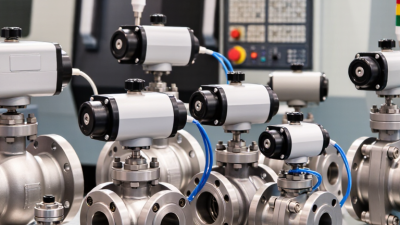
An automated valve combines a valve body, an actuator, and a control interface. It regulates flow without requiring an operator to turn a handwheel each time. Actuators may be electric, pneumatic, or hydraulic; the right option depends on site utilities, response time, and operating conditions. Small details matter.

In water treatment, automated valves can direct flow between filtration stages and isolate equipment during maintenance. In process plants, they may meter liquids, control steam, or shut a line when sensors detect an unusual condition. Some valves simply open or close. Others adjust gradually to help maintain pressure, temperature, or flow rate. Position feedback can tell a control system whether the valve reached its commanded position.

Selection calls for more than matching pipe size. Engineers also consider fluid compatibility, pressure and temperature limits, cycling frequency, and the consequences of a failed position. A valve handling clean water may face very different demands from one exposed to abrasive particles. The diagram is incomplete. A neat specification sheet can miss awkward access, wiring routes, or air-supply interruptions, so those conditions deserve a site check. Testing the actuator and control signal together can reveal problems before installation becomes difficult.

How to Assess Automated Valve Manufacturers in China

Assessing automated valve manufacturers in China starts with evidence, not polished catalogues. Request dimensional drawings, material certificates, actuator specifications, and test records for the exact valve configuration you plan to buy. Details matter. Check whether the manufacturer can explain how actuator torque matches valve pressure, size, and operating conditions. Ask how it tests leakage, switching cycles, and fail-safe functions. A capable engineering team should answer clearly and flag limits rather than promise that one design fits every site.

Review quality controls beyond a single inspection report. Ask how parts are identified, how production changes are recorded, and what happens when a test fails. If possible, compare documents with a sample unit or observe a factory test. Look for consistent markings, clean assembly, and measured results—not just a pass stamp. Ask about spare parts, commissioning guidance, and response times after delivery. Small gaps count. A paperwork review can still miss problems on a real line, and a brief visit may show only one production day. Treat unanswered questions as items to verify, not automatic proof of poor quality.

What Are the Top 10 Automated Valve Manufacturers in China? — How to Assess Automated Valve Manufacturers in China

Use these ten criteria to compare manufacturers consistently. The suggested weights are an evaluation framework, not market statistics or a ranking of specific companies.

# Assessment dimension Suggested weight What to verify Useful evidence Warning signs
1 Application and standards fit 18% Confirm the valve type, pressure class, temperature range, media, connection, and applicable industry requirements match the project. A project-specific datasheet and a standards list identifying the applicable edition and scope. For example, IEC 60534 covers industrial-process control valves; it is not a universal standard for every valve type. A general claim of “international standard” without naming the standard or showing how it applies to the offered product.
2 Valve performance and sizing 15% Check flow capacity, pressure drop, shutoff requirements, leakage class where specified, and suitability for the operating conditions. Sizing calculations, pressure-temperature ratings, flow characteristic data, and test records tied to the proposed model and configuration. A selection based only on nominal pipe size, with no operating-point or pressure-drop calculation.
3 Actuator and control compatibility 14% Verify actuator output torque or thrust across the full operating range, fail position, duty cycle, control signal, and available power supply. Actuator sizing calculations, interface drawings, wiring or pneumatic diagrams, and confirmation of the control system’s signal requirements. ISO 5211 specifies mounting interfaces for part-turn actuators; it does not by itself establish actuator sizing. No torque margin calculation, unclear fail-safe behavior, or a claimed direct fit without interface details.
4 Testing and inspection 12% Establish which inspections and tests are included, their acceptance criteria, and whether the complete automated assembly is tested. A quality inspection and test plan, pressure and seat-test records where applicable, functional test results, and a sample report linked to a serial number or production batch. Only generic certificates or test reports that cannot be matched to the supplied product.
5 Materials and traceability 10% Match body, trim, seals, and fasteners to the specified fluid, corrosion conditions, and temperature range; confirm traceability expectations. Material specifications, heat or batch traceability, and inspection certificates such as EN 10204 Type 3.1 when required by the purchase specification. Substitution of materials without approval or certificates that do not identify the relevant heat or batch.
6 Certifications and hazardous-area suitability 8% Check that certificates cover the exact product, configuration, manufacturing site, and destination-market requirements. Current certificates with verifiable scope. Where required, check actuator hazardous-area approvals and enclosure ratings against the installation specification; IP ratings are defined by IEC 60529. A certificate for a different product or site, an expired document, or treating an enclosure rating as proof of hazardous-area approval.
7 Engineering and customization capability 7% Assess ability to provide suitable materials, interfaces, control accessories, documentation, and project-specific configuration. Approved drawings, a documented change-control process, technical submittals, and written confirmation of deviations from the specification. Unapproved design changes or unclear responsibility for integration between the valve, actuator, and accessories.
8 Production capacity and delivery planning 6% Evaluate the proposed production schedule, component availability, inspection hold points, and shipment plan against the required delivery date. A milestone-based schedule, stated assumptions, and progress-reporting arrangements for the specific order. A delivery promise with no schedule, no allowance for testing, or unclear shipment terms.
9 After-sales service and spare parts 5% Clarify warranty terms, technical support channels, spare-parts availability, and troubleshooting responsibilities. Written warranty conditions, recommended spare-parts lists, maintenance instructions, and named support contacts or service arrangements. Warranty exclusions that are not disclosed before purchase or no clear method for obtaining replacement parts.
10 Commercial transparency and total cost 5% Compare the complete supply scope, payment terms, delivery basis, documentation, commissioning, and lifecycle-related costs. An itemized quotation with clearly stated inclusions, exclusions, currency, delivery terms, and validity period. An unusually low headline price that omits actuators, accessories, inspection, documentation, or shipping.
Total suggested weight 100% Score each supplier against the same project specification and evidence requirements.

Profiles of Ten Leading Automated Valve Manufacturers in China

China’s automated valve sector includes manufacturers with very different strengths; a useful profile looks beyond production volume. One group focuses on control valves for accurate flow regulation. Another builds electric-actuated valves for remote operation. Pneumatic-valve makers often serve fast-cycle production lines, while process-industry suppliers tailor assemblies to heat, pressure, and corrosive media. Details matter.

Water-treatment specialists commonly offer compact valves and corrosion-resistant materials. Power-sector manufacturers tend to emphasize dependable shutoff and actuator coordination. High-pressure suppliers focus on body integrity, sealing, and documented testing. Marine-oriented makers design for vibration, salt exposure, and limited installation space. These are distinct capabilities, not interchangeable labels.

Other profiles include manufacturers developing smart valve systems with position feedback and fault alerts, and custom-engineering firms that adapt interfaces, materials, and control logic to project drawings. Buyers should compare published pressure and temperature ranges, leakage classes, test records, and after-sales support. Ask for sample inspection reports and clarify whether actuator and valve testing happens together. A polished catalogue is not proof. Some suppliers may have impressive specifications but limited evidence from comparable installations; that deserves a closer look. Availability, lead time, and customization depth can vary by order.

Comparing Manufacturers by Products, Industries, and Capabilities

Comparing China’s top automated valve manufacturers requires more than counting product models. A useful review checks valve type, actuator range, control options, and support for installation. Ball, butterfly, gate, and control valves serve different operating needs. A water-treatment line may prioritize corrosion resistance, while a chemical process may require careful material selection and stable control. Fit matters.

Industry experience also changes what “capable” means. Power plants, food facilities, municipal systems, and general manufacturing use different pressure ranges, media, and maintenance routines. Buyers should examine published specifications, test documentation, and whether a supplier can explain its selection clearly. Ask how the actuator performs during frequent cycling, not only under ideal conditions. Small details matter.

Manufacturing capability includes machining quality, assembly checks, customization, and access to replacement parts. A broad catalogue can be useful, but it does not prove that every model suits demanding service. Site conditions may expose gaps that a catalogue misses. Comparing ten suppliers side by side can reveal differences in product depth and technical support, yet public information is uneven. Some claims need direct verification, and that makes rankings imperfect. A careful comparison should distinguish documented capabilities from marketing language.

Key Factors for Choosing a Chinese Automated Valve Supplier

Choosing a Chinese automated valve supplier requires more than comparing prices or catalog sizes. Grand View Research estimated the global automated valve market at about USD 26.5 billion in 2023, reflecting growing demand across process industries. That growth makes careful qualification important. Check whether the supplier can match valve materials, pressure ratings, actuator torque, and control signals to your actual service conditions. Ask for inspection records, material traceability, and documented testing against relevant standards such as ISO 5208 or API 598. A polished brochure is not proof.

Tips: Request a sample test report and a clear delivery schedule. Confirm who handles actuator calibration and spare parts. Small details matter.

Before placing a large order, review a recent production batch or arrange a factory audit. Look closely at machining finish, nameplate information, and how test results connect to each serial number. Ask how the supplier manages design changes and quality issues after shipment. Compare response times, not just quoted lead times. A tidy audit still cannot predict every site condition. I would also ask one uncomfortable question: what happens when the first shipment fails acceptance? Reliable suppliers answer with a process, records, and accountable contacts—not vague reassurance.

Back To Top