skip to Main Content
A Piglets Nursery House is the controlled transition area between weaning and the growing-finishing stage. It supports young pigs after separation from the sow, when their digestive systems and immune defenses remain sensitive. The room usually contains raised or solid flooring, sheltered resting areas, automatic feeders, drinker nipples, and adjustable ventilation. Temperature matters. A cold draft can reduce resting time and increase feed waste. Excess heat can quickly lower feed intake.
The USDA APHIS Swine 2021 study highlights the importance of housing, health monitoring, and management practices in U.S. swine production. Its findings support a practical principle: nursery design must protect piglets while allowing workers to observe them easily. The AHDB Pig Cost of Production report also identifies feed as a major production expense. That makes accurate feeding and low wastage essential. Small changes matter. A blocked drinker can affect an entire pen.
Most modern nursery houses use batch management, cleaning between groups, and careful entry procedures. Ventilation controllers remove moisture and harmful gases, while heaters maintain a stable microclimate. Staff check appetite, manure consistency, coughing, skin condition, and body size every day. Records turn these observations into evidence. The National Pork Board’s Pork Quality Assurance materials also emphasize responsible care, medication oversight, and documented procedures.
Still, no building solves every problem. Poor stocking density, uneven temperatures, or rushed cleaning can weaken performance. This article explains how a Piglets Nursery House works, what equipment it needs, and where practical management often falls short. The goal is not perfection. It is a safer, measurable, and more consistent environment for young pigs.
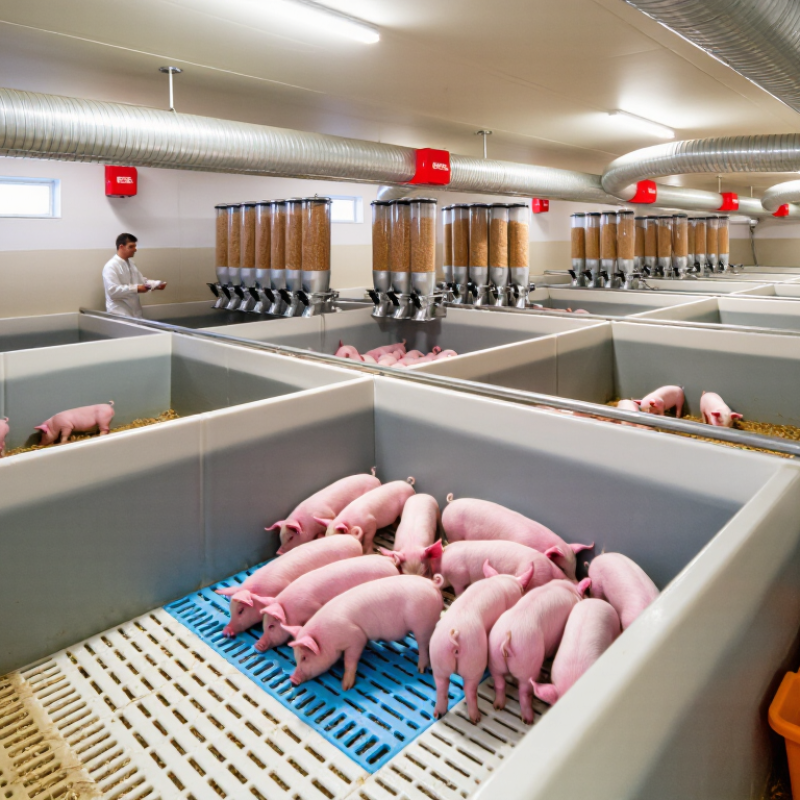
A piglet nursery house is the controlled stage between the farrowing room and the grower barn. Piglets usually enter at 21–28 days, after weaning removes milk, warmth, and familiar contact. The move is practical, not automatic. USDA APHIS’s Swine 2021 report places typical U.S. weaning near three to four weeks and identifies preweaning mortality at roughly 15% in surveyed herds. These figures show why the transition deserves careful planning.
Inside the nursery, lightweight pigs share clean pens with dry floors, stable ventilation, and easily reached feeders. Temperatures often begin near 28–30°C, then decrease as piglets grow and produce more body heat. Fresh water must flow immediately. Feed changes should be gradual. Sudden changes can reduce intake and increase digestive problems. Pens are commonly managed using all-in/all-out routines, followed by washing, drying, and disinfection. The FAO’s Good Practices for Biosecurity in the Pig Sector emphasizes separation, cleaning, and movement control as basic risk-reduction measures.
The nursery also supports close observation. A healthy piglet should stand, drink, and eat without hesitation. Watch the corners. Cold or weak pigs often cluster there. Yet 21 days is not a magic switch. Body weight, health, litter condition, and transport stress matter too. In practice, a clean room can still fail when airflow is overlooked. That is the part many simple explanations miss.
A piglet nursery house is a controlled space where recently weaned piglets grow before entering the finishing stage. Its layout should support calm movement, easy observation, and fast cleaning. Pens are commonly arranged in short rows, with clear service alleys between them. This prevents workers from stepping into every pen during routine checks.
Allowing 0.3–0.4 m² per piglet gives each animal room to rest, turn, and reach resources without constant crowding. The lower figure may work for smaller piglets and excellent ventilation. Larger animals or warm conditions may require more space. That target is useful, but not sacred.
Pens should have dry resting areas and surfaces that can be washed thoroughly. Feeders need enough access points to reduce pushing, especially during the first week after weaning. Feed should remain clean and fresh, not scattered across wet flooring. Drinkers should sit at a comfortable height and provide a steady flow without flooding the pen. Check them by hand every day.
Small details matter. A blocked drinker can affect the whole group quickly. Poor airflow can leave corners damp, even when the center looks dry. Adjustable ventilation helps, but settings often need correction as weather changes. I would measure water flow, inspect manure patterns, and watch piglet behavior rather than trusting equipment settings alone. Quiet piglets with full bellies are encouraging. Uneven growth means the layout may need another review.
| Nursery Component | Recommended Dimension or Capacity | How It Works | Practical Management Notes |
|---|---|---|---|
| Purpose of the nursery house | Post-weaning housing, commonly from about 3–8 weeks of age until approximately 20–30 kg live weight | Provides a controlled environment for temperature management, feeding, watering, health observation, and gradual growth after weaning | Use an all-in/all-out flow where possible, with cleaning and disinfection between groups |
| Stocking space | 0.3–0.4 m² per piglet, adjusted for piglet size, climate, flooring, and ventilation | Gives each piglet enough room to rest, eat, drink, and move without excessive competition | Reduce stocking density when heat stress, poor ventilation, wet floors, or larger finishing weights are expected |
| Pen group size | Often 15–30 piglets per pen; keep groups as uniform as practical | Smaller, evenly sized groups make it easier to monitor feed intake, health, and social behavior | Avoid mixing unfamiliar groups unless necessary; separate markedly smaller or compromised piglets |
| Pen layout | Rectangular pens with a clear resting area, feeding area, and drinking area; service alleys should allow safe inspection | Functional zoning encourages piglets to rest in the dry area and use separate locations for feeding and manure deposition | Keep feeders and drinkers accessible without blocking the main walkway or creating dead corners |
| Pen partitions | Smooth, durable partitions commonly about 0.6–0.8 m high | Provide group separation while allowing staff to observe piglets and clean the pen efficiently | Use corrosion-resistant materials with no sharp edges, protrusions, or gaps that can trap legs |
| Flooring | Partially or fully slatted flooring with good traction; avoid excessively wide openings | Allows manure and urine to pass below the animal area, helping keep the resting surface cleaner and drier | Inspect for broken slats, slippery surfaces, blocked channels, and conditions that may injure feet or legs |
| Feeder access | Provide enough feeding space for the selected feeder type; trough systems should allow simultaneous access or minimize waiting | Dry or liquid feed is delivered in controlled amounts so piglets can eat frequently during the day | Set feed flow to reduce bridging, dust, feed wastage, and accumulation of stale feed |
| Feeder placement | Position on a firm, well-drained surface, away from the main resting zone and direct manure flow | Separating feed from waste helps maintain hygiene and encourages normal feeding behavior | Check feeder adjustment daily during transitions because young piglets are sensitive to poor feed availability |
| Drinkers | At least two drinker points per pen are commonly used to provide backup and reduce competition; exact numbers depend on group size and system design | Nipple, cup, or bowl drinkers supply fresh water whenever piglets activate or access the valve | Place drinkers at a height piglets can reach comfortably and inspect water flow, leaks, and cleanliness every day |
| Water quality and flow | Clean, palatable water with adequate flow for the age and number of piglets | Reliable water access supports feed intake, thermoregulation, digestion, and medication delivery when prescribed | Flush lines when required and test water quality according to local veterinary or agricultural guidance |
| Temperature control | A warm zone is typically needed after weaning; temperature is gradually reduced as piglets grow and produce more body heat | Heating systems, insulation, and ventilation work together to maintain a stable pig-level environment | Observe piglet behavior: huddling may indicate cold stress, while spreading out and panting may indicate overheating |
| Ventilation | Adjustable air inlets and mechanical or natural exhaust sized for both minimum and maximum seasonal ventilation | Removes moisture, heat, dust, and gases while supplying fresh air without creating drafts at piglet level | Monitor humidity, condensation, odor, and air movement; minimum ventilation must continue in cold weather |
| Lighting and inspection | Even lighting that allows staff to see feed, water, manure, injuries, and abnormal behavior | Good visibility supports routine checks and early identification of sick or injured piglets | Inspect each pen at least daily, including appetite, coughing, diarrhea, lameness, and access to water |
| Cleaning and biosecurity | Cleanable surfaces, dedicated tools where practical, and a defined entry and exit routine | Removal of organic matter followed by washing, disinfection, and drying reduces pathogen pressure between groups | Follow product labels and veterinary guidance; disinfectants are less effective when surfaces are not cleaned first |
| Example pen calculation | 20 piglets × 0.35 m² = 7.0 m² of usable pen area | A pen measuring approximately 2.5 m × 2.8 m provides about 7.0 m² before accounting for fixed equipment and access considerations | Confirm local welfare regulations and adjust the final layout for equipment footprints, walkways, and expected finishing weight |
Note: Dimensions are practical planning ranges rather than universal requirements. Final nursery design should follow applicable animal-welfare regulations, veterinary recommendations, climate conditions, and the expected weight of the piglets.
A piglets nursery house provides a controlled space for young pigs after weaning. Climate control is central to its daily operation. Newly housed piglets usually need temperatures between 28 and 30°C, especially during the first days.
Measure temperature at piglet level, not near the ceiling. A wall reading can mislead you. Use reliable thermometers in several areas, including the resting zone. Check them at different times because sunlight, ventilation, and stocking density can change conditions quickly. The floor should feel dry, and air movement should remain gentle. Cold drafts can stress piglets even when the thermometer shows 29°C. Watch the piglets.
As the animals grow, reduce the temperature gradually each week, often by about 1–2°C when their condition allows. Their behavior gives useful evidence. Piglets pressed tightly together may feel cold. Piglets spread apart, breathe quickly, or avoid the heated area may be too warm. Healthy groups usually rest calmly with space between bodies. Feed intake, activity, and stool consistency also help confirm comfort. Small errors matter.
A nursery manager should record temperatures, observations, and adjustments every day. This creates a practical history for future batches and supports consistent decisions. However, a fixed cooling schedule is not enough. Weather changes, ventilation settings, floor moisture, and piglet health can require slower adjustments. Experience helps, but careful records prevent confidence from becoming guesswork.
A piglet nursery house is a temperature-controlled facility that protects recently weaned piglets while they adapt to solid feed and a new environment. The recommended temperature starts at approximately 28–30°C and is reduced gradually as piglets grow and develop better temperature regulation.
Climate-control example: Begin at 29°C during the first week after weaning and reduce the setpoint by about 1°C each week until reaching approximately 24°C. Actual settings should be adjusted according to piglet age, body weight, flooring, ventilation, and observed comfort.
A piglet nursery house shelters recently weaned pigs during their most sensitive growth stage. Daily work begins before sunrise. Staff inspect lying patterns, coughing, manure consistency, and feed activity. These small clues often reveal trouble earlier than formal records. A perfect routine is unrealistic, but missed observations can become expensive quickly.
Feeding must remain gradual and consistent. Fresh starter feed should be available in clean feeders, without excessive dust or spoiled leftovers. The 2012 Nutrient Requirements of Swine report indicates that nursery pigs commonly need about two to three litres of water per kilogram of feed. Workers should test drinkers daily and adjust height as piglets grow. Wet pen corners often indicate leakage, not poor animal behavior. That detail is easy to miss.
Ventilation removes moisture, heat, and harmful gases while preventing drafts at pig level. AHDB’s Pig Environment Guide places newly weaned piglets near 26–30°C, with temperatures reduced gradually as they develop. Sensors help, but a hand check still matters. Hygiene requires removing manure, washing surfaces, applying an approved disinfectant, and allowing proper drying between groups. The National Pork Board’s 2023 Swine Care Handbook emphasizes clean facilities, continuous water access, and routine health observation. In practice, drying time is often shortened when schedules become tight. That is a weak point worth correcting.
A piglet nursery house supports pigs after weaning, usually from about 7 to 25 kg. It controls temperature, airflow, water access, and feeding conditions. At 15–25 kg, growth monitoring becomes especially useful. Small problems can quickly become uneven backs, empty feeders, or coughing pens.
Teagasc’s commercial pig research commonly reports nursery average daily gain near 450–650 grams, depending on diet, health, and housing. Feed conversion often remains around 1.4–1.7 during this stage. These are reference ranges, not promises.
A 20 kg pig should be weighed weekly, preferably with the same calibrated platform scale. Record starting weight, ending weight, feed intake, mortality, removals, and treatment days. Also check weight variation. A pen averaging 20 kg may still contain pigs weighing 15 and 25 kg.
USDA APHIS swine health data highlights the importance of respiratory and digestive disease monitoring in young pigs. In practice, observe morning activity, water nipples, manure consistency, and fresh-air movement. A damp corner may signal leaking equipment or poor drainage. A quiet pig is not always a healthy pig. It may simply be cold, injured, or losing competition at the feeder. I would also review records twice weekly, because delayed entries weaken the value of accurate measurements. Health scoring can be imperfect, but consistent observations reveal trends before final nursery weights do.
