What is Knife Edge Conveyor and How Does It Benefit You?
The Knife Edge Conveyor is revolutionizing material handling systems. It serves industries where precise product movement is essential. According to a report by Market Research Future, the global conveyor system market is expected to reach USD 7 billion by 2025, with knife edge conveyors playing a significant role.
These conveyors are designed to handle bulk materials with agility. Their unique design allows for smooth transitions and minimizes product damage. They are suitable for diverse applications, particularly in food processing and packaging sectors. However, businesses must evaluate whether these systems meet specific needs.
The installation and maintenance of Knife Edge Conveyors can require an initial investment. Yet, the long-term benefits often outweigh these costs. Improved efficiency and reduced labor efforts lead to notable savings. Understanding both the advantages and limitations of Knife Edge Conveyors is essential for informed decision-making in automation.
What is a Knife Edge Conveyor and Its Unique Design Features
Knife edge conveyors are specialized systems designed to handle small and irregularly shaped products. Their unique design enhances versatility in various industrial applications, from packaging to food processing. These conveyors often boast a narrow, flat profile. This structure allows them to work effectively in tight spaces where traditional conveyors may struggle.
One of the key features of knife edge conveyors is their ability to transition smoothly at corners. This design minimizes product damage and allows continuous flow without stopping. Research indicates that the efficiency of material handling systems increases by up to 30% when using optimized conveyor designs. This enhancement can lead to significant cost savings over time.
However, installing and maintaining knife edge conveyors can pose challenges. Regular maintenance is crucial to ensure optimal performance. Workers must be trained to handle potential misalignments and wear issues. Data suggests that roughly 25% of conveyor system downtime is due to inadequate maintenance practices. This highlights the need for continuous improvement in operational procedures within various industries.
Applications of Knife Edge Conveyors in Various Industries
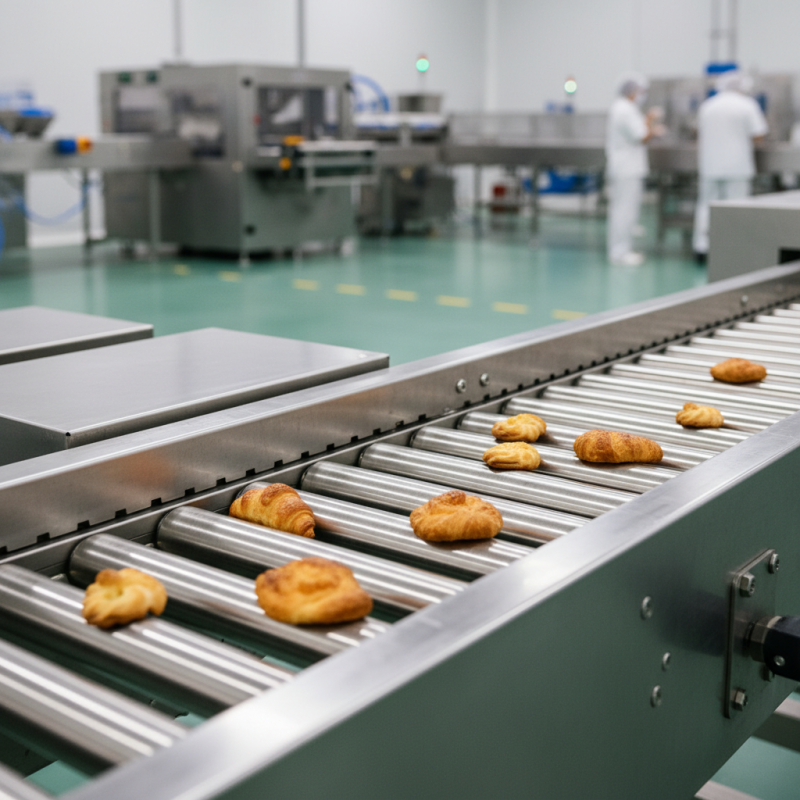
Knife edge conveyors are essential in several industries due to their unique design and capabilities. These conveyors feature a narrow and smooth edge that allows them to handle small, delicate products. Industries like food processing, packaging, and manufacturing benefit significantly from this technology. For instance, in food processing, knife edge conveyors can efficiently move fragile items like pastries without damaging them. This precision is crucial in maintaining product quality and consumer satisfaction.
Moreover, in the packaging industry, these conveyors support rapid and efficient movement of various items. They facilitate the smooth flow of products through different stages of processing. This leads to increased productivity and reduced labor costs. However, some challenges arise. Regular maintenance is necessary to ensure these conveyors operate optimally. Any wear and tear can affect their performance. Thus, operators must be vigilant and prepared to address potential issues promptly.
In manufacturing, knife edge conveyors improve overall efficiency. They enable seamless transitions between different production lines. As products shift from one stage to another, the risk of damage is minimal. Yet, companies should evaluate if this conveyor type aligns with their specific needs. Some may find alternative systems more suitable, depending on their unique production challenges and objectives.
Advantages of Knife Edge Conveyors Over Traditional Conveyor Systems
Knife edge conveyors are designed to handle products that feature small or irregular shapes. Unlike traditional conveyor systems, these conveyors provide a streamlined surface. This design minimizes product jams and ensures a smooth transfer from one station to another. The placement of the belt on the edge simplifies the movement of items, especially in tight spaces.
One clear advantage of knife edge conveyors is their efficiency in moving heavy or bulky items. Their unique construction allows for sharper turns and transitions. This feature is crucial in factories where space is often limited. However, not every application benefits from this system. It may not be suitable for larger or lighter products. Understanding your specific needs is vital to making the right choice.
The durability of knife edge conveyors cannot be overlooked. They are built to withstand heavy use and can often carry a higher load than traditional systems. Maintenance, though, can pose challenges. Operators must ensure proper alignment and tension for optimal performance. Frequent checks are recommended to avoid breakdowns. Ignoring these details can lead to costly downtime that affects productivity.
Key Performance Metrics for Knife Edge Conveyors and Industry Standards
Knife edge conveyors are designed for transporting products with precise handling. Their performance is essential to ensure efficiency in various industries. Key performance metrics include throughput, energy consumption, and maintenance frequency. These metrics help operators monitor and improve performance effectively.
Throughput refers to the amount of material a conveyor can move within a specific time frame. Tracking this helps identify bottlenecks. Energy consumption measures how much power is required during operation. Lower energy usage can lead to significant cost savings. Maintenance frequency indicates how often repairs are needed. A high frequency may point to design flaws or quality issues.
Compliance with industry standards is crucial. Standards help ensure safety and operational efficiency. Companies often struggle to meet these requirements. The design of knife edge conveyors should facilitate easy cleaning and minimal product loss. Observing these metrics and standards can significantly enhance productivity. Yet, it requires constant evaluation and improvement.
What is Knife Edge Conveyor and How Does It Benefit You? - Key Performance Metrics for Knife Edge Conveyors and Industry Standards
| Metric | Description | Standard Value | Industry Relevance |
| Belt Speed | The speed at which the conveyor belt operates. | 30-120 ft/min | High throughput applications. |
| Load Capacity | Maximum weight the conveyor can handle. | 500-2000 lbs | Heavy-duty applications in manufacturing. |
| Material Compatibility | Types of materials that can be transported. | Metal, plastic, paper | Versatility in different industries. |
| Efficiency Rating | Percentage of time the conveyor operates at full capacity without interruption. | >90% | Critical for reducing downtime in production. |
| Safety Compliance | Adherence to safety standards. | OSHA, ANSI | Ensures safe operation for workers. |
| Noise Level | The sound produced during operation. | < 75 dB | Maintains a comfortable working environment. |
Future Trends and Innovations in Knife Edge Conveyor Technology
Knife edge conveyors represent a significant evolution in material handling technology. Their design allows for efficient movement of products that require sharp turns without compromising the integrity of the items being transported. Innovations in this area focus on modular designs, improved belt materials, and enhanced energy efficiency. As sustainability becomes a crucial concern, manufacturers are developing conveyors that minimize energy consumption and reduce waste.
One of the emerging trends is the integration of smart technology. This allows for real-time monitoring and predictive maintenance. Sensors can track the performance of the conveyor, alerting operators to potential issues before they escalate. While these advancements promote efficiency, they also introduce complexity. Adapting to new systems may require additional training for staff, which can be a double-edged sword.
Another innovation on the horizon is modularity. Modular knife edge conveyors can be easily adjusted or expanded to meet changing operational needs. This flexibility makes them attractive to businesses that evolve rapidly. However, challenges remain. Balancing adaptability with stability is a continuous struggle. As companies strive to innovate, they must ensure that their choices do not compromise safety or performance.
 skip to Main Content
