skip to Main Content

How to Choose a Commercial Spray Dryer?

Choosing a Commercial Spray Dryer is not just a matter of comparing price tags or production capacity. The right system must suit the product, the facility, and the people who will operate it. A milk powder line, for example, may need different inlet conditions and atomization options than a plant-based ingredient. Even small changes in feed viscosity can affect droplet size, drying time, and the final powder’s flow. Details matter.

Start with the material and the required output. Consider moisture targets, heat sensitivity, batch size, and whether the powder must dissolve quickly or remain free-flowing. Then compare dryer configurations, atomizers, air-handling systems, and cleaning access. Ask manufacturers how they establish capacity estimates and what test data supports them. A sample run can reveal practical issues that a specification sheet may not show. It is not a magic answer, but it helps.

Reliable selection also depends on operating realities. Check energy use, routine maintenance, spare-parts availability, and the controls operators will use each shift. Request clear documentation, installation requirements, and references from facilities processing similar materials. A low purchase price can look attractive, until a hard-to-clean component slows production. And the “best” dryer may still be the wrong fit. This guide explains how to assess these factors, compare suppliers, and make a decision grounded in product trials and documented performance—not guesswork.
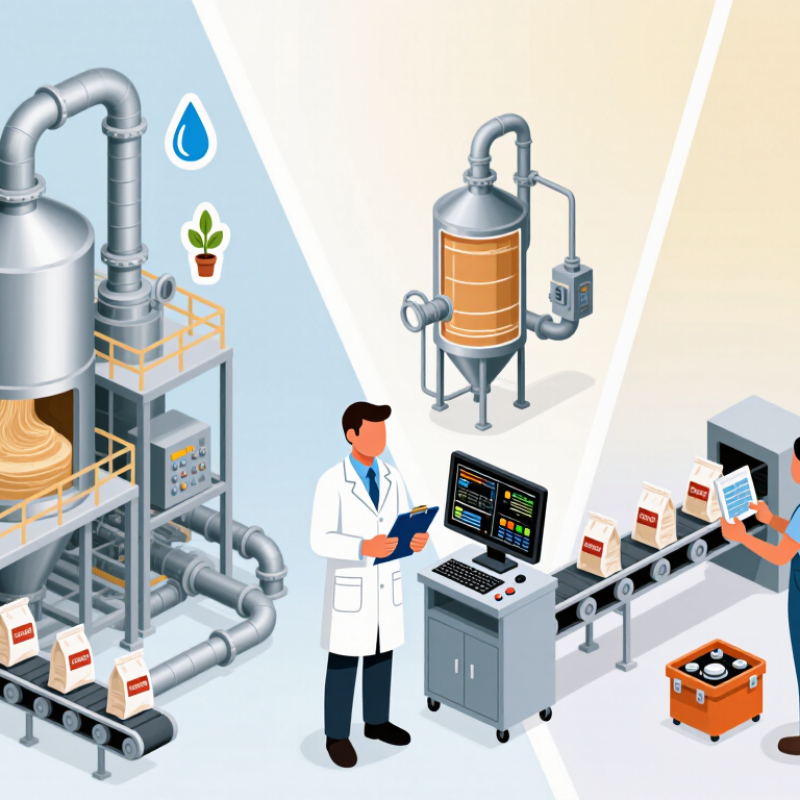
How to Choose a Commercial Spray Dryer?

Define Production Goals and Required Output Capacity

Before comparing commercial spray dryers, define the product you need to make and how much must leave the line. Set a target in kilograms of finished powder per hour or per shift, then note the required residual moisture and acceptable particle properties. A dryer’s feed rate is not the same as its powder output: feed solids, collection efficiency, and final moisture all affect usable yield. Put those figures on one worksheet. It helps.

Use actual production records where possible. Include planned operating hours, cleaning and changeover time, and seasonal demand. Plan for peaks. A unit sized only for average demand may create a bottleneck when orders rise, while excessive capacity can add cost and run inefficiently at low loads. Also check whether the stated capacity assumes a particular feed concentration or product type; supplier figures may rely on conditions unlike yours.

Allow for variation in viscosity, heat sensitivity, and inlet solids. These can change atomization, drying behavior, and the evaporation load. A small feed-composition shift may matter more than expected. If your data are incomplete, mark assumptions clearly and validate them with representative feed trials or a pilot test. I would not treat one successful trial as proof of steady commercial output; longer runs can reveal wall deposits, shutdown losses, and inconsistent powder recovery. Tie the final capacity target to a realistic production schedule, not just a best-case number.

Assess Feed Properties and Desired Powder Characteristics

A commercial spray dryer should match the feed, not just the planned production rate. Record solids content, viscosity, density, and temperature before comparing equipment. A thin liquid and a thick slurry behave differently in pumps and atomizers. Check whether the feed contains suspended particles that could block a nozzle. Measure how its viscosity changes with temperature, too. Small details matter.

Heat sensitivity can shape the whole process. If a feed loses quality quickly, shorter exposure and careful outlet-temperature control may be important. Confirm these choices through trials rather than relying on a supplier’s general performance claims. Ask for data using a representative sample, and note how the sample was prepared. It is easy to overlook that point.

Define the powder you need in measurable terms: target moisture, particle size, bulk density, flowability, and solubility. A fine powder may dissolve quickly but create more dust or handle poorly. A denser particle may flow well yet dissolve more slowly. There is no perfect setting for every product. Test the powder under realistic storage and handling conditions, then compare results with your actual specifications. If the feed varies between batches, leave room for adjustment in the dryer design. That trade-off deserves a second look.

Compare Spray Dryer Designs and Atomization Methods

A commercial spray dryer’s design should match the powder’s heat sensitivity, target moisture, and production rate. Single-stage units are straightforward, but multi-stage systems can allow more gentle final drying and better control of residual moisture. A tall chamber needs enough space for droplets to dry before reaching the walls. That detail matters: sticky deposits can reduce output and increase cleaning time. No design is automatically best.

Atomization shapes droplet size and powder texture. Pressure nozzles are robust and often suit larger production lines; rotary atomizers can handle changing feed rates and create a broad droplet distribution. Two-fluid nozzles offer flexibility at smaller scales, though compressed-air demand can raise operating costs. The European Commission’s Food, Drink and Milk Industries BREF discusses spray drying as a significant thermal process in powder production. For a useful energy baseline, NIST reports water’s latent heat near 2.26 MJ per kilogram at its boiling point. Actual dryer demand is higher because exhaust air and equipment also carry heat losses. Test data matters.

Tips: Ask suppliers for trials using your actual feed. Compare particle size, wall buildup, moisture variation, and energy use—not just rated capacity. Check whether results came from steady operation. A short test can miss fouling.

Evaluate Energy Use, Controls, Safety, and Cleaning Needs

When choosing a commercial spray dryer, compare energy use under your actual operating conditions—not just the rated capacity. The U.S. Department of Energy’s 2015 Manufacturing Energy and Carbon Footprints report estimates that process heating used about 51% of U.S. manufacturing energy in 2010. That figure is not spray-dryer-specific, but it shows why inlet temperature, exhaust heat, insulation, and feed consistency deserve close attention. Ask suppliers for energy data at your target moisture level and throughput. A polished efficiency figure can hide a mismatch with your product.

Controls should show inlet and outlet temperatures, airflow, feed rate, and alarms clearly. Operators need to spot a drifting outlet temperature before powder quality changes. For safety, review dust collection, grounding, pressure relief, and access for inspection with qualified site staff. Confirm the design against applicable standards and your facility’s hazard assessment. Cleaning matters too: inspect the chamber, ducts, and product-contact surfaces for dead zones where residue can cling. A fast cleaning cycle is useful only if it reaches every surface.

Tips: Request a witnessed water or product trial, then record energy use, cleaning time, and operator adjustments. Keep the trial notes. They may reveal a control setting or awkward access point that brochures miss.

Check Installation Requirements, Compliance, and Supplier Support

A commercial spray dryer must fit the plant, not just the product specification. Check the route from the delivery entrance to the installation area. Measure doorways, ceiling height, turning space, and floor loading. A dryer may fit on a drawing but still be difficult to move past a low beam. Confirm electrical supply, compressed air, water, drainage, and exhaust connections with your site team. Small details matter. Ask how the system handles cleaning, powder collection, and access for routine maintenance.

Tips: Before requesting quotes, send suppliers a site plan, utility details, and product requirements. Ask them to identify assumptions in writing. A second site walk can catch missed constraints.

Compliance depends on the product, process, and where the equipment will operate. Confirm applicable hygiene, worker-safety, emissions, and documentation requirements with qualified local professionals. Do not rely on a generic compliance statement. Request drawings, material specifications, operating instructions, and records showing how the proposed configuration addresses your needs. Then assess supplier support: commissioning scope, operator training, spare-parts availability, and service response times. Ask who handles troubleshooting after installation, and what information they need from your team. Even a careful checklist can miss something; keep room for a technical review before purchase. Ask for evidence.

How to Choose a Commercial Spray Dryer? - Check Installation Requirements, Compliance, and Supplier Support
Selection area What to check Useful information to request or confirm Why it matters
Process capacity and product Define the required water evaporation rate, feed characteristics, target powder properties, and operating schedule. Provide feed solids, viscosity, temperature limits, heat sensitivity, desired moisture, particle-size targets, and expected hours of operation. Dryer capacity and configuration depend on the feed and required product, not just the nominal powder output.
Building footprint and access Check the complete equipment layout, including the drying chamber, air-handling equipment, ducts, cyclone or bag filter, and service areas. Request general arrangement drawings, equipment dimensions, operating clearances, maintenance access needs, and shipping-piece dimensions. Equipment must fit the available floor area and be accessible for installation, inspection, and maintenance.
Building height and structural loads Confirm required clear height, floor loading, support points, and any loads from platforms, ducts, or elevated equipment. Have the supplier provide equipment weights, support reactions, platform details, and lifting or rigging requirements for review by the project engineer. Spray-dryer chambers and connected equipment can require substantial vertical space and structural coordination.
Utilities and services Verify the required electrical supply, heat source, compressed air, water, cooling, and cleaning services for the selected configuration. Request a utility schedule showing operating and peak demands, connection sizes, supply conditions, and any site-specific requirements. Utility availability can affect equipment selection, operating cost, and the installation schedule.
Exhaust and emissions Review exhaust-air volume, temperature, particulate collection, discharge location, and any site or permit limits. Ask for process and exhaust data, collection-system details, expected particulate performance, and information needed for local environmental review. Exhaust treatment and discharge requirements depend on the process, product, site, and applicable environmental rules.
Combustible dust and fire protection Determine whether the powder or process dust may present a combustible-dust hazard and what protection measures are appropriate. Request relevant dust-hazard assessment information and details on proposed prevention, isolation, venting, suppression, and housekeeping provisions, as applicable. Combustibility varies by material and conditions. A qualified assessment and applicable local codes and standards should guide the design.
Product-contact materials and hygiene Check wetted materials, surface finish, seals, dead spots, cleanability, and compatibility with the product and cleaning agents. Request material specifications, product-contact component lists, cleaning procedures, and details of any validated or documented clean-in-place features. Material compatibility and hygienic design help protect product quality and support effective cleaning.
Controls and electrical integration Review control-system functions, alarms, interlocks, instrumentation, data handling, and interfaces with the facility control system. Request a control-system description, instrument list, electrical drawings, alarm and interlock details, and communication-interface requirements. Clear control and interface requirements support safe operation and reduce integration issues during commissioning.
Regulatory and quality requirements Identify requirements for the product sector, installation location, pressure equipment, electrical systems, machinery, and environmental permits. Agree on the applicable jurisdiction and request relevant design documents, declarations, inspection records, and quality documentation for the project. Requirements vary by country, application, and equipment design; confirm them with the responsible authorities and qualified professionals.
Installation and commissioning Establish who is responsible for foundations, utilities, lifting, assembly, testing, operator training, and performance checks. Request an installation scope, project schedule, site-readiness checklist, commissioning plan, and clearly defined acceptance criteria. Defined responsibilities and acceptance criteria help prevent delays and clarify how successful start-up will be demonstrated.
Supplier support and spare parts Assess technical support availability, service response arrangements, training, documentation, and spare-parts provision. Ask for support coverage, service contact routes, recommended spare-parts lists, documentation language, training options, and warranty terms. Reliable support and access to critical parts can reduce downtime over the equipment’s operating life.
Total cost and lifecycle Compare purchase and installation costs with energy use, maintenance, consumables, cleaning, and expected operating requirements. Request stated assumptions for energy consumption, routine maintenance, wear parts, cleaning, and any exclusions in the commercial proposal. A consistent lifecycle comparison is more informative than purchase price alone.
Back To Top
