skip to Main Content

How to Choose the Right Cable Gland in 2026?

In 2026, choosing a Cable Gland is less about picking a metal fitting from a catalog. It is about matching the cable, enclosure, and working conditions. Small mismatches matter. A gland that fits the thread may still grip the cable poorly, admit moisture, or fail to manage armor correctly.

Start with the cable’s actual outside diameter, not a nominal size copied from an old drawing. Check the enclosure entry thread, cable construction, and available installation space. Then consider exposure to water, dust, vibration, temperature changes, oils, or sunlight. For armored cable, confirm that the gland design suits the armor type and provides the intended bonding or earthing path. For unarmored cable, strain relief and sealing may matter more. No single material or protection rating is right for every job. Details count.

A good selection also depends on the equipment maker’s instructions and the gland manufacturer’s tested specifications. Compare the stated ingress protection, temperature range, materials, and approved cable range; do not infer performance from appearance alone. In demanding locations, verify that certifications and installation methods match project requirements. Field conditions can be untidy. Cable jackets vary, and installers sometimes work with limited clearance, so a paper match deserves a physical check. I would not treat a familiar brand as a substitute for measurement. Measure it. The right choice is the one that fits securely, seals as intended, and remains serviceable after installation. A careful check now can prevent loose entries, damaged jackets, and avoidable maintenance later.
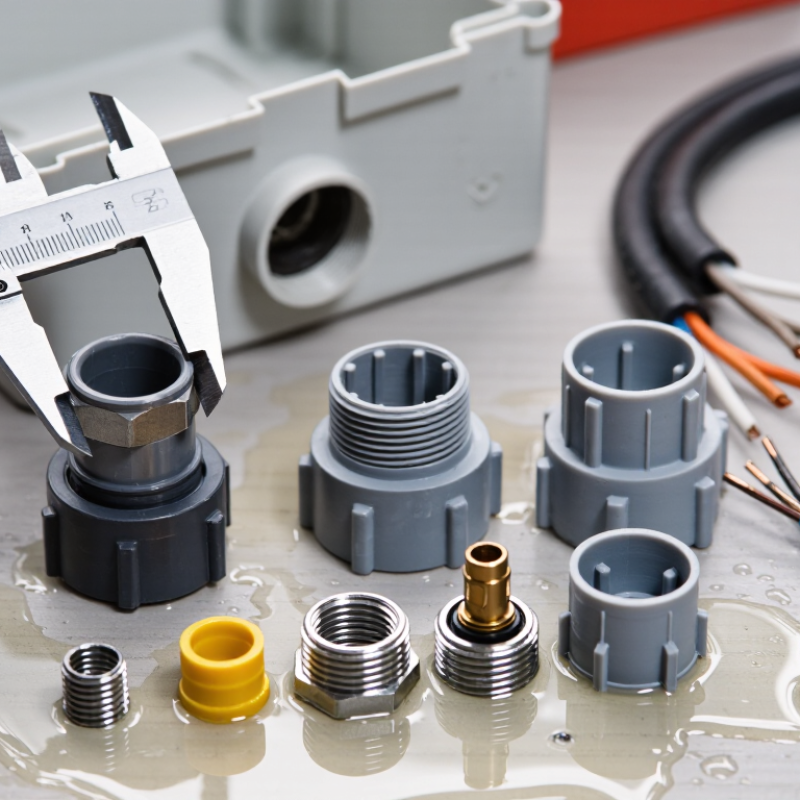
How to Choose the Right Cable Gland in 2026?

Identify the Cable Type, Diameter, and Installation Requirements

Start with the cable itself. Check whether it is unarmoured, braided, or steel-wire armoured, then measure its outside diameter across the jacket. Use the actual cable, not just a catalogue figure: jacket thickness and ovality can affect the seal. Measure it twice. Match the gland’s clamping range to the measured diameter, and confirm that its entry thread fits the enclosure. IEC 62444:2013 sets requirements and test methods for cable glands, making it a useful technical reference when comparing selection details.

Installation conditions matter just as much. For dust or water exposure, specify the required ingress protection rather than choosing by appearance. Under IEC 60529, IP6X denotes dust-tight protection, while IPX7 covers temporary immersion under defined test conditions; neither rating guarantees suitability for every cleaning method. Check temperature, UV exposure, chemicals, vibration, and strain relief, too. In a damp outdoor junction box, for example, a correctly sized seal may still fail if the gland material is incompatible with the cable jacket. That detail is easy to overlook. Also verify bonding and earthing requirements for armoured cable, and follow the equipment documentation and applicable installation standards.

How to Choose the Right Cable Gland in 2026

Start by identifying the cable construction and measuring its actual outer diameter. Then check the installation environment and select a gland whose sealing range and ingress protection meet the requirements of the complete assembly.

Reading the chart: IPX4 covers splashing water, IPX5 and IPX6 cover water jets, IPX7 covers temporary immersion (the standard test is typically 1 m for 30 minutes), IPX8 covers immersion under conditions agreed for the application, and IPX9 covers high-pressure, high-temperature water jets. These numerals are classification codes, not a linear measure of protection.

For selection, confirm the cable’s measured diameter falls within the gland’s specified sealing range. Also check cable type, entry thread, material compatibility, temperature, vibration, and whether the installed gland-and-cable assembly achieves the required IP rating. IPX addresses water protection; the first IP digit separately indicates protection against solid objects and dust.

Assess Environmental Conditions and Hazard Risks

Outdoor exposure is not one condition. A gland beside a coastal pump faces salt spray; one near a washdown line faces repeated water jets. IEC 60529 defines IP protection using two numerals: the first covers solid ingress, and the second covers water ingress. An IP6X rating means dust-tight, but it does not prove resistance to corrosion, UV, chemicals, or cable strain. Check the full exposure profile, including temperature swings and vibration.

Hazardous locations need a separate assessment. IEC 60079-10-1 classifies explosive gas atmospheres into Zones 0, 1, and 2, based on how often and how long an explosive atmosphere may occur. Match the gland’s certified protection method and equipment marking to the classified area; an IP rating alone is not explosion protection. Confirm the cable’s outer diameter against the gland’s clamping range. A seal that looks snug can still leak after thermal cycling. I would recheck that detail.

Tips: Record the lowest and highest operating temperatures, likely contaminants, washdown method, and hazardous-area zone before selection. Then verify the gland’s documented ratings and installation instructions against those conditions. If exposure is uncertain, get the site engineer to review the assumptions.

Select a Suitable Cable Gland Type and Material

Choosing a cable gland starts with the cable, enclosure, and environment—not the lowest price. Match the gland thread and clamping range to the cable’s actual outer diameter; a loose seal can admit moisture, while an over-tightened one may damage the sheath. For outdoor equipment, check the required IP rating against IEC 60529. IP6X means dust cannot enter, while water protection depends on the specific IPX rating and test conditions. Ratings are not interchangeable.

Material matters just as much. Nickel-plated brass suits many general industrial settings, while 316 stainless steel is often preferred near salt spray or corrosive washdowns. For lighter loads or specific chemical environments, a compatible polymer gland may be suitable. NACE International’s 2016 IMPACT study estimated corrosion costs at US$2.5 trillion globally, or 3.4% of global GDP. That figure is broad, but it shows why material selection deserves attention. A neat catalogue table can still mislead. Check temperature, chemical exposure, vibration, and enclosure material before ordering; mixed metals can create corrosion problems, and site conditions are easy to underestimate.

How to Choose the Right Cable Gland in 2026? — Select a Suitable Cable Gland Type and Material

Application or Requirement Suitable Gland Type Common Material Options Key Selection Checks Typical Use
General indoor industrial installation Standard compression gland Nickel-plated brass, stainless steel, or polyamide Match the cable’s outer diameter to the gland’s specified clamping range; confirm thread type and enclosure requirements. Control panels, machinery, and equipment enclosures in dry or mildly demanding locations.
Outdoor or washdown exposure Weatherproof compression gland with a suitable sealing arrangement Nickel-plated brass, stainless steel, or UV-stabilized polyamide Choose an assembly with an ingress-protection rating appropriate to the installation. The rating depends on the gland, cable, enclosure, and correct installation. Outdoor equipment, process areas, and locations exposed to rain, dust, or water jets.
Corrosive, marine, or hygienic environments Corrosion-resistant compression gland 316 stainless steel; compatible sealing materials such as EPDM or silicone where suitable Check chemical compatibility, cleaning agents, temperature range, and the required corrosion resistance for the specific environment. Coastal installations, food-processing areas, and chemical or water-treatment facilities.
Armored cable requiring mechanical retention and bonding Armored-cable gland designed for the cable’s armor construction Nickel-plated brass or stainless steel Identify the armor type and cable construction; verify armor clamping, earth continuity, cable diameter, and applicable installation requirements. Industrial power and instrumentation circuits using armored cable.
Explosive atmosphere or classified hazardous area Gland certified for the required protection concept and area classification; barrier type where the installation rules require it Typically nickel-plated brass or stainless steel, as specified by the product certification Match the certification to the zone or division, gas or dust group, temperature class, enclosure, cable type, and local regulations. Do not assume a standard gland is suitable. Oil and gas, chemical processing, and other classified hazardous locations.
Electromagnetic interference control EMC gland with a conductive contact or shield-termination design Nickel-plated brass or stainless steel Confirm compatibility with the cable shield or braid, the required frequency range, and the equipment’s bonding and earthing design. Drives, automation systems, instrumentation, and data installations sensitive to electrical interference.
Lightweight, non-corrosive installation Polyamide compression gland Polyamide (nylon), commonly formulated for electrical applications Check operating temperature, UV exposure, chemical compatibility, impact requirements, and the product’s specified ingress-protection rating. Control cabinets, light industrial equipment, and installations where low weight and electrical insulation are useful.
High-temperature or demanding mechanical conditions Gland selected specifically for the cable, temperature, and mechanical load Stainless steel or nickel-plated brass, with a seal material rated for the service temperature Review the complete assembly’s temperature limits, seal compatibility, vibration resistance, and cable clamping range. Hot process areas, heavy machinery, and installations subject to vibration or mechanical stress.

Before ordering: Measure the cable’s actual outside diameter, identify its construction and armor or shielding, confirm the enclosure entry thread (for example, metric, NPT, or BSP), and check the required certifications and environmental ratings. Thread forms are not interchangeable unless the equipment and installation are designed for an approved adapter.

Check Sizing, Sealing, and Compliance Requirements

How to Choose the Right Cable Gland in 2026?

Check Sizing, Sealing, and Compliance Requirements

Start with the cable, not the gland. Check the cable’s outer diameter against the gland’s stated clamping range. A few millimeters can matter. Measure the cable jacket itself, including any layers that will remain under the seal. Then confirm the entry thread matches the enclosure opening. Guessing from a product photo is a poor shortcut.

Sealing depends on more than the gland’s advertised IP rating. Match the seal material to the cable jacket, temperature range, moisture, oils, and cleaning chemicals on site. For example, a gland near a washdown area may need a different seal than one inside a dry control cabinet. Check the enclosure surface and locknut, too; uneven contact can undermine the seal. I would not choose from a catalogue table alone. Cable jackets vary.

Compliance needs the same care. Review the project specification and the standards that apply to the equipment and installation. IEC 62444 covers cable glands, while IEC 60529 defines enclosure IP ratings; these address different things. Do not treat one marking as proof of everything. Verify material, temperature, ingress, and any required hazardous-area certification against the installation documents. Keep the datasheet with the maintenance records. It helps later. A small mismatch may look harmless during installation, but it can leave the cable poorly gripped or the enclosure insufficiently sealed.

Verify Compatibility and Installation Specifications

Cable-gland compatibility begins with the cable, not the enclosure. Measure the cable’s actual outside diameter, including any sheath variation, and match it to the gland’s stated clamping range. Check thread type and pitch, enclosure entry size, material, temperature limits, and exposure to oil, salt, or cleaning chemicals. A gland that fits the hole may still fail to grip the cable securely.

Check the required ingress rating and installation conditions. IEC 60529:2013 defines the IP code’s two numerals: the first concerns access and solid objects, and the second concerns water ingress. IEC 62444:2010 sets requirements for cable glands used in electrical installations. Use these references to verify the rating and product documentation, not to assume every gland suits every cable. Follow the specified locknut, sealing-washer, and tightening instructions; torque is not universal. Small detail. In practice, a slightly oval cable or damaged sheath can undermine a seemingly correct fit. Recheck the assembly after installation, especially where vibration or temperature changes may loosen it.

Back To Top
