China Best Stick Welding Sticks How to Choose the Right Type?
Choosing Stick Welding Sticks is less about finding one “best” rod and more about matching the electrode to the job. A useful paraphrase—not a verbatim quotation—of welding educator Larry Jeffus’s teaching is: “Match the electrode to the metal, position, and power source.” That is a practical starting point. The wrong match can mean stubborn arc starts, excess spatter, or a weld that does not suit the joint.
Check the base metal, its thickness, the welding position, and whether your machine supplies AC, DC, or both. E6010 electrodes are commonly selected for deep penetration and certain demanding work, while E7018 rods are often used when low-hydrogen characteristics matter. Still, those labels do not replace the manufacturer’s specifications. Compatibility can vary. Read the electrode packaging and technical data sheet.
Look closely at the work in front of you. Is the steel rusty? Is the joint overhead? Is the machine’s amperage range suitable? Small details matter. A rod that runs smoothly on a clean bench may behave differently on a windy repair site. That part is easy to underestimate.
This guide explains how to compare electrode types, classifications, and practical trade-offs. It also points out where a simple rule may fail. No rod fixes poor joint preparation or incorrect settings. Even experienced welders reassess their choice when the metal, position, or power source changes.
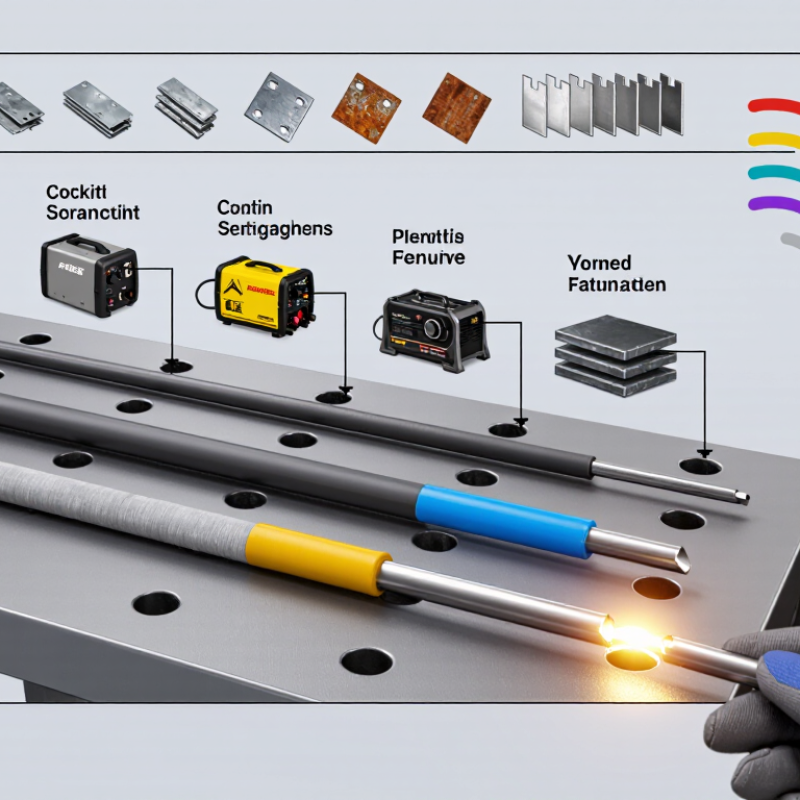
Understanding Stick Welding Electrodes and Their Classifications
Stick welding electrodes are metal rods coated with flux. The coating helps stabilize the arc, shields molten metal, and forms slag over the cooling weld. Different coatings affect arc feel, penetration, cleanup, and moisture sensitivity. The right electrode depends on the base metal, joint position, material thickness, and available power source. Small details matter.
In the AWS classification E7018, “E” means electrode, and “70” indicates a minimum tensile strength of 70,000 psi. The next digit, “1,” identifies an all-position electrode. The final two digits describe coating and current characteristics. Other common classes behave differently: E6010 offers a forceful, deeply penetrating arc, while E6013 generally has a softer arc and easier slag removal. These are useful distinctions, not guarantees; manufacturer specifications and the applicable standard should guide the choice.
A common mistake is selecting by strength number alone. For example, a low-hydrogen electrode may suit certain structural work, but it needs careful dry storage according to its instructions. Damp coating can contribute to weld defects. Not always obvious. Check the package data, match the electrode to the metal and welding position, then make a test bead on clean scrap. I still find classification codes easy to misread when switching electrode types, so checking the current requirements is worth the extra minute.
Understanding Stick Welding Electrodes and Their Classifications
The first two digits in these AWS electrode classifications indicate the minimum tensile strength of the deposited weld metal in thousands of pounds per square inch (ksi). For example, E6010 indicates 60 ksi, while E7018 indicates 70 ksi. Strength is only one factor when choosing an electrode; welding position, power source, and required coating characteristics also matter.
Comparing Common Types of Stick Welding Electrodes Made in China
Chinese-made stick electrodes commonly include E6013, E7018, and E6011, but the classification matters more than the country of manufacture. AWS A5.1/A5.1M assigns E6013 and E6011 a 60 ksi minimum tensile-strength class, while E7018 is in the 70 ksi class. E6013 suits general repairs and produces a steady arc on clean steel. E6011 penetrates more deeply and can help on rusty surfaces. Not magic, though: surface preparation still counts.
E7018 is a low-hydrogen choice for structural work where the welding procedure calls for it. Keep it dry; moisture can increase hydrogen-related cracking risk. AWS classification data describes strength, but it does not guarantee every rod’s performance or quality. Check the package for the stated standard, classification, diameter, and batch documentation, then compare those details with your procedure. A 2.5 mm rod may feel easier to control on thin plate, while thicker rods can deposit metal faster on heavier sections. That trade-off is easy to underestimate. For Chinese-made electrodes, ask for a mill test certificate and confirm the specified current type and polarity before buying. Test a short bead on matching scrap first. The result may still vary with fit-up, position, and operator technique.
China Best Stick Welding Sticks How to Choose the Right Type? - Comparing Common Types of Stick Welding Electrodes Made in China
| AWS Classification | Coating Type | Typical Current | Welding Positions | Typical Characteristics | Common Applications | Key Selection Consideration |
| E6013 | Rutile or high-titania | AC, DC+, or DC−, depending on the electrode specification | Typically all positions; check the product data for vertical-down suitability | Easy arc starting, relatively smooth bead, and easy slag removal | General fabrication, light structural work, and thin-to-medium carbon steel | A practical general-purpose choice, especially where easy handling is important |
| E7018 | Low-hydrogen, iron-powder type | Usually AC or DC+; confirm the specific electrode requirements | All positions except vertical-down, subject to the product specification | Low-hydrogen weld metal; AWS classification indicates 70 ksi minimum tensile strength | Structural steel, heavy fabrication, and welds requiring controlled hydrogen practices | Keep electrodes dry and follow the manufacturer’s storage and rebaking instructions |
| E6010 | High-cellulose sodium | DC+ | All positions, including vertical-down, when permitted by the procedure | Deep-penetrating, forceful arc; commonly used for root passes | Pipe welding and applications where penetration and fast travel are needed | Requires a DC-capable power source and suitable operator technique |
| E6011 | High-cellulose potassium | AC or DC+ | All positions, including vertical-down, when permitted by the procedure | Deep-penetrating arc; designed to operate on AC as well as DC+ | Repair work, farm equipment, and welding where an AC output is used | Useful when the power source cannot provide DC, but verify fit-up and procedure requirements |
| E7024 | Iron-powder rutile | AC, DC+, or DC−, depending on the product specification | Primarily flat and horizontal fillet positions | High deposition rate and a wide, smooth bead; not intended for all-position work | Long fillet welds and production welding on suitable carbon-steel joints | Choose it when welding position and joint access allow high-deposition welding |
Note: These are common AWS electrode classifications, not guarantees of origin. Exact current range, polarity, position approval, impact properties, and handling requirements vary by product and applicable standard. Check the electrode packaging, technical data sheet, and qualified welding procedure before use.
Matching Electrode Grades to Metals and Welding Positions
Choosing the right stick electrode starts with the base metal, then the welding position. For mild steel, E6013 is often manageable on clean, thin sections because its arc is steady and penetration is moderate. E6011 can suit rusty or less-prepared steel and works in multiple positions, but its forceful arc may leave a rougher bead. Need deeper penetration for a root pass? E6010 is commonly used for that purpose, though it generally requires DC power and more operator control. Check the electrode packaging and your machine’s settings; classifications can have specific requirements.
For thicker structural steel, E7018 is a common choice because it produces a low-hydrogen weld. It can be used in several positions, but vertical-up welding calls for controlled travel and suitable electrode diameter. Keep low-hydrogen rods dry according to the manufacturer’s instructions. A damp electrode can compromise weld quality. I still pause over position and joint access before choosing a rod; it is easy to focus on strength and overlook the awkward angle.
Tips: Match rod diameter to material thickness and position. Smaller rods can help on thin metal or overhead work. Run a short test bead on scrap of similar thickness, then inspect the profile and fusion. If the arc feels harsh, check polarity and amperage before changing electrode type. Always follow the rod data sheet and use proper eye, hand, and ventilation protection.
Checking Electrode Standards, Quality, and Supplier Reliability
Choosing stick welding electrodes starts with the classification, not the package color. Check the required standard and confirm that the electrode’s strength, coating type, and welding position suit the base metal and job. A code stamped on the carton should match the product documents. Standards and editions can vary by market, so verify the current requirements for your project. Small details matter. On site, an electrode that runs smoothly in a flat bead may behave differently overhead or on rusty plate. Review the recommended current range and polarity before buying.
Quality is easier to judge when the supplier can provide traceable batch records, inspection documents, and clear storage guidance. Ask for evidence. Look for sealed, undamaged cartons, readable lot numbers, and consistent electrode dimensions. If moisture-sensitive electrodes are involved, ask how they are packed, stored, and handled after opening. A small trial weld can reveal arc stability, slag removal, and bead appearance, though it cannot replace formal testing. I would not choose on price alone; I have seen a cheap carton cost more in rework. Reliable suppliers answer technical questions directly and explain what they cannot guarantee. Compare delivery consistency and complaint handling, too. A polished catalogue is not proof.
Selecting the Right Diameter, Current, and Storage Conditions
Choosing the right stick welding electrode starts with diameter, not habit. A 2.5 mm rod suits many light repairs and thinner steel, while a 3.2 mm rod can deposit more metal on thicker material. The correct choice also depends on joint fit, welding position, and machine output. Check the electrode packaging and welder instructions for the recommended current range. Too much current can cause a harsh arc and excess spatter; too little may make the rod stick. Small adjustments matter.
Tips: Match the rod diameter to the metal thickness and available amperage. Keep electrodes in a dry, sealed container, away from damp floors and open doors. Some low-hydrogen electrodes need controlled storage after opening; follow the manufacturer’s instructions rather than guessing. Keep them dry.
Storage is easy to overlook. Moisture can affect arc stability and weld quality, especially with electrodes designed for low-hydrogen use. If rods feel damp or their coating looks damaged, do not assume they are fine. I would check the product guidance before drying or using them, since storage requirements vary. And if a setting seems wrong, pause and inspect the rod, workpiece, and ground connection before turning up the current.
 skip to Main Content
