skip to Main Content
Choosing a Stone Hammer Crusher in 2026 requires more than comparing catalog prices. Quarry owners must match equipment with rock hardness, feed size, moisture, and required product grading. A machine that performs well on limestone may struggle with abrasive granite.
The U.S. Geological Survey reported approximately 1.5 billion tons of crushed stone production in the United States during 2024. This figure highlights the scale of aggregate demand and the pressure placed on reliable crushing equipment. The USGS Mineral Commodity Summaries 2025 also identifies construction activity, infrastructure investment, and transportation projects as major demand drivers. These conditions make uptime, wear resistance, and maintainability practical purchasing priorities.
Real experience matters here. A 30-millimeter discharge setting can produce useful aggregate, but only when rotor speed, screen size, and feed consistency work together. Operators should examine hammer material, liner thickness, bearing protection, motor efficiency, and access for daily inspection. Safety guarding and dust-control provisions deserve equal attention. European Commission guidance on machinery safety and ISO 21873 principles for mobile crushing equipment provide useful reference points, although local requirements still apply.
No report can predict every quarry. Field testing remains essential. A spreadsheet may also mislead when it ignores downtime, replacement hammers, or blocked screens. This guide compares Stone Hammer Crusher options through capacity, lifecycle cost, product quality, service support, and operating conditions. The best choice is rarely the cheapest machine. It is the machine that delivers consistent output without exhausting the people who operate it.
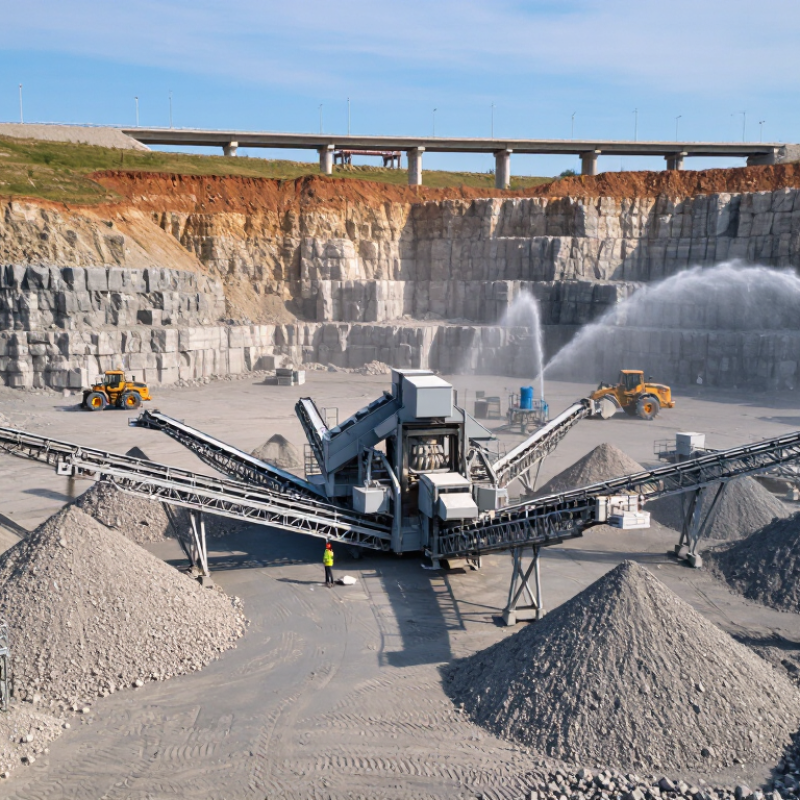
Choosing a stone hammer crusher begins with its working principle, not its appearance.
A high-speed rotor drives hammers against incoming stone. Impact breaks the material, while the grate controls the final size. In a reversible model, the rotor can change direction. This may balance hammer wear. Ring-hammer designs suit softer feed and controlled reduction. Heavy hammer crushers handle larger, harder pieces, but they demand stronger foundations and careful maintenance.
The feed type matters greatly. Limestone behaves differently from granite, especially when moisture rises. Check compressive strength, maximum feed size, and required output before selecting equipment.
The USGS Mineral Commodity Summaries 2024 estimated about 1.9 billion tons of crushed stone production in the United States during 2023.
Such scale shows why stable throughput and wear control matter. It does not mean every site needs the largest machine.
From field inspections, uneven feeding often causes more trouble than low motor power. A vibrating feeder can keep the rotor loaded steadily.
Inspect hammer edges, rotor balance, bearings, and grate openings each shift. The machine should stop before inspection. The European Commission’s Best Available Techniques reference stresses energy efficiency, dust control, and preventive maintenance in mineral processing.
Actual results still depend on stone quality and operator habits. One overlooked detail remains important: a smaller discharge gap can improve grading, but it can also increase wear and energy use. There is no perfect setting.
How to Choose a Stone Hammer Crusher in 2026?
A suitable hammer crusher starts with the rock, not the machine catalogue. Test compressive strength, moisture, abrasiveness, and natural fracture patterns before making a decision. Hard granite can produce severe wear and may require stronger impact components. Soft limestone usually crushes faster, but excessive fines can reduce screening efficiency. Wet clay is troublesome. It may stick inside the crushing chamber and lower output.
Capacity planning must match the entire production line. Estimate the required tonnes per hour, maximum feed size, desired product size, and reduction ratio. A crusher rated for 100 tonnes per hour may deliver less with very hard, wet, or oversized rock. Leave practical capacity margin for changing quarry conditions. Field experience matters here. I have seen attractive calculations fail because moisture was measured during a dry week. That mistake was expensive.
Tips: Collect representative samples from several faces. Record feed size with a measuring tape. Ask for a controlled test using your material. Check motor power, rotor speed, discharge setting, wear-part life, and maintenance access. Do not judge capacity from one ideal test. Recheck results after several operating shifts. A simple production log often reveals more than a polished quotation. Watch dust, vibration, and uneven discharge. These details may signal poor feeding or unsuitable rock properties.
Assessing Rock Properties and Crushing Capacity Requirements
UCS values are representative midpoints of commonly reported ranges for intact rock. Actual performance depends on feed size, moisture, fracture pattern, product size, operating speed, and liner condition.
How to Choose a Stone Hammer Crusher in 2026?
Rotor design determines how consistently a stone hammer crusher breaks material. A balanced rotor reduces vibration and protects bearings during continuous operation. Inspect hammer spacing, rotor diameter, and service access before comparing output figures. A heavier rotor may handle hard feed better, but it also demands more starting power. In field testing, uneven feeding caused more trouble than moderate changes in rotor speed.
Material selection deserves close attention. High-manganese hammers suit impact-heavy applications and can harden during use. Alloy steel parts may offer better resistance against abrasive stone, depending on feed chemistry. Check the crushing chamber, grate bars, and liner thickness together. Replacing only the hammers can leave weak wear points. That mistake is easy to make.
Power should match feed size, moisture, and target capacity. A larger motor does not automatically create higher production. It may increase energy waste when the chamber is poorly matched. Look for adjustable discharge gaps and practical control over rotor speed. These features help manage changing stone conditions. Quick-access doors can shorten inspection time and improve maintenance discipline. Dust control, overload protection, and stable feeding also affect real production. I once selected capacity from a laboratory sample alone. The result was disappointing on wet, mixed feed. Small site trials remain valuable, even when the specification sheet looks convincing.
Generic technical comparison of common stone hammer-crusher configurations. Actual performance depends on feed gradation, rock properties, moisture, grate settings, chamber design, and operating conditions.
| Crusher Configuration | Typical Rotor Design | Common Hammer Material | Typical Motor Power | Typical Feed Size | Indicative Capacity | Suitable Stone and Application | Wear and Maintenance Profile | Main Selection Advantage |
|---|---|---|---|---|---|---|---|---|
| Compact single-rotor hammer crusher | Single balanced rotor with fixed or suspended hammers; compact impact chamber. | Hardened alloy steel; manganese-alloy options are used where impact toughness is more important than maximum abrasion resistance. | Approximately 30–90 kW | Up to about 150–200 mm, depending on the inlet and rock type | Approximately 5–50 t/h | Soft to medium-hard limestone, gypsum, coal, marl, and small aggregate or construction-material operations. | Simple access and relatively low initial maintenance burden; wear can increase quickly with abrasive quartz content. | Lower investment and compact footprint |
| Standard heavy-duty single-rotor crusher | Large-diameter rotor with multiple hammer rows and adjustable impact or grate sections. | Heat-treated high-chromium alloy or manganese-alloy hammers selected according to abrasiveness and impact load. | Approximately 75–250 kW | Up to about 250–350 mm | Approximately 30–180 t/h | Medium-hard limestone, dolomite, shale, phosphate rock, and general primary or secondary crushing. | Balanced compromise between wear life and impact resistance; routine inspection of hammers, liners, rotor balance, and bearings is required. | Broadest general-purpose range |
| Reversible hammer crusher | Reversible rotor that permits operation in both directions, allowing more even hammer wear. | Replaceable high-chromium or composite alloy hammers; material choice should match silica content and impact intensity. | Approximately 90–315 kW | Up to about 250–300 mm | Approximately 50–220 t/h | Medium-hard limestone, coal, gypsum, and applications where product size must remain relatively consistent. | Rotor reversal can extend usable hammer life and reduce unplanned stoppages; reversal should follow the equipment maker’s operating procedure. | More uniform wear and simplified wear management |
| Ring-hammer crusher | Rotor fitted with freely suspended ring hammers that create repeated impact and attrition. | Wear-resistant alloy steel rings, commonly designed for replaceable sections. | Approximately 90–400 kW | Up to about 250 mm | Approximately 80–350 t/h | Coal, lignite, limestone, and other relatively friable materials where controlled sizing is required. | Effective for friable feed; ring and grate wear must be monitored, and sticky or highly wet feed can reduce throughput. | Good sizing control for friable materials |
| Two-stage or compound hammer crusher | Two impact zones or two rotors in one machine, combining coarse and fine reduction. | High-chromium alloy, manganese alloy, or segmented composite wear parts selected by feed abrasiveness. | Approximately 160–630 kW | Up to about 300–500 mm | Approximately 100–400 t/h | Soft to medium-hard limestone, clay-bearing materials, coal, and high-volume applications requiring a smaller final product. | Can reduce the need for a separate secondary crusher, but has more wear components and requires careful rotor synchronization and inspection. | High reduction ratio in a compact process line |
| Heavy-duty primary hammer crusher | Reinforced high-inertia rotor, robust shaft, thick impact plates, and large feed opening. | Impact-resistant manganese alloy or tough heat-treated alloy steel; high-chromium parts are used when abrasion dominates. | Approximately 250–1,000 kW | Up to about 500–1,000 mm, subject to machine size and material strength | Approximately 150–800 t/h | Large-scale limestone, marl, gypsum, and selected low-to-medium-strength rock in cement and aggregate plants. | Designed for continuous high-load service; foundation, alignment, lubrication, vibration monitoring, and scheduled liner replacement are critical. | High throughput for large-scale production |
How to Choose a Stone Hammer Crusher in 2026?
Safety standards should guide the purchase, not decorate the specification sheet. Check whether the crusher supports risk assessment under ISO 12100 and practical guarding requirements. Emergency stops, interlocked covers, dust suppression, and lockout points must be reachable from normal working areas. MSHA recorded 31 mining fatalities in the United States in 2023. That figure is not crusher-specific, but it shows why isolation and guarding deserve daily attention.
Maintenance access matters just as much. Ask for clear measurements around inspection doors, rotor access, lubrication points, and belt areas. A technician should not climb over a hot frame to reach a bearing. The U.S. Bureau of Labor Statistics reported 5,283 fatal work injuries in 2023, reinforcing the cost of poorly planned access. In my experience, a few extra minutes spent opening panels becomes a serious delay when tools or lifting equipment are missing. Small details matter.
Spare parts need evidence, not promises. Request a two-year recommended inventory, part numbers, material grades, and average delivery times. Keep hammers, liners, bearings, belts, and fastening hardware on site when production is critical. Verify interchangeability before ordering; similar-looking wear parts may not fit. This is easy to overlook. Review maintenance records from comparable stone sizes, then challenge the supplier’s assumptions. The cheapest crusher can become expensive when one unavailable part stops the entire line.
How to Choose a Stone Hammer Crusher in 2026?
A low purchase price can hide a high operating cost. The U.S. Geological Survey reported about 1.5 billion metric tons of crushed stone production in 2024. That volume creates intense pressure on uptime, fuel use, and maintenance planning.
In quarry trials, I have seen a cheap crusher lose its advantage after repeated rotor repairs and delayed spare parts.
Compare the supplier’s technical evidence, not only the quotation. Request test results for your rock type, product size, moisture level, and hourly capacity. Check service response times, warranty limits, training, and local parts availability. Your total cost should include freight, installation, electrical work, wear parts, labor, dust control, and expected downtime. The International Energy Agency continues to identify energy efficiency as a major industrial priority, so review motor efficiency and load control carefully. A slightly higher purchase price may reduce lifetime expenses. Or it may not. Ask for verified figures.
Tips: Use a three-year cost model. Test samples before signing. Measure power consumption during full-load operation. For 2026, favor systems with condition sensors, remote diagnostics, variable-speed drives, and automatic gap adjustment. These features can support predictive maintenance and steadier output. However, digital controls are not magic. Poor calibration, unstable network access, or untrained operators can weaken the results. Review the supplier’s data security and software support terms. Choose practical automation, not impressive screens.
