skip to Main Content

How to Choose a Non Cartridge Mechanical Seal in 2026?

Choosing a Non Cartridge Mechanical Seal in 2026 requires more than matching shaft diameter and pump model. Process conditions decide whether a seal survives. Pressure, temperature, fluid chemistry, shaft movement, and installation quality all matter.

Grand View Research estimates that the global mechanical seals market will continue growing through 2030, supported by chemical processing, water treatment, energy, and manufacturing demand. Fortune Business Insights also projects steady expansion over the coming decade. These reports show market momentum, but forecasts cannot identify the correct seal face for a hot, abrasive slurry. That decision still requires engineering judgment.

Tribology specialist Dr. Michael M. Khonsari has emphasized, “A seal failure is often a lubrication failure before it becomes a hardware failure.” This observation is highly relevant to Non Cartridge Mechanical Seal selection. A dry-running carbon face, blocked flush line, or misaligned shaft can destroy a carefully specified seal within hours.

Small details matter. Check the 2,850-rpm shaft, the 120°C process fluid, and the abrasive particles visible in the drained sample. Review API 682 practices where applicable, while confirming the manufacturer’s actual design limits. Do not assume every “standard” seal is interchangeable.

That sounds obvious. It is not.

Non-cartridge designs can offer lower purchase costs and easier component-level customization. They can also demand greater installation discipline. This guide compares materials, balance design, elastomers, operating limits, and maintenance risks. It also questions a common assumption: the cheapest seal may become the most expensive choice after repeated leakage, downtime, and hurried replacement.
How to Choose a Non Cartridge Mechanical Seal in 2026?

What Is a Non-Cartridge Mechanical Seal?

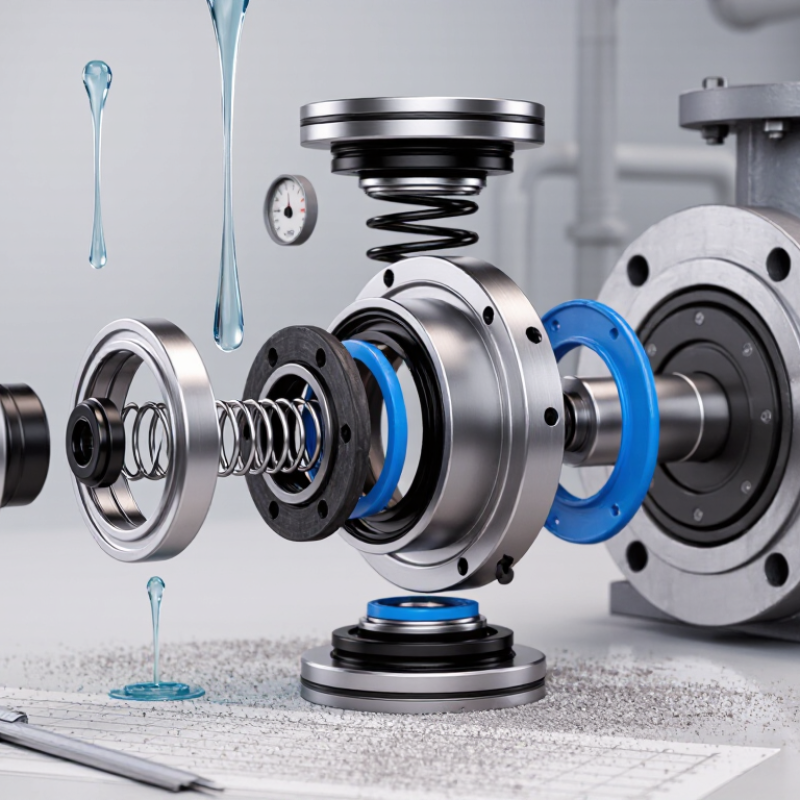
A non-cartridge mechanical seal is a pump sealing assembly installed piece by piece. Its rotating face, stationary face, spring, O-ring, and gland are separate components. Unlike a cartridge seal, it does not arrive factory-set on a sleeve. The technician positions each part directly on the shaft and inside the seal chamber. This design can reduce purchase cost and fit older equipment. It also demands more attention during installation.

In 2026, selection should start with the pump shaft diameter and seal chamber dimensions. Check operating pressure, temperature, speed, and fluid properties before choosing materials. A carbon face may suit clean water, while harder faces handle abrasive service better. Elastomer choice matters when chemicals or heat can swell the O-ring. Measure the spring length and setting dimension. Small errors can cause leakage. Keep faces clean. Really clean. A fingerprint or fiber may create an early drip.

Experienced technicians also inspect shaft runout, sleeve wear, and chamber squareness. These details often explain failures blamed on the seal itself. A non-cartridge seal offers flexibility, but that flexibility is not free. Individual parts can simplify repairs, yet installation time may increase. I would not choose it only because the price is lower. The better choice depends on maintenance skill, available tools, and repeatable measurements. Even careful work can reveal that the pump is already worn. That condition deserves correction before fitting a new seal.

How to Identify Equipment and Operating Requirements

How to Choose a Non Cartridge Mechanical Seal in 2026?

How to Identify Equipment and Operating Requirements

Choosing a non-cartridge mechanical seal starts with the equipment, not the seal catalog. Confirm the pump type, shaft diameter, rotation, and available installation space. Measure the stuffing box carefully. Small errors can create leakage or difficult assembly.

I have seen maintenance teams rely on old drawings that no longer match the pump. Measure the shaft, seal chamber depth, bore, and shoulder location directly when possible. Check the shaft surface for scoring, runout, and corrosion. A clean, stable surface matters. Also verify whether the seal uses springs, pins, or drive lugs that require a specific rotation direction.

Operating conditions determine the seal materials and design. Record fluid composition, pressure, temperature, speed, viscosity, and solids content. Include start-up, shutdown, and dry-running risks. A hot, abrasive slurry needs different face materials than clean cooling water. Chemical compatibility also includes elastomers, springs, and secondary seals. Do not judge compatibility from the fluid name alone.

Review flush plans and cooling arrangements before selecting dimensions. Poor circulation can damage faces even when the seal appears correctly installed. Ask whether pressure changes during operation. Many failures begin with incomplete data. If records conflict, pause and verify them. Guessing may save minutes during selection, but it can waste a shutdown later.

How to Select Materials, Faces, and Seal Arrangements

Choosing a non-cartridge mechanical seal starts with operating data, not a catalog photo. Record shaft diameter, speed, pressure, temperature, fluid composition, and equipment movement. I have seen small temperature changes alter elastomer performance. Do not guess.

Material selection should match the fluid and the environment. Carbon versus silicon carbide affects wear resistance, friction, and dry-running tolerance. Stainless steel may suit clean services, while higher-alloy metals can resist aggressive chemicals better. Elastomers need compatibility with temperature, additives, and cleaning fluids. Check pressure limits carefully. A material can be chemically resistant yet mechanically unsuitable.

Face selection requires attention to lubrication and contamination. Hard faces often tolerate abrasive particles better, but they still need a stable fluid film. Softer faces may perform well in clean, lubricating liquids. Flatness matters greatly. A scratched face can leak before installation begins. Inspect faces under proper lighting and keep them covered.

The seal arrangement should reflect the consequence of leakage. A single seal may fit ordinary water service. A dual arrangement offers better control when the liquid is hazardous, volatile, or difficult to contain. Consider buffer fluid pressure, monitoring, and maintenance access. Non-cartridge seals demand careful installation. Measure setting dimensions twice. I still allow room for error, because real pumps rarely match drawings perfectly. Check shaft runout, sleeve condition, and gland alignment before tightening.

How to Choose a Non-Cartridge Mechanical Seal in 2026?

Material, face, and seal-arrangement guidance based on typical thermal conductivity ranges of common mechanical seal face materials.

How to read the chart: Higher thermal conductivity can help move frictional heat away from the seal faces, but the final selection also depends on fluid compatibility, pressure, speed, solids content, temperature, and lubrication conditions.

Face selection: Carbon graphite is commonly used as a softer mating face, while silicon carbide and tungsten carbide are harder options for abrasive or demanding services. Alumina may be suitable where chemical resistance and hardness are important, subject to impact and thermal-shock limits.

Arrangement selection: A single seal is generally used for standard, non-hazardous services. Dual seals are considered when leakage containment, hazardous fluids, poor lubrication, or zero-emission requirements make additional protection necessary.

Values shown are typical material ranges in W/m·K and can vary significantly by grade, porosity, binder, manufacturing process, and operating temperature. Always verify the selected grade and seal design with the equipment and fluid requirements.

How to Verify Compatibility, Installation, and Maintenance Needs

How to Choose a Non Cartridge Mechanical Seal in 2026?

A non-cartridge mechanical seal should match the pump, shaft, fluid, and operating conditions. Start with the shaft diameter, sleeve length, rotation speed, pressure, and temperature range. Check the fluid’s abrasiveness and chemical behavior. Water, solvents, and slurries demand different face and elastomer materials. Hard faces handle particles better, while softer materials may suit cleaner liquids. Confirm the seal’s dimensions against the pump drawing, not memory or assumptions. Small differences matter.

Installation quality often determines service life. Inspect the shaft for scratches, burrs, corrosion, and excessive runout. Clean the stuffing box carefully. Measure shaft squareness and verify the correct spring direction. Never force the seal over a sharp keyway. Lubricate compatible elastomers lightly, then tighten fasteners evenly. Use a calibrated torque tool where specifications are available. I have seen leaks caused by fingerprints on sealing faces. It sounds minor. It is not.

Maintenance planning should include leakage, vibration, temperature, and flush condition. Record a baseline after startup, then compare readings during routine inspections. A slight drip may indicate adjustment, contamination, or face damage. Do not tighten blindly. Over-compression can create heat and rapid wear. Replace damaged components instead of reusing questionable parts. In difficult services, ask a qualified technician to review material compatibility and installation records. My own checks are not perfect, so a second inspection often catches overlooked alignment errors.

How to Compare Reliability, Cost, and 2026 Industry Standards

How to Choose a Non Cartridge Mechanical Seal in 2026?

Reliability starts with the pump, not the catalogue. A non-cartridge seal needs accurate shaft measurements, clean faces, and correct spring compression. In field work, small installation errors often create heat marks within hours.

The U.S. Department of Energy reports that pumping systems can consume about 25% of industrial electricity. Poor sealing can increase this burden through leakage, friction, and repeated shutdowns.

Cost comparison should include maintenance labor, lost production, flushing fluid, and disposal. A lower purchase price may become expensive after two premature failures.

API 682, Fifth Edition, published in 2022, provides qualification and leakage-control guidance for process pump seals. ISO 21049 also offers a recognized framework for seal selection and testing. These standards do not remove engineering judgment. They only make the decision less subjective.

Check pressure, temperature, speed, shaft runout, and fluid chemistry before comparing quotations. Use documented test records, inspection reports, and installation procedures.

Reliability data matters more than confident sales language. Ask for expected operating hours and failure evidence. Not every seal needs the highest specification. That choice can waste money.

A practical 2026 comparison should rank reliability first, lifecycle cost second, and purchase price last. Still, this order may change when the pump is inexpensive, noncritical, and easy to isolate. That is where many evaluations become imperfect.

Back To Top
