skip to Main Content
Choosing a top Fufu Mixer Machine manufacturer in China requires more than comparing prices or polished product photos. Buyers should examine practical details: batch capacity, motor power, mixing consistency, bowl material, cleaning access, and spare-parts support. A machine may look sturdy on a website yet perform differently with cassava, yam, or other doughs. Ask manufacturers for specifications, operating videos, and clear warranty terms. Small details matter.
W. Edwards Deming, a quality-management expert, offered a useful manufacturing principle: “Quality is everyone’s responsibility.” His words are not specific to fufu equipment, but they offer a sensible lens for evaluating a supplier’s production and support practices. Look for evidence of inspection procedures, responsive technical service, and machines tested under realistic working conditions. Request references where possible, and compare like-for-like configurations. This guide considers those factors when discussing Chinese manufacturers. It also recognizes a limitation: supplier information can change, and claims deserve independent verification. A low quoted price may be attractive. It is not proof of value. Good selection takes careful questions, not guesswork.
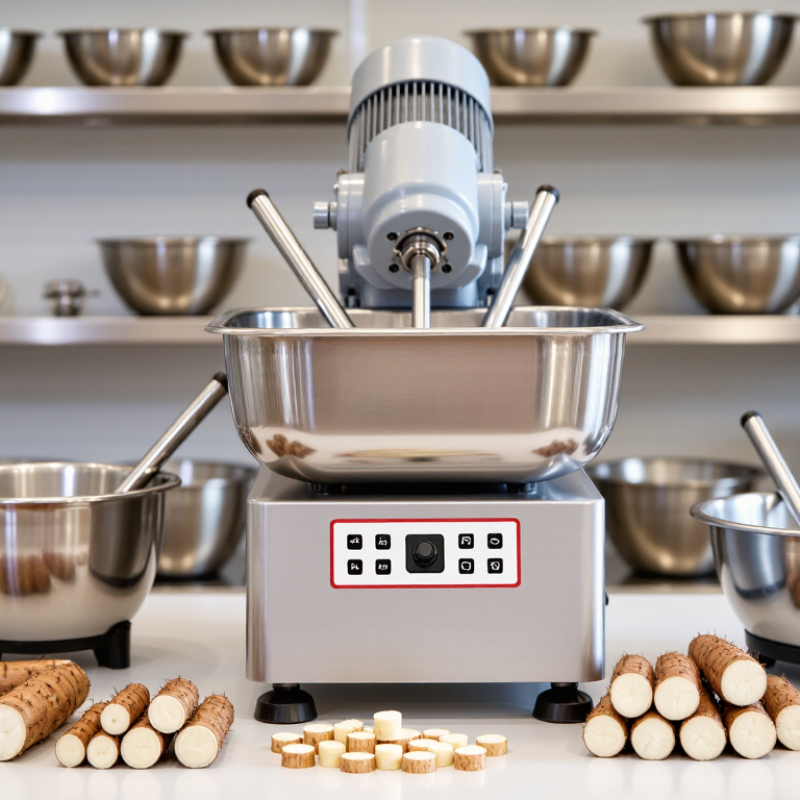
A fufu mixer machine is a powered kneading appliance designed to turn cooked starchy food into a smooth, cohesive dough. Depending on the model, it may use a sturdy bowl and rotating paddle or mixing arms. The cooked cassava, yam, or other prepared staple is added in manageable portions. As the arms turn, they press, fold, and stretch the mixture repeatedly. That matters. It helps distribute moisture and soften lumps without the repeated pounding used in traditional preparation. Some machines only knead; others include heating functions, so buyers should check the machine’s specifications.
The result is not automatic. Ingredient moisture, portion size, and cooking time can all change the texture. A batch that looks glossy around the edges may still have a firm center, so operators should pause and inspect it. Not every unit. Some designs need occasional scraping, too. For consistent results, follow the maker’s operating instructions, avoid overloading the bowl, and keep hands clear of moving parts. Clean food-contact surfaces promptly, especially around paddle joints where sticky dough can collect. A mixer saves physical effort, but careful observation still makes a difference.
When assessing a fufu mixer manufacturer in China, look beyond catalog photos and advertised output. Ask for a live demonstration using cassava dough with a consistency close to your own. Watch whether the mixer handles the load evenly, vibrates, or leaves dry pockets near the bowl wall. Details matter. Request the rated batch capacity, motor power, mixing time, and recommended duty cycle in writing.
Ask for evidence. A clear video can show the machine running, but it cannot replace a sample test or factory inspection. Check the bowl, shaft, and paddles for sturdy construction and smooth, accessible surfaces. Ask how the machine is cleaned and which parts commonly need replacement. Also confirm available voltage, control options, guarding, delivery terms, and what the warranty actually covers. Vague replies deserve follow-up.
Compare at least two suppliers using the same requirements, not just the lowest quotation. Ask for references from buyers with similar production needs, and verify that the stated capacity suits your batch size. Request drawings and spare-parts details before placing an order. It is tempting to trust polished demonstrations; I would not treat them as proof of long-term reliability. A small sample run may expose issues that a brochure misses.
When comparing a fufu mixer, look beyond the advertised output per hour. Check the bowl’s working capacity, motor power, and mixing speed. A machine rated for a large batch may struggle with dense dough if its motor lacks torque. Ask for the recommended batch size and the time needed to process it. Small details matter.
Inspect the parts that touch the food. Stainless steel is common, but confirm the grade and whether surfaces are smooth enough to clean without leaving residue. Check how the mixing arm lifts, how the bowl locks, and whether guards stop operation when opened. Ask for a demonstration using a realistic portion, not an empty bowl. Watch for uneven mixing or excessive vibration.
Controls should be easy to read, with clear speed settings and an accessible emergency stop. Compare voltage, frequency, dimensions, and plug requirements with your production site before ordering. Request operating and cleaning instructions, warranty terms, spare-parts availability, and service response details in writing. Do not rely on capacity alone. It is easy to overlook noise, heat, or cleaning time during a short demonstration. I would also verify the machine after delivery; specifications on paper do not reveal every practical limitation.
Quality, Safety, and Certification Considerations
A fufu mixer handles sticky, starchy food, so cleanability matters as much as mixing speed. Look for smooth food-contact surfaces, sealed joints, and a bowl that can be reached without awkward dismantling. Ask for material declarations and documented cleaning instructions. A certificate alone is not enough. Check that its scope covers the actual machine and intended use. WHO’s 2015 estimates found that unsafe food caused about 600 million illnesses and 420,000 deaths worldwide each year. That figure concerns food safety broadly, not mixer failures, but it shows why hygienic design deserves attention.
Review the machine’s risk assessment, emergency-stop function, guards, wiring documentation, and factory acceptance test. Ask how the mixer performs with your recipe and batch size; request a witnessed trial using comparable ingredients. A smooth sample is useful. Repeatability matters more. Confirm that inspection records and maintenance guidance are available in a language your operators understand. Some details can be missed during selection, especially how quickly residue collects around seals.
Tips: Request copies of relevant test reports, then verify them with the issuing body. Inspect welds, lid interlocks, and the bowl’s underside. If cleaning takes longer than expected, reconsider the design.
WHO, Estimates of the Global Burden of Foodborne Diseases, 2015.
Choosing a fufu mixer manufacturer starts with your actual production routine. Estimate the kilograms you need per batch, the number of batches per shift, and the texture your customers expect. A small kitchen may value a compact footprint, while a larger operation needs steady output and a motor suited to longer working periods. Bigger is not always better.
Ask how the machine handles your ingredients and mixing method. Request a live test or a sample batch, then check whether the fufu is evenly mixed and easy to remove from the bowl. Look closely at food-contact surfaces, welds, seals, and cleaning access. Ask how long routine cleaning takes. Small details matter.
Compare written specifications, not just sales claims. Confirm voltage, capacity, dimensions, lead time, spare-part availability, and warranty terms. Ask for an operating video and references from customers with similar production needs. A responsive technical team can be valuable when a mixer stops mid-shift. Still, a neat video cannot prove long-term reliability, and I would not treat one successful test as a guarantee. Discuss what happens if the delivered machine differs from the agreed specifications, and get those details in writing.
Suggested evaluation weights for comparing manufacturers against your production needs. These are planning priorities, not market-survey results.
Use this 100-point framework to compare quotations. Confirm food-contact material documentation, tested batch capacity, mixing consistency, cleaning requirements, customization options, warranty terms, and spare-parts availability before choosing a supplier.
