 skip to Main Content

How to Choose an Oilless Reciprocating Compressor
Choosing an Oilless Reciprocating Compressor begins with the air requirement, not the catalog photograph.
Pressure, flow, duty cycle, air purity, noise, and installation space must be measured together.
A clean workshop still needs clean compressed air.
The U.S. Department of Energy’s Improving Compressed Air System Performance sourcebook reports that compressed air can consume significant industrial electricity. It also identifies leakage as a frequent source of waste, sometimes reaching 20–30% of compressor output. These figures make efficiency more than a purchasing slogan. They affect operating cost every hour. Ron Marshall, a respected compressed-air auditor and specialist, has warned, “Compressed air is not free.” That short sentence deserves attention.
For medical, food, electronics, or laboratory applications, confirm the required ISO 8573-1 air-quality class. Do not accept “oil-free” as an unsupported marketing phrase. Ask for test results, certification details, and operating conditions. Check whether the compressor maintains pressure during peak demand, not only during a quiet factory shift. Review cylinder wear, valve access, cooling performance, receiver size, and service intervals. A small receiver may cause frequent cycling. An oversized unit may waste energy during low-load periods.
The Carbon Trust and DOE both emphasize system-level assessment, yet many buyers still compare only purchase prices. That approach is understandable. It is also incomplete. A lower quotation can conceal higher electricity, maintenance, and downtime costs. This guide will examine practical selection criteria, including lifecycle cost and application risk. Some recommendations may feel conservative. That is intentional. Compressor sizing is not perfectly predictable, and real plants rarely behave like spreadsheets.
What an Oilless Reciprocating Compressor Is
How to Choose an Oilless Reciprocating Compressor
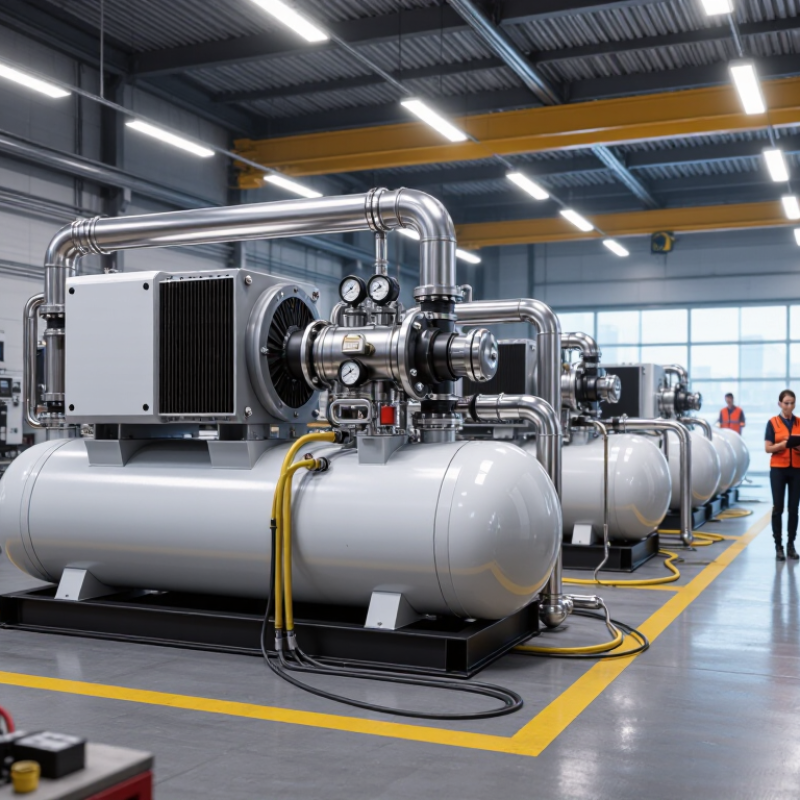
An oilless reciprocating compressor produces compressed air without oil entering the compression chamber. A piston moves inside a cylinder, drawing in air and forcing it through a discharge valve. Special piston rings and bearings reduce friction without conventional oil lubrication. This design suits laboratories, dental equipment, food processing, and instrument air systems where oil contamination creates serious problems.
“Oilless” does not mean maintenance-free. The rings still wear. Heat also builds quickly when airflow is restricted. During a site inspection, check the air intake filter, cooling paths, and operating temperature. A blocked filter can make a small compressor sound harsh and vibrate against the floor. Moisture remains another concern. Compressed air may still carry water, especially in humid rooms, so a suitable dryer or drain system may be necessary.
When choosing one, compare pressure, flow rate, duty cycle, noise level, and expected service life. Do not select capacity from peak demand alone. That choice can leave the compressor cycling constantly. A receiver tank can reduce frequent starts, but it cannot fix an undersized compressor. Manufacturer data should be checked against real operating conditions, including ambient temperature and altitude. Some specifications appear impressive until measured at a different pressure. That detail is easy to miss. Personally, I would also leave a safety margin, because workshop demand rarely stays as predictable as the original calculation.
| Selection Dimension | What an Oilless Reciprocating Compressor Is | How to Evaluate It | Practical Check |
|---|---|---|---|
| Operating Principle | A positive-displacement compressor that uses a piston moving back and forth inside a cylinder to draw in, compress, and discharge gas. | Confirm that the reciprocating design matches the required pressure, flow pattern, and duty cycle. Reciprocating compressors are generally suitable for relatively high pressure and low-to-moderate flow applications. | Review the pressure and flow requirements. |
| Meaning of “Oilless” | An oilless compressor is designed so that lubricating oil is not introduced into the compression chamber or the delivered gas stream. | Check whether the design uses oil-free materials, sealed bearings, permanently lubricated components, or another method that separates lubrication from the gas path. | Request a gas-path and lubrication diagram. |
| Gas Purity | Oilless compression reduces the risk of oil contamination, but the final gas quality also depends on seals, wear particles, intake air, moisture, and downstream filtration. | Match the compressor’s documented gas-quality performance with the application. Medical, laboratory, food, electronics, and paint processes may require specific purity limits. | Define acceptable oil, particle, and moisture levels. |
| Required Pressure | Discharge pressure is the pressure available at the compressor outlet under specified operating conditions. | Select a compressor whose rated discharge pressure exceeds the system’s normal working pressure while allowing for pressure losses in piping, filters, dryers, valves, and regulators. | Include system pressure drop and reserve capacity. |
| Required Flow | Flow is commonly stated as free-air delivery or another standardized volumetric flow value. It should not be confused with displacement or inlet volume alone. | Compare flow values at the same inlet pressure, discharge pressure, temperature, and measurement standard. Use the highest simultaneous demand rather than the average demand. | Compare delivered flow at the actual pressure. |
| Duty Cycle | Duty cycle describes how much of a repeating period the compressor operates, such as intermittent operation or continuous operation. | For continuous or frequent operation, choose a model specifically rated for that duty. An undersized intermittent-duty unit may overheat, wear rapidly, or require frequent maintenance. | Calculate operating hours and starts per hour. |
| Cooling Method | Reciprocating compressors remove heat through air cooling, water cooling, or a combination of methods. | Air-cooled units are simpler to install where ventilation is adequate. Water-cooled units may suit higher continuous loads but require reliable water quality, flow, and temperature control. | Verify ambient conditions and cooling utilities. |
| Noise and Vibration | Piston motion produces pulsation and mechanical vibration. Noise depends on speed, enclosure, mounting, valves, and operating pressure. | Check sound pressure data, vibration limits, foundation requirements, and the need for pulsation dampers or acoustic enclosures, especially near occupied areas. | Review measured noise data and mounting guidance. |
| Energy Efficiency | Compressor efficiency is affected by compression ratio, motor efficiency, valve losses, clearance volume, cooling, leakage, and control method. | Compare specific power or energy consumption at the same operating pressure and flow. Avoid selecting substantially more capacity than the application needs. | Compare power input at the required duty point. |
| Motor and Electrical Supply | The drive motor converts electrical energy into mechanical power for the compressor. Starting current and control equipment affect installation requirements. | Confirm voltage, phase, frequency, motor rating, protection class, starting method, and compatibility with the available electrical system. | Match the motor to the site power supply. |
| Air Treatment | Compressed gas can contain water vapor, condensate, particles, and contaminants from the intake environment even when no oil is used. | Determine whether an aftercooler, moisture separator, dryer, sterile filter, particulate filter, or coalescing filter is required for the application. | Specify treatment based on end-use quality. |
| Maintenance Requirements | Oilless compressors do not require routine oil changes in the compression chamber, but valves, piston rings, seals, filters, bearings, and cooling components can still wear. | Review replacement intervals, inspection procedures, spare-part availability, service access, and the maintenance skills required at the installation site. | Request a preventive-maintenance schedule. |
| Installation Environment | Ambient temperature, altitude, humidity, dust, corrosive gases, ventilation, and available floor space affect compressor performance and service life. | Select a configuration rated for the site conditions. High ambient temperature and altitude can reduce cooling capability and delivered capacity. | Use corrected performance data for the site. |
| Controls and Protection | Control systems may use pressure switches, unloaders, variable-speed drives, or electronic controllers to regulate operation and protect the equipment. | Look for high-temperature shutdown, overload protection, pressure relief, low-pressure protection where applicable, condensate management, and fault indication. | Verify alarms, shutdowns, and relief devices. |
| Total Cost of Ownership | The full cost includes purchase, installation, electricity, filters, replacement wear parts, downtime, service, cooling utilities, and disposal. | Compare lifecycle cost rather than purchase price alone. A suitable capacity, efficient control strategy, accessible service points, and durable wear components can reduce long-term cost. | Estimate energy and maintenance costs over service life. |
Note: Performance ratings should always be compared under the same measurement conditions and verified against the applicable technical standards and application requirements.