How to Choose the Best Multi Hole Drilling Machine
Choosing a Multi Hole Drilling Machine is less about buying the largest machine and more about matching its capabilities to the work on your shop floor. A cabinet-door line may need repeatable hole spacing across hundreds of panels. A fabrication shop may prioritize rigid fixturing and reliable drilling through thicker plate. These are different jobs. The right choice starts with real production details: material, hole diameter, spacing tolerance, workpiece size, batch volume, and expected changeovers.
Industry data offers useful context, but it should not replace application testing. Grand View Research valued the global machine tools market at approximately USD 86.9 billion in 2023 and projected growth through 2030. This is a broad market measure, not a forecast specifically for multi-hole drilling machines. Still, it reflects the scale of investment in equipment used for precise, repeatable manufacturing. Buyers should look beyond headline specifications and compare spindle configuration, feed control, fixture design, tool-change needs, safety features, and after-sales support.
Small differences matter. A machine that drills several holes at once can reduce cycle time, but only when the hole pattern and workpiece remain consistent. For mixed orders, setup time and adjustment range may matter more than peak output. Ask suppliers to demonstrate your material and target hole pattern, then inspect the finished parts for position and edge quality. Not every shop does. And a polished demonstration is not the same as months of dependable production. This guide explains how to assess machine types, capacity, accuracy, operating costs, and service before making a purchase.
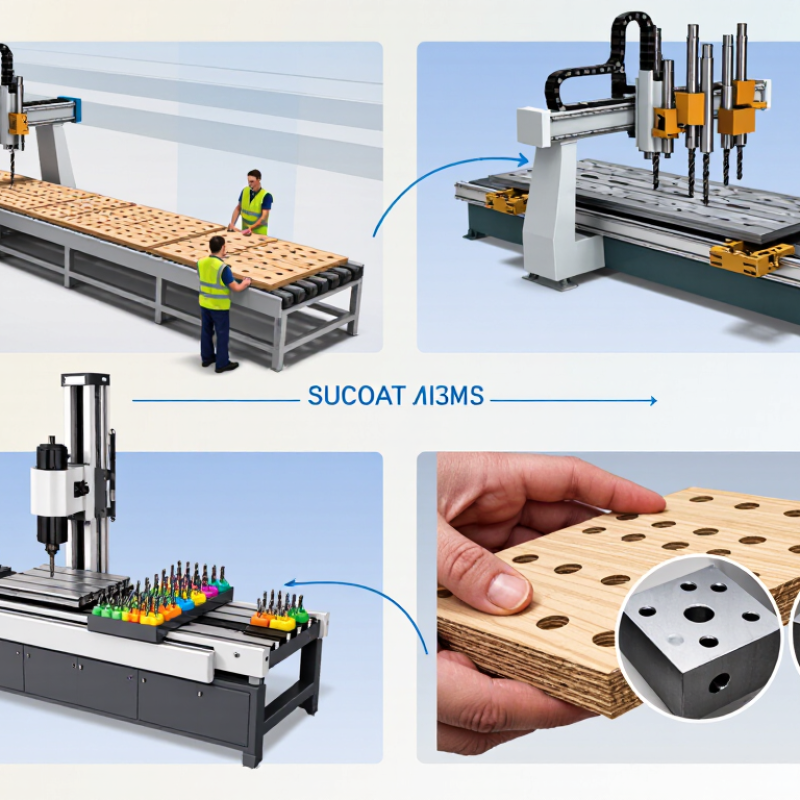
Define Production Needs: Holes per Cycle, Pitch (mm), and Batch Size
Before comparing machines, map the part, not just the spindle. Record holes per component, hole diameter, and the exact centre-to-centre pitch in millimetres. Then group holes that can be drilled in one cycle without compromising clamping or tool access. A 12-hole plate may need only three cycles on a four-spindle head, but only if its pattern matches the spindle layout. Check pitch tolerance against the drawing; “about right” can become scrap. Estimate daily cycles from batch size, setup time, and changeovers—not theoretical speed alone. Deloitte and The Manufacturing Institute’s 2024 report estimates that U.S. manufacturing may need 3.8 million workers by 2033, with 1.9 million jobs potentially unfilled. That makes repeatable, easy-to-load production worth assessing alongside raw output.
Tip: Measure a real batch. Time loading, drilling, unloading, and tool changes; record the slowest step. For example, 500 parts with eight holes each means 4,000 holes, but a 4-hole cycle does not guarantee only 1,000 production cycles. Part variation, repositioning, and rejected pieces matter. I would leave a little capacity for these interruptions; forecasts are rarely perfect. Compare the required pitch and hole count with the machine’s adjustable spindle spacing, fixture area, and number of working heads. Then ask for a trial using your material and actual batch size.
How to Choose the Best Multi Hole Drilling Machine - Define Production Needs: Holes per Cycle, Pitch (mm), and Batch Size
| Example production job | Material and thickness | Holes per cycle | Hole pattern / pitch | Typical hole size | Batch size | Planning consideration |
| Cabinet side panels | Melamine-faced particleboard, 16–18 mm | 5–11 | 32 mm system pitch; pattern length varies by panel | 5 mm shelf-pin holes | 100–500 panels | Confirm which hole positions must be drilled simultaneously and whether adjustable spindle spacing is needed. |
| Drawer fronts and hardware panels | MDF or particleboard, 16–22 mm | 2–4 | 32 mm pitch or job-specific spacing | 5–8 mm, depending on fitting | 20–100 panels per design | For frequent design changes, prioritize quick stops and simple pattern adjustment over maximum spindle count. |
| Shelves with repeated support holes | Plywood or laminated board, 15–25 mm | 4–8 | 32 mm pitch; repeated rows or short patterns | 5–6 mm | 50–300 shelves | Check panel support and clamping so thin or flexible workpieces remain flat during drilling. |
| Solid-wood furniture components | Hardwood or softwood, 18–30 mm | 2–6 | Fixed or adjustable pitch, commonly specified per drawing | 6–10 mm | 10–80 components per design | Allow for grain direction, suitable tooling, and test cuts; setup flexibility can matter more than cycle capacity. |
| High-volume cabinet components | Melamine-faced board, 16–25 mm | 8–21 | Repeated 32 mm patterns across multiple positions | 5–8 mm | 500–2,000+ components | Compare total throughput, including loading, positioning, clamping, and unloading—not just drilling time. |
Planning note: These are illustrative production scenarios, not guaranteed machine capacities. Confirm the required hole pattern, pitch tolerance, material, tooling, and batch mix with a representative workpiece before selecting equipment.
Match Workpiece and Capacity: Material, Thickness (mm), and Drill Diameter (mm)
How to Choose the Best Multi Hole Drilling Machine
Match the machine to the workpiece, not just the drawing. Record the material, maximum thickness in millimeters, hole diameter, and spacing between holes. The World Steel Association’s World Steel in Figures 2024 reports 1,892.2 million tonnes of crude steel produced worldwide in 2023. That scale makes steel a common fabrication material, but it does not determine your drill settings. Steel grade, hardness, and surface condition matter too. For aluminum or stainless steel, check the machine’s recommended tooling and speed range before comparing capacity.
Thickness sets the required flute length and clamping clearance. Diameter affects cutting load, so a machine that drills many small holes may struggle with fewer large ones. Check both. For example, a 6 mm plate with 8 mm holes is a different job from a 25 mm plate with 20 mm holes, even if the hole count matches. Confirm every spindle can handle the selected diameter, and verify spindle spacing against the part layout. Not just nominal capacity. Ask for test results using your material and maximum thickness; a clean sample can reveal burrs, wandering holes, or uneven breakthrough. I would also leave some capacity in reserve. It is easy to overlook tool wear and mixed batches when planning from an ideal drawing.
Compare Spindle Specifications: Count, Speed (rpm), Feed (mm/min), and Power (kW)
A multi-hole drilling machine should be matched to the work, not chosen by spindle count alone. More spindles can finish a row of holes in one pass, but they also increase setup demands and total load. Count the holes you make most often, then check whether spindle spacing can match your actual panel or component. Small differences matter.
Compare spindle speed in rpm with the material and tool diameter. Higher speed may suit small bits, while larger bits often need slower rotation to control heat and wear. Ask for the usable speed range under load, not just the maximum figure. A machine rated at 3,000 rpm may behave differently when every spindle is cutting at once. Check the real load.
Feed rate, measured in mm/min, affects both output and hole quality. Fast feed can reduce cycle time, yet it may cause tear-out or rough edges in some materials. Look for adjustable feed and test it on a representative offcut. Power, listed in kW, should support the combined spindle demand and feed system during continuous work. One detail is easy to miss: available power does not guarantee steady torque at every speed. Compare specifications under similar operating conditions, and record the settings that produce clean, consistent holes. I would not assume the largest numbers mean the best fit.
Verify Machine Accuracy with ISO 230-1 Tests and Required Hole Tolerances
Before buying a multi-hole drilling machine, define the hole pattern’s limits: diameter, pitch, position, and perpendicularity. ISO 230-1:2012 specifies geometric accuracy tests under no-load or quasi-static conditions. It does not prescribe one universal pass value. Set acceptance limits from the part drawing, not a supplier’s broad accuracy claim. Small errors add up.
Check spindle alignment, table straightness, and squareness with suitable calibrated instruments. Record the machine’s thermal state, test setup, measuring instrument, and results. These details make comparisons meaningful. ISO 230-2:2014 separately addresses positioning accuracy and repeatability for numerically controlled axes, useful when axis motion locates holes. The two standards measure different things.
A geometry test alone cannot prove the finished hole pattern will meet tolerance. Run a representative test plate, then measure hole centers and diameters with a CMM or calibrated vision system. For example, a drawing tolerance of ±0.05 mm leaves little room for drill runout, fixture movement, or tool wear. I would not trust one test plate as proof. Repeat the cut, and keep the raw measurement data; a neat report can still miss a setup problem.
Assess Safety and Cost: ISO 12100 Risk Review, Tooling, and Cycle Time
Before comparing prices, review the machine’s hazards using an ISO 12100 risk-assessment approach. It is not a certificate. It helps identify hazards, estimate risks, and plan reductions. Check spindle access, chip ejection, clamping points, noise, and unexpected restart during maintenance. A guard that blocks a real service task may be bypassed, so assess usability as well as design. Small details matter: a workpiece shifting under several drills can damage tooling and injure an operator. Document who loads parts, clears chips, and changes tools.
Then compare tooling and cycle time, not just the machine’s purchase price. Include loading, clamping, drilling, retracting, unloading, and tool changes in each cycle. Simultaneous drilling may shorten production time, but it can increase setup demands and replacement-tool costs. Ask for a timed trial using your material and hole pattern. Inspect the holes, listen for vibration, and record how often adjustments are needed. One awkward truth: a fast cycle is not always a productive one if a dull drill creates rejects. Estimate cost per acceptable part, including labor, tooling, downtime, and maintenance. The numbers may still be imperfect; real shifts rarely run like a clean demonstration.
How to Choose the Best Multi Hole Drilling Machine
Compare estimated drilling cycle time alongside an ISO 12100 risk review and total-cost considerations.
How to use this chart: The cycle times are illustrative planning estimates for the same hypothetical drilling task, not published machine benchmarks. Validate them with workpiece trials and supplier quotes. Compare tooling, setup, maintenance, energy, and labor costs per part—not purchase price alone. Following ISO 12100, define machine limits, identify hazards, estimate and evaluate risks, then reduce risks through inherently safe design, guards and interlocks, and clear operating procedures. Complete a machine- and application-specific review before selection.
 skip to Main Content
