 skip to Main Content

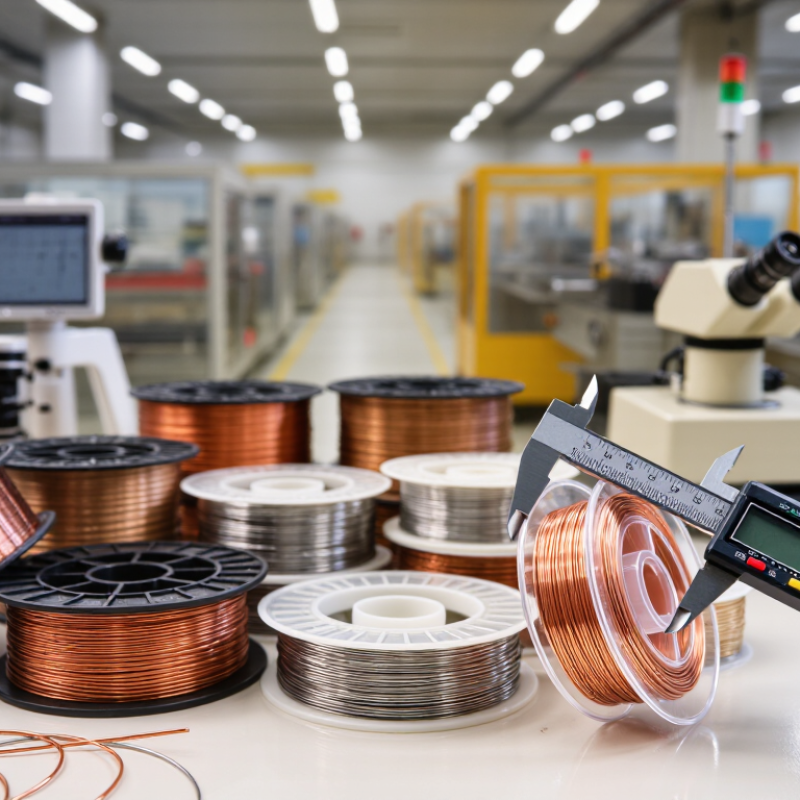
China’s top ten copper alloy winding wire suppliers should be compared by engineering details, not catalog size. Their profiles commonly cover thermal classes from 155°C to 220°C. These classes indicate insulation endurance under heat. They do not guarantee identical motor life. Always check the test method.
Alloy selection changes conductivity, strength, and bending behavior. Copper-chromium alloys may support better mechanical stability. Copper-silver alloys can perform well during continuous heating. Standard copper remains valuable where conductivity is the priority. Available wire sizes may range from fine enamelled conductors near 0.10 mm to larger rectangular sections above 5 mm. Actual ranges differ between suppliers. Some profiles also include round, flat, and multi-strand designs. This comparison is useful, but not perfectly clean. Product terminology is sometimes inconsistent.
Tips: Request a recent technical datasheet, insulation grade, conductor tolerance, elongation data, and thermal-aging results. Ask for sample lengths before approving production. Measure diameter at several points, because one reading can mislead. Confirm whether the stated 155–220°C class applies to the insulation system or only the resin. A supplier’s factory experience matters, but documented testing matters more. I would also review batch traceability and export packaging. Small details often expose weak quality control.