skip to Main Content

China Top 10 Vacuum Hydrocarbon Cleaning Machine Makers

China’s manufacturing scale makes it an important place to evaluate suppliers of precision-cleaning equipment. Vacuum hydrocarbon cleaning machines remove oils and residues from metal components inside enclosed chambers. Depending on the system, vacuum processing can support solvent circulation, drying, and recovery. Results still depend on the machine design, solvent choice, load arrangement, and process controls.

The National Bureau of Statistics of China reported that manufacturing value added grew 5.0% in 2023. UNIDO’s International Yearbook of Industrial Statistics 2024 also places China among the world’s leading manufacturing economies. These reports provide useful industrial context, but they do not measure this machine category specifically. Not the whole story. Public, comparable figures for China’s vacuum hydrocarbon cleaning machine shipments and market shares are limited, so rankings should be treated cautiously. A polished brochure cannot replace a process trial.

This guide introduces China Top 10 Vacuum Hydrocarbon Cleaning Machine Makers and the criteria buyers can use to assess them. Look beyond chamber size. Compare cleaning consistency, drying performance, solvent recovery, automation, maintenance access, and documented testing. Ask how the supplier handles representative parts, including blind holes and narrow channels. Request operating data for your own soil and material conditions. The right shortlist depends on the application, not a headline claim. Vacuum Hydrocarbon Cleaning Machine Manufacturers may offer similar specifications, yet differ in engineering support and validation quality. Those details matter on the production floor.
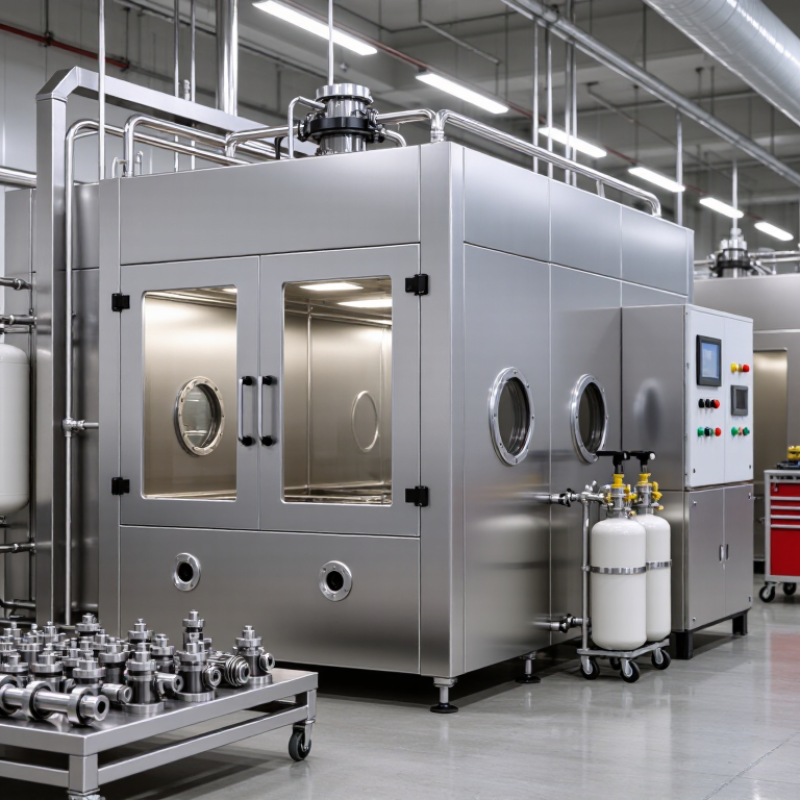
China Top 10 Vacuum Hydrocarbon Cleaning Machine Makers

What Is a Vacuum Hydrocarbon Cleaning Machine?

A vacuum hydrocarbon cleaning machine removes oils, machining fluids, and fine residues from metal or precision components. It uses a hydrocarbon-based solvent inside a sealed chamber rather than an open wash tank. Parts may be sprayed or immersed, then exposed to reduced pressure. Lower pressure helps solvent evaporate at lower temperatures, while filtration and distillation can recover reusable solvent. A final vacuum-drying stage helps clear liquid from narrow holes and threaded features. That matters. Operators still need to check material compatibility; elastomers and coatings can react differently.

The machine’s key value is controlled cleaning, not a promise of zero exposure or zero residue. Actual results depend on solvent formulation, load geometry, soil type, and cycle settings. NIOSH’s Pocket Guide to Chemical Hazards lists a 50 ppm recommended exposure limit for n-hexane, averaged over a 10-hour workday. That figure applies to n-hexane, not every hydrocarbon solvent. Facilities should consult the safety data sheet and verify ventilation and exposure controls for the chosen blend. A vacuum cycle can improve drying, but trapped soil may remain.

How Vacuum Hydrocarbon Cleaning Works

Inside a vacuum hydrocarbon cleaner, parts sit in a sealed chamber. The machine removes air, then washes components with a low-moisture hydrocarbon solvent. Spray pressure or ultrasonic energy helps loosen oils from gears, blind holes, and machined surfaces. Hydrocarbons dissolve many nonpolar oils effectively. The cleaning result still depends on soil type, part geometry, and solvent condition.

Vacuum also helps lower the temperature needed for solvent evaporation and drying. The NIST Chemistry WebBook lists n-heptane’s normal boiling point as 98.42°C; under reduced pressure, its boiling point falls. Actual cleaning solvents are often blends, so that figure is a reference point, not an operating setting. After washing, the chamber drains and distills used solvent; vapour condenses for reuse, while vacuum assists drying. The European Commission’s Surface Treatment of Metals and Plastics BREF describes solvent recovery and controlled systems as key process measures.

That matters. Operators should track solvent condition, pressure, and drying time, then verify cleanliness on real parts.

The awkward part: a bright surface can still hide residue in a narrow recess.

Key Features and Industrial Applications

Vacuum hydrocarbon cleaning machines use a sealed chamber to wash and dry metal components with a hydrocarbon-based solvent. A vacuum helps remove air from narrow cavities, while controlled heating supports cleaning and drying. Distillation can separate contaminants from the working solvent, and filtration captures particles before reuse. Details matter. Temperature, pressure, and cycle time should match the part’s material and soil load. Operators also need to inspect seals, filters, and solvent condition regularly. Compatibility varies, so a test run on sample components is often sensible.

These machines are used for precision-machined parts, bearings, gears, and components with blind holes or fine passages. In automotive and general engineering workshops, they can remove cutting oils and machining residues before inspection or assembly. Electronics manufacturers may clean suitable metal parts, but sensitive materials and assemblies require careful process validation. Not every part. Basket loading affects results: crowded parts can shield surfaces and trap residue. A clean-looking chamber does not prove that every cavity is dry. Check representative parts, including difficult-to-reach areas, and record cycle settings. There is no perfect setting. Longer cycles may improve drying, but they can also increase energy use and wear.

Profiles of 10 Vacuum Hydrocarbon Cleaning Machine Makers in China

China’s vacuum hydrocarbon cleaning machine makers differ in engineering focus, chamber size, automation, and after-sales support. These ten anonymized profiles highlight practical points buyers can compare. They are not rankings; equipment should be assessed against actual parts and process requirements.

Profile one emphasizes compact systems for small components and limited floor space. Profile two focuses on larger chambers for batch processing. Profile three offers configurable baskets and fixtures for irregular parts. Profile four centers on automated loading and recipe control. Profile five gives attention to filtration and solvent recovery. Profile six supports production lines that need repeatable cycle timing. Details matter. Ask for a sample cleaning trial.

Profile seven appears suited to precision components, where residue checks are essential. Profile eight focuses on operator access and routine maintenance. Profile nine offers project-based engineering for unusual part geometries. Profile ten may appeal to buyers seeking simpler equipment and controls. These are comparison categories, not verified claims about individual firms. Request chamber drawings, cycle data, utility requirements, and service terms. A polished brochure is useful, but it cannot replace a test on representative parts. Some specifications may look impressive and still miss the real production bottleneck.

China Top 10 Vacuum Hydrocarbon Cleaning Machine Makers - Profiles of 10 Vacuum Hydrocarbon Cleaning Machine Makers in China

Note: The table below is a non-company-specific reference to common vacuum hydrocarbon cleaning machine configurations and applications. It does not rank or identify ten individual Chinese manufacturers; company-specific product and capability data should be verified directly with suppliers.

No. Machine Configuration Typical Workpiece / Application Common Process Features Key Selection Consideration
1 Single-chamber batch system Mixed production batches of metal components Cleaning, solvent recovery, and vacuum drying in one chamber Chamber size, batch loading, and required cycle time
2 Multi-chamber batch system High-volume production with repeated, defined batches Separate process chambers can support overlapping cycle stages Throughput, automation level, and production-line integration
3 Ultrasonic-assisted system Parts with small passages, recesses, or complex surfaces Ultrasonic energy is combined with solvent cleaning and vacuum processing Part geometry, material compatibility, and validated cleaning results
4 Spray-and-immersion system Machined components with surface oil and machining residues Solvent spray and immersion stages followed by drying Soil type, basket loading, and spray coverage
5 Vapor-phase-capable system Precision parts requiring controlled solvent exposure and drying May use solvent vapor as part of the cleaning or final-rinse sequence Confirm the specified solvent, process sequence, and vapor-management design
6 Rotating-basket system Small or medium-sized parts loaded in baskets Basket rotation helps expose different part surfaces during processing Basket capacity, part movement, and protection of delicate components
7 Vertical-lift loading system Tall parts or batches requiring controlled vertical handling A lifting mechanism moves the load through or between process positions Maximum load dimensions, lifting capacity, and operator access
8 Automated transfer-line system Repeat production with a stable part mix and defined process steps Automated load transfer can be integrated with upstream and downstream equipment Line takt time, controls integration, and changeover requirements
9 Large-workpiece batch system Large housings, fixtures, or components with substantial surface area A larger chamber and load-handling arrangement are configured for the workpiece Usable chamber dimensions, load mass, and solvent circulation
10 Recipe-controlled precision system Parts with documented cleanliness and repeatability requirements Programmable recipes can control process stages and operating parameters Recipe traceability, process validation, and cleanliness acceptance criteria

How to Compare and Select a Chinese Manufacturer

When comparing Chinese manufacturers of vacuum hydrocarbon cleaning machines, start with your parts and production targets. Share part dimensions, material, soil type, basket load, and daily batch volume. Ask each supplier to explain chamber capacity, vacuum performance, solvent recovery, filtration, and drying steps. Request a cycle demonstration using representative parts, then inspect cleanliness and drying results. Numbers matter. A glossy brochure cannot show how your parts behave in a real cycle.

Tips: Bring drawings and a written soil description to supplier meetings. Ask for cycle records, utility requirements, maintenance intervals, and a clear list of included equipment. Confirm who handles installation, operator training, spare parts, and remote troubleshooting.

Compare quotations line by line, not by purchase price alone. Check the warranty scope and response times in writing. Review factory inspection records and request references from users with similar parts or throughput. Confirm that safeguards, ventilation needs, and operating documents match your site and applicable local requirements. Test it twice. If possible, run repeated trials; one successful sample is useful, but it is not enough. Some details may remain unclear until commissioning, so record assumptions before signing.

How to Compare and Select a Chinese Vacuum Hydrocarbon Cleaning Machine Manufacturer

Suggested evaluation weights for comparing manufacturers. Score each supplier against the same requirements, then verify claims through technical documents, factory acceptance testing (FAT), and site acceptance testing (SAT).

These percentages are a practical selection framework, not an industry-standard ranking. Adjust the weights to match your parts, production volume, safety requirements, and service needs.

Back To Top
