skip to Main Content
China’s power manufacturing sector has become a serious sourcing destination for global buyers. Its factories produce current sensors, busbars, shunts, connectors, power modules, and complete electrical assemblies. Yet supplier selection requires more than comparing catalog prices.
Power Current performance depends on conductivity, thermal control, insulation, and stable production quality. A low-resistance busbar may look simple, but poor plating can create heat at the connection point. Small defects matter. They can affect efficiency, service life, and maintenance costs.
John G. Kassakian, a respected power electronics professor, described the field this way: “Power electronics is the technology associated with the conversion and control of electrical energy.” His observation remains useful when assessing Chinese manufacturers. Buyers should examine design capability, material traceability, factory testing, and documented quality systems. Sample reports should include current ratings, temperature-rise data, insulation results, and endurance testing. Factory audits can reveal details that websites rarely show.
The strongest manufacturers usually explain their limits clearly. They do not promise unlimited performance without conditions. That honesty matters. No supplier is perfect, and one test report cannot prove long-term reliability. Buyers should compare several production batches and review corrective-action records. Some companies may offer excellent engineering but weak export support. Others may have strong logistics but limited customization.
This guide examines China’s leading Power Current manufacturers for global buyers. It focuses on practical evidence, not promotional claims. The goal is simple: identify capable partners, reduce avoidable sourcing risks, and support decisions based on measurable performance.
Power current manufacturers produce more than cables and metal cabinets. Their portfolios often include transformers, switchgear, busbars, rectifiers, current sensors, industrial power supplies, and protection systems. These products control, convert, measure, and distribute electricity in factories, buildings, renewable-energy sites, and data centers. According to the International Energy Agency’s Electricity 2024 report, global electricity demand is expected to grow by about 3.2% annually from 2024 to 2026. That growth increases demand for stable equipment, not merely higher output.
Manufacturers serve global buyers through modular designs, factory testing, digital documentation, and regional technical support. Export-ready products usually require voltage compatibility, insulation testing, electromagnetic compatibility checks, and recognized safety certification. The IEA’s Renewables 2024 report forecasts nearly 5,500 GW of new renewable capacity between 2024 and 2030. This creates practical demand for grid converters, protection relays, energy-storage interfaces, and weather-resistant enclosures. Small details matter. A loose terminal can stop a production line. Spare parts and clear wiring diagrams also reduce downtime across distant sites. Yet global supply chains remain imperfect. Delivery delays, inconsistent local standards, and limited commissioning expertise can weaken an otherwise strong product. Manufacturers should measure field failures, publish test conditions, and improve designs after customer feedback. That evidence is more convincing than broad claims about quality.
China Top Power Current Manufacturers for Global Buyers
Key Criteria for Evaluating Chinese Power Current Manufacturers
A capable manufacturer should show more than attractive prices and polished product photos. Ask for complete datasheets, rated current, voltage limits, thermal performance, insulation details, and expected service life. Experienced engineers can compare these figures with your equipment’s actual load profile. Request samples from normal production, not specially prepared units.
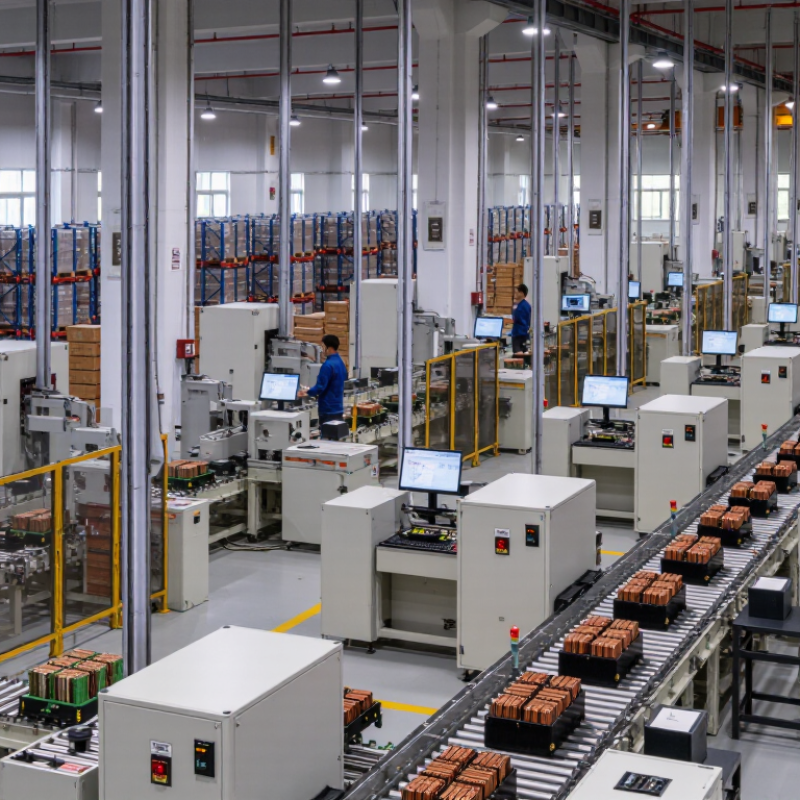
Factory verification matters. Check whether testing equipment is calibrated and whether inspection records are traceable by batch. During a visit, examine copper terminals, connector crimping, enclosure sealing, and labeling under real production conditions. A clean showroom proves little. Ask for evidence of compliance with applicable international standards, supported by valid laboratory reports and production controls.
Supply reliability also deserves close attention. Review monthly capacity, material sources, lead times, packaging methods, and backup plans for shortages. Confirm how the manufacturer handles failed samples, field complaints, and design changes. Clear technical communication is essential, especially when drawings use different measurement systems. No audit is perfect. I have seen factories pass a document review but struggle with small engineering changes. That gap deserves a controlled pilot order, repeated testing, and written acceptance criteria before larger purchasing commitments.
| Evaluation Dimension | What Global Buyers Should Verify | Relevant Technical Evidence | Typical Acceptance Benchmark | Buyer Risk if Not Verified | Suggested Rating |
|---|---|---|---|---|---|
| Product Scope | Whether the manufacturer has the required current-product category rather than acting only as a trading company. | Current transformers Shunt resistors Busbars Hall-effect sensors Rogowski coils | Documented production capability for the exact product type, voltage class, current range, and installation environment required by the project. | Incorrect product selection, unstable quality, and limited technical accountability. | Essential |
| Electrical Accuracy | Measurement accuracy under the specified current, frequency, temperature, burden, and load conditions. | Accuracy class, ratio error, phase displacement, linearity, temperature coefficient, and calibration records. | For metering current transformers, the requested accuracy class should be confirmed against the applicable IEC or equivalent national standard. Typical classes include 0.1, 0.2, 0.5, and 1.0. | Incorrect energy readings, protection maloperation, or non-compliance with the end user's design. | Critical |
| Rated Current Range | Compatibility with continuous current, overload current, short-time current, and the required measurement range. | Rated primary current, rated secondary current, overload capability, short-time thermal current, and dynamic current rating. | The supplier should provide test data for the complete operating range, not only the nominal current point. | Thermal damage, saturation, signal distortion, or premature component failure. | Critical |
| Insulation and Safety | Electrical isolation and insulation performance for the intended voltage and installation category. | Insulation resistance, power-frequency withstand voltage, impulse withstand voltage, creepage distance, clearance, and dielectric test reports. | Values must match the applicable product standard and the buyer's system voltage. For medium- and high-voltage applications, type-test evidence is normally required. | Electric shock, flashover, insulation breakdown, and serious equipment damage. | Critical |
| Applicable Standards | Whether the product is designed and tested to standards recognized in the destination market. | IEC 61869 series IEC 60044 legacy references UL requirements where applicable RoHS REACH | The manufacturer should identify the exact standard edition, product scope, test laboratory, and certificate holder. A generic “CE” claim alone is not sufficient technical evidence. | Import delays, failed customer audits, redesign costs, or rejection by an inspection body. | Critical |
| Quality Management | Effectiveness of the factory's quality-control system and traceability process. | ISO 9001 certificate, incoming inspection, in-process inspection, final testing, nonconformity records, corrective-action reports, and batch traceability. | A valid certificate should match the legal manufacturing entity and production address. Certificates should be checked with the issuing organization where practical. | Uncontrolled process variation and difficulty identifying the cause of field failures. | High |
| Factory Capability | Actual manufacturing resources, process control, and capacity for repeat orders. | Production-line photographs or audit results, winding and assembly equipment, calibration system, test benches, staffing, and monthly capacity evidence. | Capacity should be demonstrated using the buyer's forecast, required lead time, product complexity, and peak-season demand rather than a general sales statement. | Late delivery, subcontracting without approval, and inconsistent product quality. | High |
| Testing and Calibration | Whether finished products are tested individually or only sampled. | Ratio and polarity tests, insulation tests, resistance tests, accuracy tests, temperature testing, calibration equipment, and test-record retention. | 100% routine testing is preferred for safety-critical electrical characteristics; sampling plans should be documented for other inspections. | Defective units may reach the customer without detection. | Critical |
| Materials and Construction | Consistency and suitability of magnetic cores, copper or aluminum conductors, insulation materials, terminals, housings, and encapsulation compounds. | Material specifications, approved-vendor list, incoming material certificates, design drawings, and change-control procedure. | Materials should be traceable to defined specifications, with formal approval required for substitutions or design changes. | Loss of accuracy, overheating, corrosion, cracking, or reduced service life. | High |
| Environmental Performance | Resistance to temperature, humidity, vibration, dust, salt mist, and other installation conditions. | Operating temperature range, storage temperature, IP rating, humidity testing, vibration testing, corrosion testing, and altitude limitations. | Environmental ratings should be selected from the actual application conditions. IP ratings must be supported by the relevant test method and enclosure design. | Drift, corrosion, moisture ingress, mechanical failure, or unreliable readings in the field. | High |
| Customization Capability | Ability to adapt dimensions, terminals, mounting, insulation, output signals, labels, packaging, and documentation. | Approved drawings, engineering-change process, prototype procedure, sample approval, tooling ownership, and design-for-manufacturing review. | Custom requirements should be confirmed in a signed technical specification before quotation or mass production. | Fitment problems, repeated sample revisions, and unexpected tooling or engineering charges. | High |
| Sample and Pilot Validation | Whether the supplier can support a controlled sample-to-production transition. | Pre-production samples, first-article inspection, reliability testing, pilot-batch report, and comparison between approved samples and mass-production units. | Approval should cover electrical, mechanical, dimensional, marking, packaging, and documentation requirements. | Mass-produced units may differ from the approved sample. | High |
| Export and Documentation | Readiness to support international shipments and technical documentation requirements. | Commercial invoice, packing list, certificate of origin, HS-code support, inspection documents, installation instructions, drawings, and English test reports. | Documents should be consistent with the legal exporter, product description, quantity, and destination-country requirements. | Customs delays, installation errors, and additional import or inspection costs. | High |
| Lead Time and Supply Continuity | Ability to deliver samples and repeat orders reliably, including during component shortages or seasonal peaks. | Quoted sample lead time, production lead time, capacity plan, safety-stock policy, approved backup materials, and on-time-delivery records. | Lead time should be stated separately for samples, tooling, pilot batches, and repeat production, with assumptions clearly defined. | Project delays, production stoppages, and emergency freight expenses. | High |
| Warranty and After-Sales Support | Clarity of warranty coverage and response process for technical or quality issues. | Warranty period, exclusions, failure-analysis procedure, replacement policy, response time, remote support, and corrective-action process. | Commercial terms should define responsibility for verified manufacturing defects, transport damage, installation errors, and unauthorized modifications. | Long dispute cycles and limited recovery when field failures occur. | High |
| Total Cost of Ownership | Overall purchasing cost rather than unit price alone. | Unit price, tooling, testing, packaging, freight, duties, inspection, spare parts, failure rate, and expected service life. | The lowest quotation should not be selected without comparing specifications, test coverage, warranty terms, delivery reliability, and lifecycle risk. | Hidden costs, premature replacement, and higher project risk. | High |
China Top Power Current Manufacturers for Global Buyers?
Chinese manufacturers serve several important categories in the power-current sector. These include low-voltage switchgear, distribution cabinets, dry-type transformers, industrial power supplies, and battery charging systems. Cable producers commonly specialize in copper conductors, aluminum conductors, control cables, and fire-resistant insulation. Other factories focus on current transformers, energy meters, solar inverters, and power-quality equipment.
Each category requires different technical evidence. Switchgear buyers should review rated voltage, short-circuit capacity, enclosure protection, and temperature-rise test results. Transformer buyers need efficiency data, winding materials, noise levels, and insulation performance. For power supplies, check output stability, overload protection, cooling design, and operation under changing loads. These details matter more than polished catalog photographs.
In supplier evaluations, factory documentation often reveals practical differences. Ask for recent test reports, production samples, calibration records, and material traceability. Confirm whether testing occurs in-house or through an independent laboratory. A serious manufacturer can explain tolerances clearly and identify rejected units. That is reassuring.
Compliance should match the destination market and project environment. International standards may apply, while local regulations still require separate verification. Factory audits can examine crimping quality, assembly discipline, incoming-material checks, and final inspection. Remote audits help, but they cannot replace a sample-based review. I have found that delivery promises are sometimes too optimistic. Buyers should allow inspection time, packaging checks, and spare-component planning before shipment.
China Top Power Current Manufacturers for Global Buyers?
Quality is proven through repeatable testing, not attractive catalog photos. Experienced buyers should request samples, factory audit records, and recent inspection reports. For power and current equipment, useful checks include insulation resistance, thermal cycling, overload protection, and terminal temperature tests. Test conditions must match the intended voltage, frequency, load, and installation environment.
Certification claims require careful review. ISO 9001 indicates a quality management system, but it does not certify every product. IEC standards can guide design and testing, while CE marking may require a documented conformity assessment for applicable European requirements. RoHS and REACH evidence can support restricted-substance compliance. Other markets may require local safety marks or additional laboratory reports. A certificate without a matching model number is a warning sign.
Export compliance also depends on accurate documents. Confirm the commercial invoice, packing list, certificate of origin, HS classification, and product specifications before shipment. Ask whether the manufacturer screens destinations, end users, and controlled components under applicable trade rules. Small errors happen. A translated rating label may not match the test report. Correct it before production, not after customs inspection. Keep serial numbers, batch records, and calibration dates traceable. This makes claims easier to investigate and supports reliable after-sales decisions.
The chart compares common nominal single-phase supply voltages used in major buyer markets. China and most European markets commonly use 50 Hz, while the United States uses 60 Hz; Japan uses 50 Hz in the east and 60 Hz in the west. Global buyers should confirm voltage, frequency, plug configuration, product testing, and destination-market requirements before export. Depending on the product and destination, compliance reviews may include IEC standards, CE marking, RoHS requirements, ISO 9001 quality-system evidence, and UN 38.3 documentation for applicable lithium-battery shipments.
Global buyers comparing China’s power current manufacturers should begin with product fit, not quoted price. Define voltage range, current rating, frequency, enclosure material, temperature limits, and installation method. A supplier may offer an attractive unit that fails under continuous outdoor use. Request technical drawings, test reports, material lists, and a sample from the same production line.
Factory experience matters. Review export records, production equipment, quality-control procedures, and staff qualifications. Ask how incoming materials are checked and how failed units are recorded. Independent inspections can verify dimensions, insulation, terminal strength, and operating performance. Certifications should match the destination market and product category. Do not accept copied documents or unclear certificate numbers. A video call helps, but it cannot replace physical verification.
When placing an order, confirm model numbers, tolerances, packaging, lead time, warranty terms, and inspection points in writing. Start with a small trial order when the supplier is unfamiliar. Compare total landed cost, including tooling, freight, duties, testing, and possible rework. Payment milestones should connect to measurable production steps. A spreadsheet helps, yet it can still hide communication delays or inconsistent batches. That weakness deserves attention. Keep approved samples, signed specifications, and dated inspection photos. Clear records protect both sides and make future repeat orders more reliable.