skip to Main Content
China’s role in power equipment is expanding as grids absorb renewable generation, electric vehicles, and industrial loads. According to IRENA’s Renewable Capacity Statistics 2024, renewables accounted for 86% of new global power capacity added in 2023. This growth increases the need for compact, dependable, and serviceable switching equipment.
The International Energy Agency’s Electricity 2024 report expects global electricity demand to rise by more than 6% between 2024 and 2026. Distribution networks must therefore manage higher loads without sacrificing safety. A properly engineered High-Voltage Distribution Box can support feeder protection, isolation, metering, and controlled power distribution. Its enclosure, insulation, busbars, grounding system, and thermal design deserve close technical review.
Details matter.
China-based manufacturers often provide integrated engineering, factory testing, and flexible production for utility, industrial, renewable-energy, and infrastructure projects. However, price alone cannot define a top supplier. Buyers should examine design calculations, short-circuit ratings, ingress protection, temperature-rise results, traceability, and after-sales support. Relevant projects may also require conformity with IEC 62271 or other applicable regional standards.
The figures vary by market and application. That limitation matters. A supplier may show impressive production capacity, yet still require stronger documentation or site support. Reliable manufacturers should welcome factory inspections, witness testing, and transparent quality records. This introduction examines how leading Chinese suppliers build High-Voltage Distribution Box solutions, compare technical capability, and earn trust through measurable performance rather than broad marketing claims.
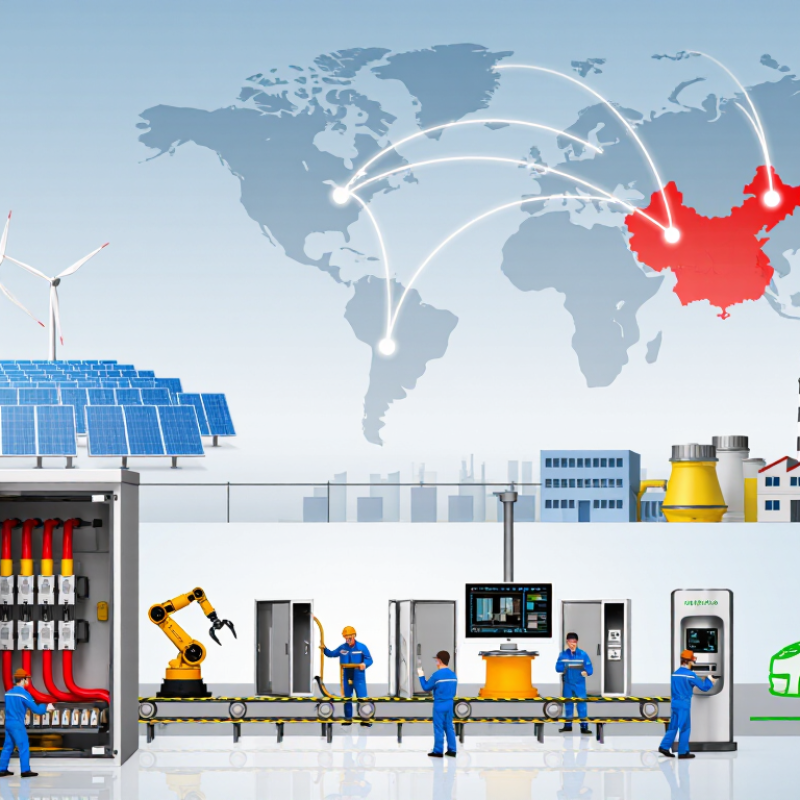
A high voltage distribution box is the controlled switching center of an electric vehicle or energy storage system. It receives power from the battery and distributes it through protected high voltage circuits. Typical systems operate around 400 or 800 volts, depending on the vehicle architecture.
Inside, busbars carry current between contactors, fuses, pre-charge components, and sensing devices. The box may supply the inverter, onboard charger, heating system, and air-conditioning compressor. Its core function is controlled energy routing. It must also disconnect power during crashes, insulation faults, overcurrent events, or maintenance. The IEA’s Global EV Outlook 2024 reported nearly 14 million electric car sales in 2023. Electric vehicles represented about 18% of new car sales worldwide. This growth increases the need for compact, reliable high voltage protection.
Small details matter. Sealed housings help resist moisture, dust, and vibration. Creepage distance, clearance, temperature rise, and connector locking require careful validation under IEC-based design practices. A high voltage distribution box is not a magic shield. Poor busbar spacing can create heat, noise, or insulation stress. Designers sometimes focus too heavily on rated current and overlook service access. That is a practical weakness. Testing should include thermal cycling, vibration, insulation resistance, and fault interruption. IEA data shows strong market momentum, but field reliability still depends on disciplined engineering, traceable inspection, and realistic operating conditions.
Representative medium-voltage AC system levels commonly used in power distribution. Regional networks may use different nominal values.
A high-voltage distribution box is an enclosed electrical assembly used to receive, distribute, switch, protect, and monitor high-voltage power. Its core functions typically include busbar connection, circuit isolation, overcurrent and short-circuit protection, insulation coordination, grounding, and electrical status monitoring. Under commonly used IEC definitions, high voltage generally refers to systems above 1,000 V AC or 1,500 V DC.
Reference: IEC 60038 standard nominal voltages; actual voltage selection depends on the grid, application, insulation system, and local regulations.
China Top High Voltage Distribution Box Manufacturer: Main Components and Technical Specifications
A high-voltage distribution box routes battery energy to inverters, chargers, compressors, and auxiliary loads. Its main components include copper busbars, high-voltage contactors, fuses, connectors, pre-charge circuits, and a service disconnect. An insulation monitoring device detects leakage before it becomes dangerous. The enclosure usually combines aluminum or coated steel with flame-resistant insulating parts. Short paths matter. They reduce heat and voltage loss.
For electric platforms, designers commonly specify 400–1,000 V DC systems. Continuous current may range from 200 to 600 A, depending on vehicle size and load demand. IEC 61439-1 defines key requirements for low-voltage assemblies up to 1,500 V DC. Designers should also verify creepage distance, clearance, dielectric strength, temperature rise, and short-circuit withstand. IP67 protection is often selected for sealed applications, but testing quality matters more than the label.
The IEA Global EV Outlook 2024 reported more than 14 million electric cars sold worldwide in 2023. Electric models represented nearly 18% of global car sales. This growth increases demand for stable and compact power distribution. A practical design should support CAN communication, HVIL monitoring, and thermal sensing. One weakness remains. A neat datasheet can hide poor connector sealing or uneven busbar heating. I would not treat IP67 alone as proof of reliability. Real validation needs vibration, salt spray, overload, and repeated temperature-cycle testing.
| No. | Main Component or Specification | Typical Technical Data | Function and Selection Notes | Applicable Standard or Reference |
|---|---|---|---|---|
| 1 | Rated Voltage | 3.6 kV, 7.2 kV, 12 kV, 17.5 kV, 24 kV or 40.5 kV | Defines the maximum system voltage for which the distribution box is designed. The selected rating should be equal to or higher than the network voltage. | IEC 62271-1; IEC 62271-200 |
| 2 | Rated Frequency | 50 Hz or 60 Hz | Must match the frequency of the connected medium-voltage power system. | IEC 62271-1 |
| 3 | Busbar System | Copper or aluminium; typical continuous current: 630 A to 3,150 A | Carries and distributes current between incoming, outgoing and sectionalizing circuits. The cross-section is selected according to current, temperature rise and short-circuit duty. | IEC 62271-200; IEC 60865-1 |
| 4 | Vacuum Circuit Breaker | Rated current: 630 A to 3,150 A; short-circuit breaking current: commonly 16 kA to 40 kA | Interrupts load and fault currents. A stored-energy operating mechanism is commonly used for electrical or manual operation. | IEC 62271-100 |
| 5 | Load-Break Switch | Rated current: typically 200 A to 630 A; voltage class up to 40.5 kV | Provides switching of normal load current. It is not a substitute for a circuit breaker when high fault-current interruption is required. | IEC 62271-103 |
| 6 | Disconnector and Earthing Switch | Visible isolation function; earthing switch short-time withstand selected to match the system fault level | Provides safe isolation and grounding during maintenance. Mechanical and electrical interlocks help prevent incorrect operating sequences. | IEC 62271-102 |
| 7 | Current Transformer | Typical secondary current: 1 A or 5 A; protection and metering cores selected separately | Reduces primary current to a measurable value for protection relays, meters and monitoring equipment. Accuracy class depends on the application. | IEC 61869-1; IEC 61869-2 |
| 8 | Voltage Transformer or Capacitive Voltage Sensor | Secondary voltage commonly 100 V or 110 V; sensor output depends on the protection and measurement system | Provides voltage signals for metering, protection, synchronizing and voltage-presence indication. | IEC 61869-1; IEC 61869-3 |
| 9 | Surge Arrester | Metal-oxide type; continuous operating voltage and nominal discharge current selected for the system | Limits transient overvoltage caused by lightning or switching operations and protects insulation and connected equipment. | IEC 60099-4 |
| 10 | Protection Relay | Functions may include overcurrent, earth-fault, undervoltage, overvoltage and circuit-breaker failure protection | Detects abnormal operating conditions and sends a trip command to the circuit breaker. Settings must be coordinated with the upstream and downstream network. | IEC 60255 series |
| 11 | Internal Arc Classification | Optional IAC classification, such as AFL or AFLR, with a specified test current and duration | Indicates the level of protection provided to people near the enclosure during an internal arc event. The classification must match the installation layout. | IEC 62271-200 |
| 12 | Short-Time Withstand Current | Common ratings include 16 kA, 20 kA, 25 kA, 31.5 kA and 40 kA for 1 s or 3 s | Specifies the fault current that the equipment can withstand for a defined period without unacceptable damage. | IEC 62271-1; IEC 62271-200 |
| 13 | Power-Frequency Withstand Voltage | Typical 12 kV equipment: 28 kV for 1 minute; values vary by rated voltage class | Verifies insulation performance under a specified alternating test voltage for a defined duration. | IEC 62271-1 |
| 14 | Lightning Impulse Withstand Voltage | Typical 12 kV equipment: 75 kV peak; values vary by rated voltage class | Defines the insulation capability against standard lightning impulse overvoltage. | IEC 62271-1 |
| 15 | Enclosure Protection | Common indoor ratings: IP4X or higher; outdoor ratings often require IP54 or higher | Protects personnel from hazardous access and shields internal parts from solid objects, dust and water according to the installation environment. | IEC 60529 |
| 16 | Enclosure Material and Finish | Painted galvanized steel, stainless steel or aluminium; powder-coated finish commonly used | The material and coating should be selected for mechanical strength, corrosion resistance, indoor or outdoor service and site pollution conditions. | IEC 62271-200; ISO 12944 |
| 17 | Cable Termination Compartment | Accommodates screened separable connectors or cable lugs; provision for cable clamps and stress control | Provides safe connection of incoming and outgoing medium-voltage cables while maintaining insulation clearances and mechanical support. | IEC 60502-4; IEC 62271-200 |
| 18 | Control and Auxiliary Power | Common auxiliary supplies: 24 V DC, 48 V DC, 110 V DC, 220 V DC or 220/230 V AC | Supplies trip coils, closing coils, indication lamps, heaters, protection relays and communication devices. | IEC 62271-1; IEC 60255 series |
| 19 | Mechanical and Electrical Interlocking | Interlocks prevent unsafe operations, such as closing an earthing switch onto an energized circuit | Reduces the risk of operating errors and supports safe maintenance procedures. | IEC 62271-200 |
| 20 | Installation Environment | Typical indoor ambient temperature: -5 °C to +40 °C; maximum average over 24 hours: +35 °C | Altitude, humidity, pollution level, seismic conditions and ventilation requirements must be confirmed before final selection. | IEC 62271-1 |
Note: The listed values are commonly used reference ratings for medium-voltage distribution equipment. Final specifications should be verified against the applicable grid code, site conditions, protection study and project requirements.
China Top High Voltage Distribution Box Manufacturer
Manufacturing begins with controlled material selection, not cabinet assembly. Copper bars are checked for conductivity, dimensions, and surface damage before cutting. Steel panels are measured after laser processing to prevent uneven door gaps. Operators record bending angles, weld points, coating thickness, and torque values. Small errors matter. A loose connection can create heat months later.
The IEA Electricity 2024 report forecasts global electricity demand will grow by about 4% annually from 2024 to 2026. This pressure makes stable distribution equipment more important. Quality teams therefore verify products against IEC 61439 design and routine verification requirements. Tests commonly include insulation resistance, dielectric withstand, temperature-rise assessment, protective-circuit continuity, and enclosure protection checks under IEC 60529. Factory acceptance testing should also confirm wiring, labels, interlocks, and terminal tightening. Every result needs a traceable record.
Experience shows that inspection alone cannot repair poor process control. Incoming copper may pass sampling while one hidden surface defect escapes detection. That weakness deserves review.
Digital torque tools, barcode tracking, and calibrated test equipment reduce such risks. Yet human judgment remains necessary during final inspection. No production line is flawless. The practical goal is controlled variation, clear evidence, and fast corrective action when measurements drift.
China Top High Voltage Distribution Box Manufacturer
Applications Across Industrial and Energy Systems
High voltage distribution boxes support safe, controlled power routing in factories, substations, renewable plants, and transport infrastructure. They protect switching equipment from dust, moisture, overloads, and accidental contact. In steel mills, chemical facilities, and data centers, compact enclosures help manage power near demanding loads. Clear labeling and accessible inspection points matter more than attractive surfaces.
The International Energy Agency reported nearly 510 gigawatts of renewable capacity additions worldwide in 2023. This growth increases demand for reliable collection and distribution equipment at solar and wind sites. A distribution box may connect multiple feeder circuits, isolate faults, and transfer power toward transformers or storage systems. Thermal monitoring is useful when cables operate continuously under high current. Small errors become expensive outages.
Industrial projects also require designs suited to harsh conditions. Salt air, vibration, condensation, and limited installation space can weaken ordinary cabinets. That assumption is convenient, but incomplete. Engineers should verify insulation levels, short-circuit withstand ratings, ingress protection, grounding methods, and maintenance access against applicable IEC requirements. The IEA’s Electricity 2024 report expects global electricity demand to grow strongly through 2026, driven partly by industry, cooling, and data centers. That pressure makes reliable distribution practical, not optional. Yet specifications should follow measured site conditions, not copied templates. Past field experience shows that overlooked heat buildup can shorten component life, even when initial testing passes.
Selecting a reliable Chinese manufacturer requires evidence beyond a polished website. The IEA Electricity 2024 report expects global electricity demand to grow by about 3.4% annually through 2026. This growth increases pressure on safe, traceable distribution equipment. Ask for current factory audits, production capacity, and completed project records. Verify whether the manufacturer follows applicable IEC 62271 requirements and relevant Chinese standards. A certificate alone is not enough.
Request type-test and routine-test reports from qualified laboratories. Check dielectric withstand, temperature rise, short-circuit performance, enclosure protection, and interlock reliability. For each cabinet, the supplier should provide serial-number traceability, material records, wiring diagrams, and inspection results. ISO 9001 certification supports process control, but it does not replace product testing. Confirm the certificate scope and validity directly. Small details matter.
Review the factory’s final assembly area. Look for calibrated instruments, controlled wiring, clean busbar joints, and documented torque settings. Require a factory acceptance test before shipment, with photographs and signed records. Samples should match mass production. That point is often missed. A supplier may answer quickly but still lack engineering depth. Ask how it handles design changes, spare parts, field failures, and delivery delays. No manufacturer is perfect, including those with impressive export figures. A practical risk review should compare test evidence, communication quality, after-sales response, and total lifecycle cost rather than choosing the lowest quotation.
