China Best Pallet Banding Kit Suppliers for Global Buyers
Global buyers rarely lose time because a strap is missing; they lose it when the strap, tensioner, seal, and load fail to work together. A well-matched Pallet Banding Kit can help secure cartons, reduce shifting, and make hand packing more consistent. But no kit suits every pallet. Strap width, material, load weight, and operator technique all matter.
The wider packaging market shows why these choices deserve careful attention. Smithers’ The Future of Global Packaging to 2028 estimated that global packaging reached about $1.05 trillion in 2023, with further growth forecast. That figure covers packaging broadly, not pallet banding kits alone. It signals scale, not a guarantee that any one product will perform well. Packaging scholar Dr. Susan Selke’s research on packaging trade-offs offers a useful reminder: performance should be considered alongside material use and distribution needs. Buyers should test actual loads, not rely only on a supplier’s catalog.
Small details count. A rough pallet edge can damage a strap; an awkward tensioner can slow packing. Too much tension may crush cartons. Too little may let the load shift. There is no magic kit. For global buyers comparing suppliers in China, this guide focuses on measurable specifications, sample testing, clear communication, and after-sales support. Ask for strap compatibility, tool guidance, and spare-part availability before ordering. Then test the kit on your own cartons and pallet pattern. A short trial can reveal issues a polished product photo cannot. One caveat remains: published market figures do not replace hands-on testing.
What a Pallet Banding Kit Is and How Its Components Work
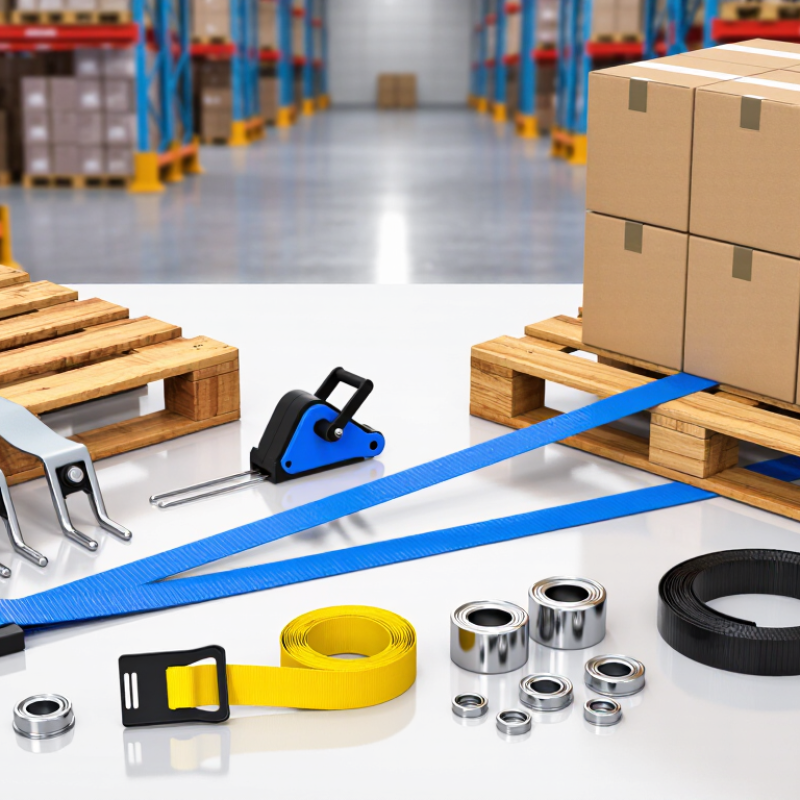
A pallet banding kit is a set of tools and materials for securing cartons or other goods to a pallet. A typical kit includes plastic or steel strapping, a tensioner, seals or buckles, and sometimes a strap dispenser. Each part has a distinct job. The strap holds the load together, while the tensioner removes slack. A seal or buckle keeps the strap closed after tensioning. Simple, but easy to misjudge.
During packing, an operator feeds the strap around the load and through the tool. The tensioner pulls it snug against the cartons. The strap ends are then joined with a seal, buckle, or tool-made joint, depending on the kit. Too little tension can let boxes shift during handling. Too much may crush corners or damage lighter cartons. A cardboard edge protector can help spread pressure across vulnerable edges.
Kit choice depends on load weight, pallet shape, and strapping material. Polypropylene strapping is often used for lighter loads; heavier or demanding applications may call for stronger material. Check that the tensioner matches the strap’s width and thickness. A mismatch can cause slipping or poor seals. A frequent oversight is buying a tool before testing it with the actual strap. One trial on a loaded pallet can reveal awkward threading, uneven tension, or a seal that is difficult to inspect.
How a Pallet Banding Kit Works
Typical sequence for a manual strapping kit. Exact tool designs and whether cutting is built into the tensioner vary by kit.
Components: The strap wraps around the load; the tensioner tightens it; a sealer or compatible seals secure the joint; excess strap is cut off, sometimes by a cutter integrated into the tensioner.
Key Types of Pallet Banding Kits and Their Applications
China Best Pallet Banding Kit Suppliers for Global Buyers
Key Types of Pallet Banding Kits and Their Applications
Pallet banding kits generally combine strapping, a tensioning tool, seals, and a cutter. Manual kits suit low-volume shipping and smaller warehouses. Operators can tighten straps around cartons or stable pallet loads without power. They are portable, but repeated hand tensioning can slow busy packing lines. A small mismatch matters: the strap must suit both the load and the tool.
Battery-powered kits help teams band more pallets with less manual effort. They are useful in distribution centers where operators move between packing stations. Pneumatic kits can support high-volume operations, but they need a suitable air supply and regular maintenance. Strap material also matters. Polypropylene often fits lighter loads, while polyester can provide stronger restraint for heavier shipments. Steel strapping may be considered for rigid, heavy loads, provided the application and handling procedures support it. No kit fits every load.
Tips: Check strap width, thickness, and compatibility with the tensioner and seals before ordering. Test a sample pallet under real packing conditions. Watch for strap loosening, crushed cartons, or shifting layers during handling. It is easy to focus on tool speed and overlook operator training; that part deserves attention too.
How to Choose a Kit for Different Loads and Packaging Needs
China Best Pallet Banding Kit Suppliers for Global Buyers
How to Choose a Kit for Different Loads and Packaging Needs
A suitable pallet banding kit should match the load, not just the pallet size. Light cartons may need narrower strapping and a simple tensioner. Dense materials, such as stacked tiles or metal parts, usually require stronger strapping and tools that can maintain consistent tension. Small details matter. Consider sharp edges, uneven stacks, and whether the load may shift during handling.
For polypropylene strapping, a compatible manual tensioner and seals can suit lighter shipments. Polyester strapping often works better for heavier or more rigid loads, but check the tool’s stated strap width and thickness. A kit that feels sturdy in a sample test may still be tiring during a full shift. Try it with the actual load and packaging before ordering in volume. Test before scaling.
Global buyers should also check replacement-part availability, clear instructions, and whether the kit supports the strapping sizes used at their facility. Ask suppliers for specifications, including tensioner range and seal compatibility, rather than relying on vague descriptions like “heavy duty.” Measurements can be misleading if packaging varies between batches, so keep a sample carton or pallet pattern for comparison. The best fit is sometimes less obvious than expected.
How to Evaluate Chinese Suppliers for Quality and Reliability
China Best Pallet Banding Kit Suppliers for Global Buyers
How to Evaluate Chinese Suppliers for Quality and Reliability
A reliable supplier should prove performance with samples, records, and repeatable production checks. Ask for a complete kit and test it on your actual pallet load. Check strap width, joint strength, tension consistency, and tool comfort across several cycles. Measure the sealed straps, not just the supplier’s claims. Paper promises are easy. Request inspection records, material specifications, and batch traceability, then compare them with the delivered goods. Certificates can help, but they do not replace product testing.
Check the details. The World Bank’s 2023 Logistics Performance Index assessed 139 economies and included shipment timeliness among its six dimensions. It is not a supplier scorecard, but it shows why delivery reliability deserves measurable attention. Ask suppliers for recent on-time delivery figures, typical lead times, and examples of how they handled delays. Confirm spare-part availability and response times in writing. A factory visit or independent pre-shipment inspection can reveal inconsistent packing, worn tools, or weak quality controls. Even then, one inspection cannot guarantee every order. Keep a record of defects and corrective actions, and review performance after each shipment.
What Global Buyers Should Check Before Ordering and Shipping
Before ordering a pallet banding kit, compare its parts with your actual packing routine. Confirm the strap material, width, thickness, seals, and tensioning tool are compatible. Check the kit’s stated operating limits against your pallet size, load weight, and handling conditions. A sample kit can reveal awkward details, such as a cutter that is hard to reach or seals that slip on a dusty strap. Test it on a representative load, not just an empty pallet. Ask for a clear parts list, product specifications, and instructions in a language your team can use. Small omissions matter.
Shipping details deserve equal attention. Request the packed carton dimensions and gross weight before comparing freight quotes; estimates based only on product weight can be misleading. Confirm the expected production time, dispatch date, packaging method, and whether spare seals or replacement parts can ship with the order. For long-distance transport, ask how the kit is protected from moisture and rough handling. Make sure the commercial invoice and packing list describe the goods consistently, and clarify who arranges import clearance and delivery. Even a careful checklist can miss something. I would still verify the carton markings against the purchase order before dispatch.
 skip to Main Content
