7 Best Fluid End Modules for Global Buyers
Choosing the right Fluid End Modules is a pressure-management decision, not merely a purchasing exercise. Inside each module, valves, seats, plungers, and seals face repeated impact, abrasive mud, and sudden pressure changes. A small defect can become a visible leak beside the pump skid. That detail matters.
The International Energy Agency’s Oil 2024 report projects global oil demand will reach 105.4 million barrels per day by 2030. Baker Hughes’ International Rig Count also shows continuing drilling activity across North America, the Middle East, and other major regions. These trends support sustained demand for dependable pressure-pumping components. However, global buyers should avoid treating market growth as proof of product quality.
Dr. Robert F. Mitchell, author of Fundamentals of Drilling Engineering, offers a useful engineering reminder: “Drilling performance depends on pressure control, hydraulics, and mechanical reliability.” The statement is simple. Its application is not.
This guide compares seven Fluid End Modules through practical criteria, including metallurgy, pressure rating, pump compatibility, sealing design, maintenance access, and documented testing. API 7K requirements provide an important reference, but certification alone does not answer every field question. Service history, spare-part availability, machining accuracy, and supplier response times can matter just as much.
Some rankings remain debatable. They should.
A module that performs well in clean water may struggle with high-solids drilling mud. Buyers should examine actual operating conditions, not attractive catalog photographs. The following selection focuses on reliability, lifecycle value, and evidence that can be checked before installation.
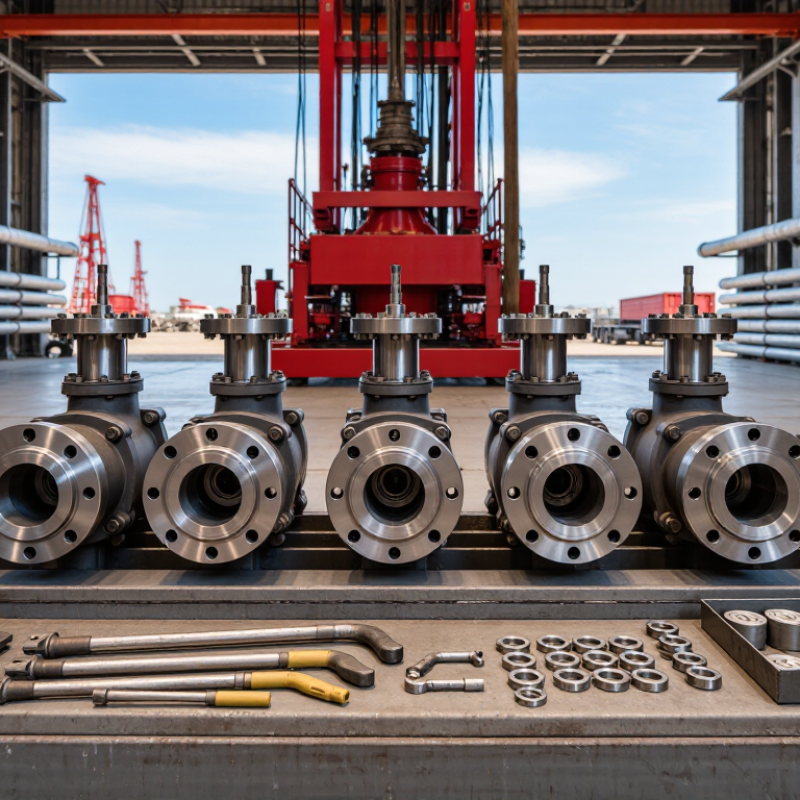
Fluid End Modules: Definition, Structure, and Core Functions
Fluid End Modules: Definition, Structure, and Core Functions
A fluid end module is the pressure-handling section of a reciprocating pump. It directs, contains, and controls liquid during each piston or plunger stroke. In drilling, industrial, and high-pressure service, this module faces repeated impact, vibration, and pressure cycling.
Its structure commonly includes a fluid cylinder, suction and discharge valves, valve seats, liners, pistons or plungers, covers, seals, and connecting passages. Each part has a specific role. The valves open and close with changing pressure, while the liners protect the main body from abrasion. Seals prevent leakage around moving components. A small mismatch can cause uneven loading.
Material selection requires more than checking tensile strength. Buyers should compare fluid chemistry, suspended solids, temperature, pressure, and operating speed. Alloy steel may support demanding pressure conditions, while corrosion-resistant materials can suit aggressive fluids. Elastomer selection also matters. A seal that performs well in clean water may fail quickly in oil-based or chemically treated fluids.
For global buyers, dimensional interchangeability is essential. Check bolt patterns, chamber volume, valve geometry, connection standards, and available drawings. Pressure testing records and traceable material certificates add practical confidence. Inspectors should examine sealing surfaces, bore finish, cracks, and machining marks before installation. A polished specification can still hide an unsuitable tolerance. I would also question any supplier that cannot explain its inspection method clearly. Real service data is useful, but it is often incomplete. That limitation deserves attention.
Seven Leading Fluid End Module Types for Global Applications
Global applications demand fluid end modules that match pressure, chemistry, temperature, and maintenance conditions. Plunger modules suit high-pressure water, chemical injection, and compact dosing systems. Piston modules handle heavier fluids and repeated industrial duty. Diaphragm modules isolate the pumped liquid from moving components, reducing leakage risk in sensitive processes.
Hydraulic diaphragm modules support accurate metering under demanding pressures. Double-diaphragm modules add separation and monitoring for corrosive or hazardous liquids. Packed plunger modules remain practical where operators accept routine seal adjustment and inspection. Ceramic-lined modules resist abrasive slurries, although their brittle surfaces require careful installation and clean alignment.
Each design needs evidence, not assumptions. Check wetted materials against the actual fluid concentration and temperature. Review pressure ratings at operating speed, not only at laboratory conditions. Field technicians should inspect valves, seals, diaphragms, and bolt torque during scheduled maintenance. Small details matter.
Global buyers should also consider spare-part availability, local service skills, electrical compatibility, and documentation. A module that performs well in a cool workshop may struggle in humid coastal conditions. This is where specifications can become incomplete. Actual viscosity, suspended solids, and start-stop frequency are often underestimated. Careful application data usually produces a safer and more reliable selection.
Performance Factors: Pressure, Flow Rate, Materials, and Durability
7 Best Fluid End Modules for Global Buyers
Selecting a fluid end module requires more than checking the maximum pressure on a datasheet. Pressure should match the pump’s continuous duty, not only its short-term limit. A module rated for 10,000 psi may suffer early fatigue when exposed to repeated pressure spikes. Flow rate matters just as much. Restricted passages can create turbulence, heat, and unstable output. Review the required liters per minute, stroke frequency, and fluid viscosity together. Small differences become obvious when the discharge line begins to vibrate.
Material selection should follow the fluid, temperature, and cleaning method. Stainless alloys can resist many corrosive fluids, while hardened steel may better tolerate abrasive particles. Neither choice is universally superior. Check valve seats, plungers, seals, and gaskets separately. One weak component can reduce the useful life of the entire module. Elastomers also need careful evaluation; a seal that performs well at room temperature may harden near a hot process line. This detail is often missed.
Durability depends on design and maintenance habits. Look for smooth internal surfaces, replaceable wear parts, accurate machining, and documented pressure testing. Field inspections should check scoring, pitting, loose fittings, and unusual pulsation. Do not rely on appearance alone. A clean housing may hide internal fatigue. It is also worth comparing the supplier’s test records with your actual operating cycle, although records may not reflect every site condition. I would leave room for revision after the first service interval. Real equipment is less predictable than a laboratory chart.
7 Best Fluid End Modules for Global Buyers
Performance comparison by maximum working pressure, rated flow rate, and expected service life.
The benchmark uses representative industrial configurations rather than brand-specific products. Pressure and flow capacity depend on operating speed, fluid type, temperature, and seal design. Stainless steel and alloy steel are commonly selected for high-pressure service, while duplex stainless steel, tungsten carbide, ceramics, and elastomers can improve corrosion resistance and wear life.
Global Buyer Checklist: Compatibility, Certification, and Maintenance
7 Best Fluid End Modules for Global Buyers
Choosing among the seven best fluid end modules starts with compatibility, not price. Confirm pump model, fluid type, pressure rating, connection size, and operating temperature. A module that fits physically may still fail under abrasive drilling mud or repeated pressure cycles. Check piston diameter, liner dimensions, valve arrangement, and seal materials against the equipment manual. Small differences matter.
Certification should be verified before shipment. Request material certificates, pressure-test records, dimensional reports, and traceable batch numbers. For international projects, confirm whether documentation meets the destination’s safety and quality requirements. Ask for independent inspection when the application is critical. Paperwork alone is not proof.
Maintenance planning protects the purchase. Inspect valves, liners, seats, and seals at scheduled intervals. Keep spare wear parts near the worksite, especially where delivery takes weeks. Record pressure changes, leakage, vibration, and operating hours. These details often reveal problems early. A clean fluid path helps too.
No checklist is perfect. Field conditions can change quickly. Recheck compatibility after changing fluids, pressures, or temperatures. One overlooked seal compound may cause swelling, leakage, and unplanned downtime. Buyers should also review installation training and technical support before approval. The cheapest module is rarely the lowest-cost choice when maintenance access is poor.
 skip to Main Content
