skip to Main Content

7 Best CCS Busbar Manufacturers for Global Buyers

In an electric-vehicle battery pack, a CCS Busbar helps connect cells while supporting electrical monitoring and organized assembly. Its design can influence current distribution, insulation, thermal behavior, and the space available inside a module. Small details matter: conductor thickness, weld consistency, sensor routing, and protective materials all affect how a finished assembly performs. A neat drawing is only the beginning.

This guide introduces seven CCS Busbar manufacturers for global buyers and outlines practical points for comparing them. It considers engineering support, material options, production capabilities, quality controls, customization, and experience serving international projects. Buyers should also ask about sample testing, traceability records, production capacity, and communication across time zones. These details can help reveal whether a supplier fits a specific battery design, rather than simply offering an attractive catalog. Claims still need verification. A polished brochure is not proof of stable manufacturing, and published capabilities may change over time. Request current documentation and assess samples against your own technical requirements before making a sourcing decision. No single manufacturer suits every program; the best choice depends on pack design, target volumes, validation needs, and regional support.

7 Best CCS Busbar Manufacturers for Global Buyers

What CCS Busbars Are and How They Function

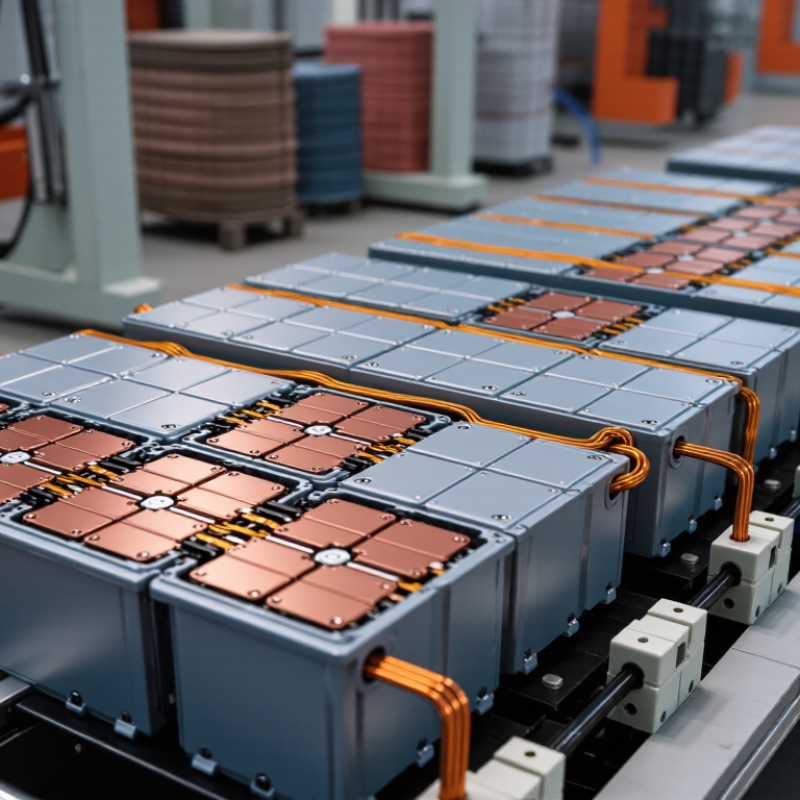
A CCS busbar, or cell connection system, links battery cells into electrical groups. It combines conductive metal paths with an insulating carrier and, in many designs, voltage-sensing connections. Copper or aluminum conductors carry current between cell terminals. Small sensing wires relay cell-level voltage data to the battery management system. Some assemblies also support temperature monitoring, depending on their design.

During operation, current flows through the busbars while the sensing circuit helps the control system track cell conditions. The carrier keeps conductors positioned and separated, reducing the chance of unwanted contact. Connections may be welded or made using another process suited to the materials and production requirements. A practical design must account for current, heat, vibration, and space constraints. CAD layouts look tidy; real assemblies can be less forgiving. Prototype checks matter.

Tips: Confirm the rated current and terminal layout before choosing an assembly. Check insulation, weld quality, and sensing-wire routing. Small routing errors can complicate inspection later. Validate the design under realistic thermal and vibration conditions, not just on a workbench.

Key Criteria for Evaluating CCS Busbar Manufacturers

Choosing a CCS busbar manufacturer starts with the production details behind the sample. Ask what copper or aluminum grades are used, and how incoming material is checked. A clean surface is useful, but it cannot prove consistent conductivity. Details matter. Request dimensional reports for conductor thickness, bend angles, and hole positions. Small deviations can complicate assembly inside a battery pack.

The joining process deserves close attention. Ask how weld strength and electrical resistance are measured, and whether results are recorded by production lot. Insulation should be checked for coverage, adhesion, and resistance to heat and vibration. Request test data from samples that reflect the intended design, not only a generic product. Ask for evidence. Thermal cycling and vibration results can reveal weaknesses that a visual inspection misses.

Production capability matters too. A supplier should explain its tooling, inspection steps, traceability, and process changes in plain terms. Check whether it can support prototype adjustments before larger production runs. Clear answers are reassuring; vague promises are not. Still, documentation has limits. A thick quality manual does not guarantee careful work on every shift. Discuss how defects are contained, reported, and corrected, then compare those answers with actual inspection records.

Seven CCS Busbar Manufacturers Serving Global Buyers

The seven CCS busbar manufacturers serving global buyers differ in production focus, engineering support, and order flexibility. Some specialize in precision-stamped copper or aluminum conductors. Others integrate busbars, voltage-sensing circuits, insulation films, and connectors into complete cell contact systems. The right fit depends on your battery design, not a broad “best” label.

One group excels at laminated busbars, where stacked conductors and insulation help control space inside a battery pack. Another focuses on sensor integration, routing fine wires or flexible circuits beside metal contacts. High-volume automotive suppliers may offer automated assembly and repeatable inspection. Smaller manufacturers can be more adaptable during prototype revisions. Useful questions include: Can they work from your drawings? How do they check contact dimensions, insulation placement, and electrical continuity? Ask for sample records, not only a polished product photo.

Global purchasing also involves practical details. Export-ready suppliers should explain packaging, lead times, documentation, and how engineering changes affect cost. A well-packed sample should arrive with clear part identification and materials information. Some buyers overlook communication speed; it matters when a connector shifts by a few millimeters. Still, a responsive sales contact is not proof of process control. Compare technical evidence, sample quality, and production capacity before making a decision. One imperfect detail can reveal a useful question.

Comparing Manufacturer Capabilities, Certifications, and Markets

A useful comparison of CCS busbar manufacturers starts with the production details behind their capability claims. Ask whether they control cladding, forming, drilling, and surface finishing in-house. These steps affect bond consistency, hole position, and fit inside a compact electrical assembly. Request sample inspection records, dimensional tolerances, and test methods—not just a polished product sheet. Small details matter.

Certifications can help assess process discipline, but their scope deserves attention. ISO 9001 indicates a quality management system; it does not certify every busbar design. For automotive supply, IATF 16949 may be relevant, while ISO 14001 can clarify environmental management practices. Check that certificates are current and cover the actual manufacturing site. A certificate alone is not proof of stable output.

Market experience also shapes practical support. A manufacturer serving vehicle, energy storage, or industrial customers may understand different vibration, thermal, and installation demands. Compare export packaging, technical response times, and the ability to provide traceability across production lots. Ask how defects are investigated and corrective actions verified. Samples can look excellent; repeat orders reveal more. I would still avoid choosing on price alone, though that is easy to say when budgets tighten. A pilot order can expose communication gaps before they become costly delays.

7 Best CCS Busbar Manufacturers for Global Buyers - Comparing Manufacturer Capabilities, Certifications, and Markets

Comparison guide: The entries below are anonymous supplier capability profiles, not verified or ranked companies. Capabilities are common sourcing categories; confirm each supplier’s actual equipment, certifications, production location, and customer references directly.

Supplier profile Typical CCS / busbar capabilities Relevant quality and compliance evidence to request Common buyer markets Best fit Key checks before selection
1. Automotive high-volume integrator Designed for repeat production of battery interconnects, including stamped conductors, insulation components, and assembly operations. May support automated inspection and traceability. Request a current IATF 16949 certificate if automotive quality-system approval is required, plus ISO 9001 scope, process-control plans, and product-specific validation records. A certificate should be checked for the relevant production site and scope. Automotive battery packs and other high-volume vehicle programs in the regions served by the supplier. Programs needing production scalability, controlled processes, and automotive supplier documentation. Confirm approved materials, change-control procedures, traceability level, annual capacity, tooling ownership, and launch support.
2. Precision stamping specialist Focuses on stamped copper or aluminum conductors, formed tabs, and repeatable geometries. Part complexity and achievable tolerances depend on the material, thickness, tooling, and design. Request a documented quality system, inspection methods, material certificates, and capability studies for critical dimensions. ISO 9001 is a quality-management-system standard; it does not by itself certify a particular part. Battery modules, vehicle electronics, industrial power assemblies, and other applications requiring formed conductive parts. Designs with high part counts or detailed stamped features. Review sample parts, burr limits, dimensional reports, plating controls, tool-maintenance plans, and production scrap controls.
3. Laminated busbar specialist Builds stacked conductive layers separated by insulation, an approach used in applications where compact routing and controlled electrical spacing are important. Construction options depend on the design and operating conditions. Request insulation-material specifications, dielectric test methods, and test reports for the finished assembly. IEC 60664-1 addresses insulation coordination for low-voltage systems; confirm its applicability to the product and application rather than treating it as a general manufacturer certificate. EV power distribution, inverters, battery systems, and industrial power electronics. Assemblies with space constraints or multiple conductors routed in a compact stack. Check working voltage, clearances and creepage distances, temperature limits, insulation compatibility, and validation under actual operating conditions.
4. Flexible copper interconnect manufacturer May produce flexible copper links or formed connections for locations where movement, assembly access, or vibration accommodation is part of the design. Flexibility is product- and geometry-dependent. Request conductor-material and plating documentation, joining-process qualifications, resistance measurements, and mechanical or thermal test results relevant to the application. Battery packs, power electronics, industrial equipment, and selected charging-system assemblies. Connections where a rigid conductor is difficult to package or may transfer unwanted mechanical loads. Verify current rating, temperature rise, bend or fatigue performance where relevant, joint design, corrosion protection, and assembly instructions.
5. aluminum busbar and lightweighting specialist Works with aluminum conductors and associated joining or surface-treatment processes. Aluminum can reduce conductor mass, but the design must account for conductivity, joint behavior, and material compatibility. Request alloy and temper identification, incoming-material records, joining-process controls, and corrosion or thermal test data. Ask how dissimilar-metal connections are designed and protected. Vehicle battery systems, energy storage, industrial distribution, and other weight- or cost-sensitive power applications. Projects assessing aluminum conductors as an alternative to copper. Compare the complete assembly—not material price alone—including conductor dimensions, joint resistance, connector compatibility, and lifecycle performance.
6. Battery-pack interconnect and assembly specialist Can combine conductors with sensing, insulation, connectors, or other pack-level features, depending on its design and assembly scope. Integration depth varies by supplier. Request site-specific quality-system documentation, electrical test records, traceability samples, and evidence that safety-critical characteristics are controlled. ISO 14001 concerns environmental management and is separate from product safety or automotive quality certification. EV battery packs, stationary energy storage, and battery-module assembly programs. Buyers seeking a more integrated interconnect assembly rather than a standalone metal part. Clarify design responsibility, interfaces with cells and battery-management systems, end-of-line testing, data retention, and responsibility for sub-suppliers.
7. Regional custom busbar fabricator Typically supports application-specific fabrication and smaller or more varied production runs. Available processes may include cutting, bending, drilling, plating, insulation, or assembly; confirm the actual in-house scope. Request the quality-system certificate and scope for the manufacturing site, material traceability, inspection records, and any customer-specific approvals. Confirm whether special processes are performed in-house or subcontracted. Regional EV supply chains, industrial power distribution, charging equipment, and prototype or service programs. Buyers prioritizing local engineering support, shorter supply routes, or lower-volume customization. Check capacity at the required volume, subcontractor controls, lead-time assumptions, export capability, and continuity plans for critical materials.

Standards note: IATF 16949 and ISO 9001 relate to quality management systems; ISO 14001 relates to environmental management; IEC 60664-1 concerns insulation coordination. These standards do not automatically establish that a particular CCS busbar is suitable or certified for a specific vehicle, battery, or market. Ask for current certificates, their scope, and product-level test evidence.

How to Choose a CCS Busbar Supplier for Your Application

Choosing a CCS busbar supplier starts with the application, not the catalogue. Define peak current, operating voltage, installation space, and expected temperature range. Ask the supplier to confirm the conductor’s exact material, dimensions, coating, and insulation system. The abbreviation “CCS” can be used differently across markets, so verify the construction in writing. Small details matter: a poorly fitted terminal can create a hot spot under sustained load.

The International Energy Agency’s Global EV Outlook 2024 reports nearly 14 million electric cars sold worldwide in 2023, about 18% of new car sales. That growth increases demand for dependable electrical components, but sales figures alone do not prove a supplier’s quality. Request resistance and temperature-rise results, dimensional inspection records, and evidence of repeatable production. Check whether samples represent normal production, not just a carefully prepared prototype. A few suppliers may not provide everything immediately; treat that as a point to investigate, not an automatic rejection.

Tips: Send a drawing and real operating conditions before requesting a quote. Compare test methods, tolerances, lead times, and traceability—not price alone. If possible, inspect a sample after thermal cycling. Datasheets help, but field conditions can still surprise you.

7 Best CCS Busbar Manufacturers for Global Buyers — How to Choose a CCS Busbar Supplier for Your Application

Material conductivity is one practical factor when evaluating busbar options for a cell connection system (CCS).

Typical electrical conductivity at approximately 20°C is about 58 MS/m for copper and 35 MS/m for aluminum. Actual values vary by grade and condition. When choosing a supplier, also assess current capacity, temperature rise, weight, joining method, insulation, manufacturing tolerances, and application-specific testing.

Back To Top