 skip to Main Content

10 Best Air Tight Seals for Industrial Use?
Selecting the right Air Tight Seals can determine whether an industrial system runs smoothly or leaks under pressure. This guide examines ten dependable sealing options for pumps, compressors, hydraulic equipment, pipelines, and process machinery. Each choice involves more than material strength. Temperature, pressure, shaft speed, chemical exposure, installation quality, and maintenance access all matter.
Robert Flitney, a recognized sealing specialist and author of The Seal User’s Handbook, offers a useful warning: “A seal is only as good as the conditions in which it operates.” That principle keeps this comparison practical. A rubber O-ring may perform well in a clean hydraulic circuit, while a PTFE seal may better resist aggressive chemicals. A mechanical seal can protect rotating equipment, but poor alignment may shorten its service life quickly.
The article will compare construction, operating limits, durability, maintenance demands, and typical industrial applications. It will also highlight details engineers sometimes overlook, such as surface roughness, compression, lubrication, and thermal expansion. Small errors can create visible problems, including oil mist, pressure loss, dust buildup, or repeated downtime.
No single product is perfect.
Some recommendations may change after field testing. Manufacturer data remains essential, especially for demanding environments. A seal that succeeds beside a cool-water pump may fail near a hot chemical line. Readers should treat the ranking as a practical starting point, not a final engineering approval. Reliable Air Tight Seals support safer operations, lower maintenance costs, and more predictable production.
What Makes an Air-Tight Seal Suitable for Industrial Use
10 Best Air-Tight Seals for Industrial Use?
What Makes an Air-Tight Seal Suitable for Industrial Use
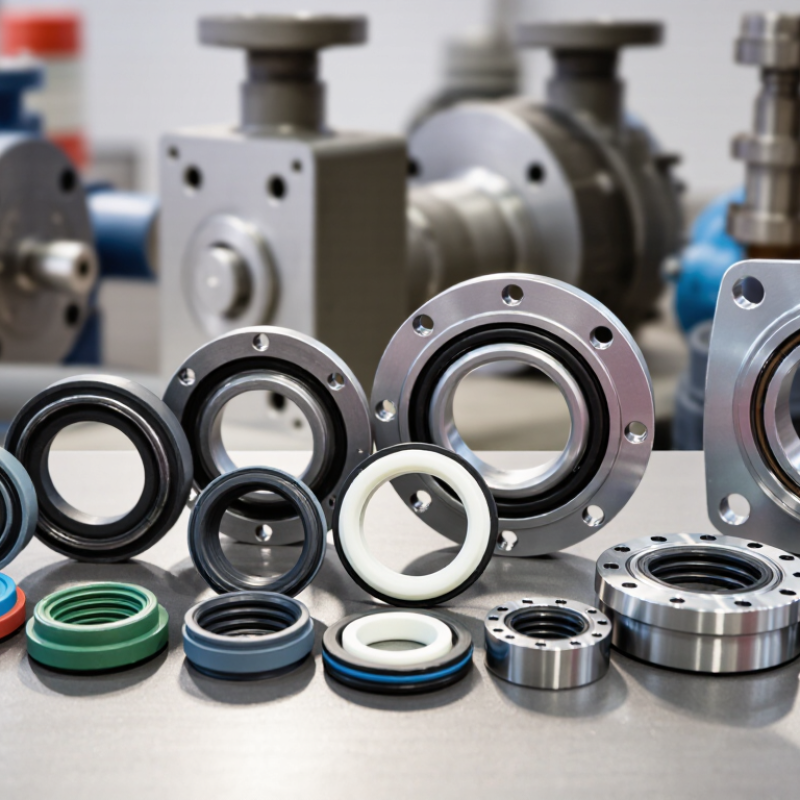
An industrial air-tight seal must match pressure, temperature, movement, and chemical exposure. O-rings suit many static joints, while lip seals handle rotating shafts. U-cups support hydraulic and pneumatic cylinders. Energized PTFE seals perform well under heat and aggressive media. Metal C-rings and spiral-wound gaskets suit high-pressure flanges. Diaphragms, bellows, sheet gaskets, and flange seals cover other demanding applications. The “best” design depends on the joint, not the catalogue ranking.
Material selection requires evidence. Elastomers need resistance to oil, moisture, ozone, and compression set. PTFE handles chemicals well, but it can creep under sustained load. Metal seals tolerate extreme temperatures, yet they demand controlled surfaces and installation force. The U.S. Department of Energy reports that compressed-air leaks can waste 20% to 30% of compressor output. Poor sealing is therefore an energy problem, not only a maintenance issue. A worn seal may hiss beside a hot pipe, hidden beneath insulation.
Engineers should check seal hardness, squeeze percentage, extrusion clearance, surface finish, and tolerance stack-up. ISO 3601 provides dimensional requirements for many O-rings. ISO 8573-1 helps define compressed-air purity requirements, which influence seal contamination risks. Leak testing with pressure decay, ultrasonic inspection, or helium can verify performance. Still, laboratory results can mislead. A seal passing a bench test may fail after vibration, repeated cycling, or careless assembly. Field records, scheduled replacement, and correct lubrication remain essential. Small errors matter.
10 Best Air Tight Seals for Industrial Use? - What Makes an Air-Tight Seal Suitable for Industrial Use
A practical comparison of common industrial sealing designs. Performance ranges are typical guidelines and depend on material, installation, surface finish, pressure, speed, and media.
| No. | Seal Type | Typical Industrial Use | Typical Pressure Capability | Typical Temperature Range | Suitable Media | Main Advantages | Important Limitations |
|---|---|---|---|---|---|---|---|
| 1 | O-Ring | Static flanges, hydraulic cylinders, pneumatic valves, pumps, and fittings | Static applications commonly up to about 200 bar; higher pressure requires back-up rings and suitable groove design | Approximately −50°C to +200°C, depending on elastomer | Air, water, hydraulic fluids, oils, fuels, and many chemicals when correctly compounded | Low cost, compact design, easy replacement, and wide material selection | Can extrude, twist, or wear under excessive pressure, rapid motion, poor lubrication, or incorrect sizing |
| 2 | PTFE Spring-Energized Seal | High-performance valves, pumps, rotary shafts, chemical processing equipment, and vacuum systems | Often suitable from vacuum service to approximately 300 bar, subject to design and anti-extrusion support | Approximately −70°C to +260°C for many PTFE designs | Aggressive chemicals, solvents, gases, steam, hydrocarbons, and clean process fluids | Very low friction, strong chemical resistance, broad temperature capability, and good shelf life | Higher cost; requires accurate installation, correct spring selection, and suitable surface finish |
| 3 | Hydraulic or Pneumatic Rod Seal | Cylinders, actuators, presses, injection-molding equipment, and mobile machinery | Commonly about 100–500 bar for hydraulic designs; pneumatic versions usually operate at much lower pressure | Approximately −40°C to +200°C, depending on compound and profile | Hydraulic oil, air, water-glycol fluids, and selected process fluids | Designed for reciprocating motion, effective fluid retention, and compact gland construction | Sensitive to rod damage, contamination, misalignment, extrusion gaps, and improper lubrication |
| 4 | Rotary Shaft Lip Seal | Gearboxes, electric motors, pumps, compressors, and rotating machinery | Generally low to moderate pressure, often up to approximately 0.5 bar without special support | Approximately −40°C to +200°C, depending on lip material and lubricant | Lubricating oils, greases, water, and selected low-pressure gases | Simple, economical, widely available, and effective at excluding dust and retaining lubricant | Not ideal for high pressure; lip wear increases with shaft runout, roughness, speed, and dry running |
| 5 | Mechanical Face Seal | Centrifugal pumps, mixers, agitators, compressors, and rotating process equipment | Commonly approximately 10–40 bar, depending on seal arrangement, speed, and fluid | Approximately −50°C to +250°C, depending on face and secondary-seal materials | Water, chemicals, hydrocarbons, slurry, steam, and process fluids with suitable face materials | Excellent containment for rotating shafts and much lower leakage than many packing arrangements | Requires accurate installation, controlled faces, proper cooling or lubrication, and protection from dry running |
| 6 | Metal Spiral-Wound Gasket | Pipe flanges, pressure vessels, heat exchangers, steam systems, and petrochemical equipment | Commonly suitable for high-pressure flange service, often above 100 bar when correctly selected and installed | Approximately −200°C to +500°C, depending on winding metal and filler | Steam, gases, hydrocarbons, oils, water, and many chemical process fluids | Handles high temperature and pressure; adaptable to flange imperfections and varied media | Usually single-use; requires correct bolt load, flange alignment, compression control, and surface condition |
| 7 | Braided Compression Packing | Valve stems, pump shafts, mixers, and equipment where adjustable sealing is acceptable | Typically about 10–100 bar, depending on construction, shaft speed, and service conditions | Approximately −100°C to +500°C, depending on fiber and lubricant | Water, steam, oils, chemicals, and abrasive fluids with compatible packing materials | Adjustable, repairable in place, tolerant of some shaft irregularity, and suitable for large equipment | Normally permits controlled leakage; excessive tightening can create heat, wear, and shaft damage |
| 8 | Labyrinth Seal | High-speed bearings, turbines, compressors, gearboxes, and rotating dry-gas equipment | Best for low differential pressure; pressure capability depends strongly on stages, clearances, and purge design | Approximately −50°C to +500°C, depending mainly on material and equipment design | Air, dry gases, lubricating oil environments, and applications requiring non-contact sealing | Non-contact operation, minimal friction, high-speed capability, and long service life when clearances are maintained | Not a complete zero-leakage barrier; sensitive to pressure reversal, contamination, shaft movement, and clearance changes |
| 9 | Metal C-Ring or E-Ring Seal | Vacuum chambers, aerospace-style equipment, high-temperature vessels, and precision flanges | From high vacuum to high-pressure service, subject to cross-section, plating, groove design, and flange loading | Approximately −200°C to +800°C, depending on metal alloy and coating | High-purity gases, vacuum, steam, hydrocarbons, and demanding chemical or thermal environments | Very low gas permeability, strong temperature resistance, and long-term stability in severe service | High cost; requires rigid, accurately machined sealing surfaces and carefully controlled compression |
| 10 | Inflatable Seal | Large doors, vacuum chambers, cleanrooms, containment systems, and equipment with variable gaps | Usually low differential process pressure; the inflation pressure is commonly around 1–3 bar above ambient | Approximately −40°C to +200°C, depending on elastomer and reinforcement | Air, gases, dust, water, and selected chemicals with compatible rubber compounds | Compensates for uneven or changing gaps, retracts when uninflated, and provides a broad contact area | Requires a reliable inflation system; vulnerable to puncture, excessive gap movement, and incompatible media |