skip to Main Content
Buying MOLYBDENUM SHEET is not simply a matter of choosing the lowest price. The right sheet must match temperature, atmosphere, thickness, tolerances, and forming requirements. A polished surface may look impressive, yet hidden issues can appear during cutting or welding. Small details matter here.
Dr. Mark J. Jackson, a refractory-metals specialist, observes, “Material selection begins with the service environment, not the supplier’s brochure.” This principle deserves attention. Before comparing quotations, buyers should confirm molybdenum grade, chemical composition, dimensions, flatness, and applicable standards. ASTM B386 may provide a useful reference for molybdenum plate, sheet, and foil. However, a standard alone does not guarantee successful performance.
These seven practical tips examine the decisions that experienced purchasers often check first. They cover grade selection, thickness accuracy, surface condition, supplier documentation, testing, fabrication behavior, and total cost. Ask for mill certificates and traceability records. Request sample inspection when the application is critical. Check whether the supplier understands vacuum furnaces, high-temperature shields, semiconductor equipment, or other specialized uses.
Some buyers overlook packaging. That can be costly. Molybdenum sheet may arrive scratched, bent, or contaminated if protective materials are inadequate. Another common mistake is assuming every “pure molybdenum” sheet performs identically. Manufacturing route, recrystallization behavior, and impurity levels can change practical results.
No purchasing checklist is perfect. Service conditions may be misunderstood, and specifications may remain incomplete. That is why a qualified metallurgist should review the final choice before production begins. Careful questions now can prevent expensive rework later.
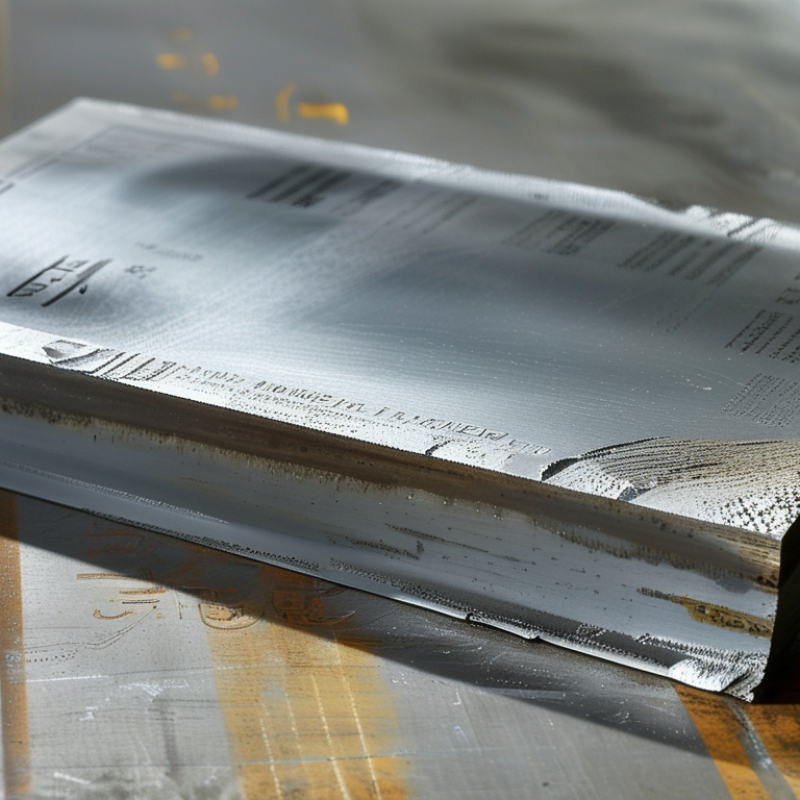
Buying molybdenum sheet starts with defining the grade, not comparing prices.
Commercially pure molybdenum suits high-temperature parts, furnace components, and applications requiring strong thermal conductivity. TZM adds titanium and zirconium for improved strength and creep resistance at elevated temperatures. Molybdenum-lanthanum can offer better recrystallization resistance and forming behavior. Grade selection depends on service conditions.
Specify the operating temperature, atmosphere, load, and expected service life. Vacuum and inert environments usually protect molybdenum better than oxidizing air. Ask for thickness, width, length, flatness, surface finish, density, hardness, and tensile requirements. For formed parts, ductility matters as much as strength. A thick sheet may appear robust, yet it can crack during bending if the grain structure is unsuitable.
Request a material certificate with chemical composition, mechanical results, dimensions, and inspection methods. Confirm whether values apply at room temperature or elevated temperature. That difference matters. Check grain orientation and recrystallization behavior when the sheet will face repeated heating cycles. In practice, buyers sometimes choose TZM automatically, although pure molybdenum may perform adequately and cost less. This assumption deserves review. Trial forming, sample inspection, and clear acceptance limits can prevent expensive rework. Even small edge cracks may grow during thermal cycling.
Buying molybdenum sheet starts with the finished part, not the supplier’s stock list. Match thickness to heat load, stiffness, forming method, and machining allowance. A thin sheet may warp during heating. A thicker sheet may waste material and raise machining costs. State length, width, thickness, flatness, edge condition, and quantity in the inquiry. Specify millimeters, not “about one millimeter.” Small ambiguity becomes expensive scrap.
Tolerance deserves equal attention. Ask whether thickness tolerance follows ASTM B386 or another agreed specification. Request the actual tolerance band. ASTM B386 covers molybdenum and molybdenum-alloy plate, sheet, and strip. For a 1.00 mm component, ±0.05 mm can change fit, mass, and heat transfer. That assumption may be wrong. Confirm flatness after cutting, because cutting stress can distort an accurate-looking sheet. Ask for inspection records, chemical analysis, and lot traceability. Experience matters here.
Dimensions should reflect the furnace, shield, or fixture. Leave only the allowance your process needs. Oversized sheets increase handling risk. Undersized sheets create joints. Molybdenum is not infinitely forgiving during forming; tight radii can crack, especially with unsuitable grain direction or surface damage. The International Molybdenum Association reports that steelmaking uses about 80% of molybdenum demand. The USGS Mineral Commodity Summaries 2025 estimated 2024 mine output near 260,000 metric tons. These figures describe market scale, not guaranteed sheet availability. Check lead time, packaging, surface condition, and certificate details before approval. I would also test one sample. Paper specifications can miss real behavior.
Typical starting-point thickness ranges for matching molybdenum sheet to application requirements. Final dimensions and tolerances should be confirmed against the applicable drawing and material specification, such as ASTM B386.
Thin foil is commonly selected where low mass and thermal response are important, while thicker sheet is preferred for furnace hardware, structural parts, and components exposed to mechanical loads. Specify length, width, flatness, edge condition, surface finish, and thickness tolerance separately because allowable tolerances vary with size, thickness, rolling condition, and production standard.
Purity should match the service environment, not only the sales description. Commercially pure molybdenum sheet commonly contains at least 99.95% molybdenum, but trace carbon, oxygen, iron, and nickel can affect recrystallization and corrosion behavior. Request a heat-specific certificate of analysis. Prefer results from ICP-OES, glow-discharge mass spectrometry, or another trace-element method. A generic certificate is weaker evidence.
Manufacturing method changes performance. Rolled sheet usually offers more consistent thickness and grain direction than poorly controlled forged stock. Ask about rolling reductions, annealing temperature, and final heat treatment. ASTM B386 covers molybdenum and molybdenum-alloy plate, sheet, and strip. Check whether the supplier tests tensile strength, elongation, hardness, and dimensional tolerance against that specification.
The USGS Mineral Commodity Summaries 2024 reported global mine production of about 260,000 metric tons in 2023. Supply is substantial, but refined material quality still varies by producer and processing route.
Surface quality needs a close inspection. Look for edge cracks, scratches, pits, oxide discoloration, and rolling marks under angled light. Measure thickness at several points, not just the center. A bright finish can mislead. It may hide shallow grinding damage.
I would also request photographs before shipment and a sample coupon for critical work. No certificate replaces inspection. Even experienced buyers sometimes accept attractive surfaces too quickly. That mistake can become expensive during forming or high-temperature service.
Verify the supplier’s certification before reviewing the price. Check whether the quality certificate is current and covers sheet production. Confirm the legal company name, certificate number, issuing body, and certification scope. ISO 9001 can support process control, but it does not prove every sheet meets your specification. Ask for the mill test report before shipment. It should identify molybdenum purity, thickness, dimensions, surface condition, and heat number.
Request actual testing details, not vague statements such as “fully inspected.” The report should show chemical analysis and relevant mechanical results. Depending on the application, request tensile strength, hardness, density, grain structure, or ultrasonic inspection records. Confirm the test method and laboratory identity. An independent laboratory report carries more weight when the laboratory has recognized accreditation. Sample reports help, but they are not product evidence.
Traceability should continue from raw material to packed sheet. Match the heat number on the report with the marking, packing list, and physical label. Ask how production lots are separated and how corrections are recorded. Photographs can help during receiving inspection. They cannot replace documents. A certificate may look complete and still contain a missing heat number. That small gap matters. I have seen buyers focus on shiny surfaces and forget thickness mapping. Check several points with calibrated equipment. Keep all records with the purchase order, because traceability often becomes difficult after delivery.
7 Tips for Buying Molybdenum Sheet
Start with the specification, not the lowest price. Confirm purity, thickness, width, length, flatness, and tolerance in writing. Ask for a material certificate and inspection report. A low quote may exclude cutting, testing, or export packing. Compare the delivered cost, not only the price per kilogram. Request quote validity too, because molybdenum prices can change with raw material costs. Do not guess.
Lead time needs careful checking. Ask whether the sheet is in stock, semi-finished, or made to order. Confirm production time, inspection time, and shipping time separately. A supplier promising five days may mean five days before dispatch. Request a realistic delivery schedule with milestone dates. If your equipment has a fixed installation date, allow a small buffer. I once underestimated inspection time, and the delay affected the whole production plan.
Packaging protects both quality and budget. Look for clean separators, moisture-resistant wrapping, rigid support, and clear labeling. Heavy sheets need reinforced crates to prevent bending during transport. Check whether the package lists heat number, dimensions, quantity, and handling instructions. After-sales support also matters. Choose a supplier that can answer technical questions, provide traceability, and handle dimensional disputes fairly. Ask about replacement procedures before payment. A fast reply is useful, but documented answers are safer. Inspect a sample on arrival, even when the supplier seems reliable.
| Tip | Buying Dimension | Practical Market Benchmark | What to Compare Before Ordering | Documents or Evidence to Request | Main Risk to Control |
|---|---|---|---|---|---|
| 1 | Define the exact grade and specification | Commercially available molybdenum sheet is commonly supplied as pure molybdenum or TZM alloy. Typical purity requirements for pure molybdenum sheet are around 99.95% Mo or higher, depending on the application. | Compare molybdenum grade, chemical composition, thickness, width, length, surface condition, flatness, and applicable ASTM or equivalent specification. Confirm whether the sheet is rolled, annealed, or stress-relieved. | Material specification, chemical analysis, dimensional inspection report, and heat or lot traceability information. | Receiving a technically different grade or surface condition that cannot meet the operating temperature or forming requirements. |
| 2 | Compare total landed pricing | Molybdenum sheet pricing is normally quoted by kilogram, piece, or project. Cost changes significantly with thickness, sheet size, purity, alloying, tolerance, surface finish, order quantity, and processing requirements. | Request comparable quotations using the same grade, dimensions, tolerance, quantity, Incoterm, inspection level, and delivery destination. Separate material price from cutting, polishing, testing, packing, freight, duties, and taxes. | Itemized quotation, price validity period, payment terms, freight quotation, and written confirmation of included services. | Selecting the lowest unit price while overlooking freight, import charges, inspection costs, or nonconforming-material replacement expenses. |
| 3 | Verify lead time and production capacity | Standard sizes may be available from stock or produced in approximately 2–6 weeks. Custom dimensions, tight tolerances, special finishes, or small production lots may require approximately 6–12 weeks. | Compare material availability, production schedule, cutting time, inspection time, packing time, and transport time. Ask whether the quoted lead time begins after payment, drawing approval, or technical clarification. | Written production schedule, promised dispatch date, stock confirmation, and milestone plan for custom orders. | Treating production time as total delivery time or relying on an unconfirmed stock statement. |
| 4 | Check dimensional and surface quality | Thin refractory-metal sheet can be sensitive to flatness, edge damage, surface scratches, oxide contamination, and thickness variation. Acceptable limits must be agreed in writing before production. | Compare thickness and width tolerances, flatness, edge condition, surface roughness, visible defects, straightness, and allowable repair marks. Confirm whether the supplied surface is as-rolled, pickled, ground, or polished. | Approved drawing, inspection standard, dimensional report, surface photographs, and sample approval where practical. | A sheet may satisfy nominal dimensions but fail during machining, vacuum processing, brazing, or high-temperature service. |
| 5 | Evaluate packaging and transport protection | Molybdenum sheet should be protected from moisture, impact, contamination, bending, and abrasion. Common protection includes clean wrapping, moisture barriers, cushioning, rigid support, and a strong export crate or pallet. | Compare whether sheets are separated, supported on a flat base, protected against humidity, secured against movement, and marked with grade, size, quantity, gross weight, and handling instructions. | Packing specification, packing photographs before dispatch, package dimensions, gross and net weights, and shipping marks. | Warping, edge chipping, oxidation, surface contamination, or corrosion of accompanying components during transit and storage. |
| 6 | Review inspection and acceptance procedures | A practical acceptance plan may include visual inspection, dimensional measurement, chemical verification, surface examination, and certificates for the specific heat or production lot. | Compare inspection responsibility, sampling quantity, test methods, acceptance limits, independent inspection options, nonconformance notification period, and the procedure for rejected material. | Certificate of conformity, material test certificate, inspection report, test results, and lot or heat number matching the shipment markings. | Having no objective basis for rejecting material or proving that test results relate to the delivered sheets. |
| 7 | Assess after-sales support and warranty terms | Strong support normally includes prompt technical communication, traceability, replacement or corrective-action procedures, and a clearly defined period for reporting quality issues. | Compare response time, technical contact availability, warranty scope, claim documentation, replacement lead time, credit or refund conditions, and support for installation or processing questions. | Sales contract, warranty terms, complaint procedure, contact details for quality support, and written corrective-action commitments. | Delays in resolving defects can interrupt production, especially when the material is custom-sized or difficult to replace quickly. |
Note: Price ranges and lead times vary by grade, dimensions, quantity, processing requirements, inspection level, destination, and market conditions. Use the benchmarks above for quotation comparison, then obtain a written, specification-based offer for the final purchase.
