2026 Top PTFE Butterfly Valve Types for Global Buyers
Choosing the right ptfe butterfly valve in 2026 requires more than comparing price, size, or delivery time. Global buyers must examine media compatibility, pressure class, operating temperature, sealing design, and actuation requirements. A valve handling hydrochloric acid needs different protection than one serving chilled water. Small details matter, including shaft alignment, liner thickness, flange standards, and the quality of the disc edge.
Dr. James E. McGrath, a respected fluoropolymer researcher, stated, “Performance depends on the material, the design, and the service conditions.” That principle remains highly relevant to butterfly valve selection. PTFE offers strong chemical resistance and a low-friction sealing surface, but it is not automatically suitable for every process. Excessive heat, sudden pressure changes, or abrasive solids can reduce service life. The choice is not always obvious.
This guide examines the leading PTFE butterfly valve types for international purchasers in 2026, including wafer, lug, flanged, lined, and offset designs. It considers practical use in chemical processing, water treatment, pharmaceuticals, food production, and marine systems. Buyers will also find guidance on manual handles, pneumatic actuators, electric actuation, seat construction, and inspection documentation. Certification requirements can vary by destination and application. That assumption can fail.
A reliable purchasing decision should connect laboratory data with field experience. Ask for pressure-temperature charts, material certificates, cycle-testing results, and clear warranty terms. Inspect the details. A lower initial price may conceal difficult maintenance, uncertain spares, or premature seat wear. This overview aims to make comparison easier, while acknowledging one uncomfortable truth: no single PTFE butterfly valve type is ideal for every global service condition.
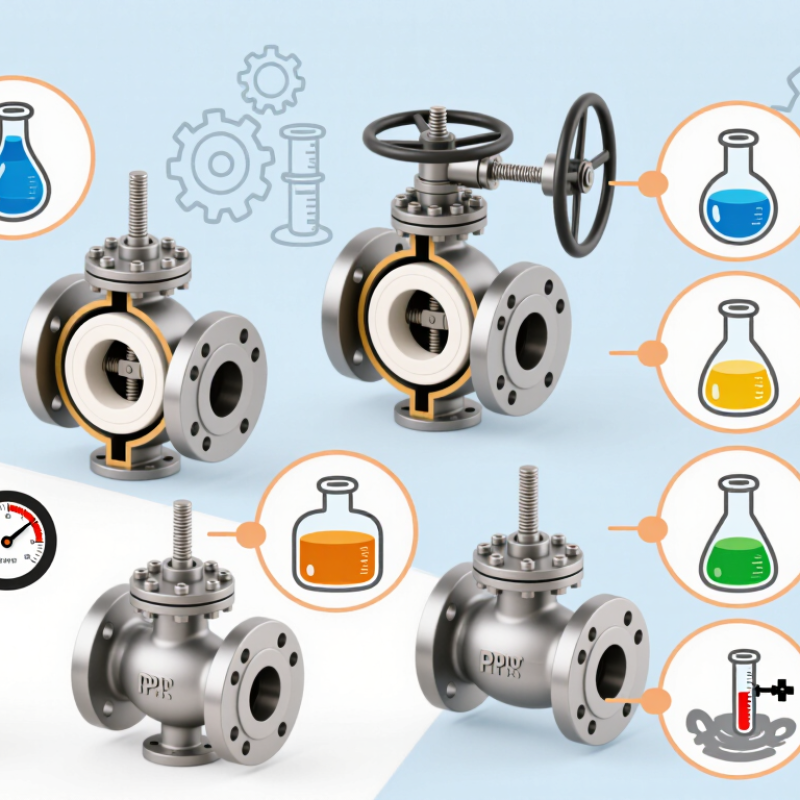
PTFE Butterfly Valve Basics and Core Operating Principles
PTFE Butterfly Valve Basics and Core Operating Principles
A PTFE butterfly valve uses a circular disc that turns 90 degrees around a stem. The disc aligns with the pipeline when open and blocks flow when closed. Its PTFE seat creates a tight seal against many corrosive fluids, including acids, solvents, and purified water. The sealing contact is simple, but not effortless.
Grand View Research estimated the global butterfly valve market at about USD 8.8 billion in 2023, with continued growth toward 2030. This demand reflects compact designs, lower installation weight, and efficient quarter-turn operation. However, market growth does not remove engineering limits. PTFE can deform under constant compression, a behavior known as cold flow. Temperature, pressure, cycling frequency, and fluid compatibility must be checked together.
Grand View Research estimated the global butterfly valve market at about USD 8.8 billion in 2023, with continued growth toward 2030.
The valve body carries the line load, while the stem transfers actuator torque to the disc. Operators should confirm the pressure rating, face-to-face dimension, and flange pattern against EN 593, API 609, and ISO 5211 requirements.
Typical PTFE-lined designs may handle temperatures near 200°C, but the exact limit depends on the seat, body, and pressure. That number can mislead without a complete datasheet.
A technician should also inspect seat wear, stem leakage, and disc edge damage during maintenance. Small scratches may become visible leakage paths after repeated cycling.
Main PTFE Butterfly Valve Types for Global Buyers
2026 Top PTFE Butterfly Valve Types for Global Buyers
Main PTFE Butterfly Valve Types for Global Buyers
PTFE butterfly valves are commonly selected for corrosive fluids, clean water, chemicals, and certain food-processing lines. Their main types include concentric, double-offset, wafer, lug, and flanged designs. A concentric PTFE-lined valve keeps the disc and stem centered, offering simple structure, lower cost, and easy maintenance. It suits many general-purpose pipelines with moderate pressure and temperature.
Wafer valves fit between two pipe flanges and save installation space. Lug valves use threaded inserts, allowing one pipeline side to remain secured during maintenance. Flanged valves provide stronger alignment for larger systems and heavier operating conditions.
Double-offset designs reduce disc friction against the seat, which can improve service life during frequent cycling. They may cost more.
Manual handles work well on small, accessible lines. Gear operators or pneumatic actuators support larger valves and remote control. Buyers should check fluid concentration, operating temperature, pressure class, vacuum conditions, and cycling frequency before choosing a type. PTFE performance changes with pressure and temperature.
Field checks often reveal a simple mistake: the lining is suitable, but the elastomer stem seal is not. Material compatibility must cover every wetted component. Confirm flange dimensions, face-to-face length, actuator mounting, and inspection documents. Standards such as ISO 5211 or API 609 may apply, but local project requirements can differ. No selection rule works everywhere. A slightly higher initial cost may prevent repeated shutdowns, yet overspecifying the valve can waste budget.
Selection Criteria for Different Industrial Applications
2026 Top PTFE Butterfly Valve Types for Global Buyers
Selection Criteria for Different Industrial Applications
Choosing a PTFE butterfly valve starts with the process, not the catalog photograph. Wafer valves suit compact piping and weight-sensitive installations. Lug valves support easier section isolation and partial line maintenance. Flanged designs fit larger pipelines where alignment and bolt access matter. Each type has limits.
For corrosive chemicals, confirm PTFE compatibility with concentration, temperature, and exposure time. Ask for pressure-temperature data, not only a maximum pressure figure. Check the disc material as carefully as the seat. A strong PTFE lining cannot compensate for a poorly selected disc or shaft. In field inspections, I also examine packing compression and actuator clearance. Small installation errors can cause large leakage problems.
For water treatment, low operating torque and reliable bubble-tight shutoff often guide selection. Slurry service needs a disc and seat arrangement that tolerates suspended solids. Food and pharmaceutical lines require cleanable surfaces, suitable material documentation, and careful dead-zone control. Vacuum service deserves separate verification because some standard seats deform under negative pressure. Do not assume full compatibility.
Cycle frequency changes the decision. Manual handles may work for occasional isolation, while automated units need torque margins, position feedback, and fail-safe planning. I once focused too heavily on chemical resistance and underestimated repeated cycling. That mistake changed the maintenance schedule. Buyers should compare test records, inspection procedures, spare-part availability, and technical support across regions. The cheapest valve is rarely the least expensive choice.
 skip to Main Content
