skip to Main Content

2026 Top Fluid Power Hydraulics Suppliers?

Choosing the 2026 top fluid power hydraulics suppliers requires more than comparing product catalogs or brand recognition. A dependable supplier must support real operating conditions, from mobile excavators working in muddy yards to factory presses cycling thousands of times daily. This introduction examines manufacturers and distributors through practical criteria, including component quality, pressure performance, engineering support, delivery reliability, maintenance access, and documented compliance.

The evaluation considers pumps, valves, cylinders, motors, filtration systems, hoses, and complete hydraulic assemblies. Public technical data, application guidance, service networks, warranty terms, and customer experience all matter. A supplier may offer efficient variable-displacement pumps, but poor spare-parts availability can still create costly downtime. Likewise, a wide product range does not guarantee suitable advice for high-temperature oil, contaminated environments, or demanding duty cycles.

No supplier is perfect. Some publish detailed testing information but provide limited regional support. Others respond quickly and understand field problems, yet offer less transparent performance data. That difference deserves attention. Ratings and rankings should therefore be treated as informed guidance, not permanent verdicts. This overview aims to help engineers, procurement teams, and equipment owners compare credible options with greater confidence. It also encourages readers to verify pressure ratings, certifications, lead times, compatibility, and lifecycle costs before signing a contract. Small details matter. A leaking fitting, delayed seal kit, or unclear service responsibility can outweigh an impressive brochure.
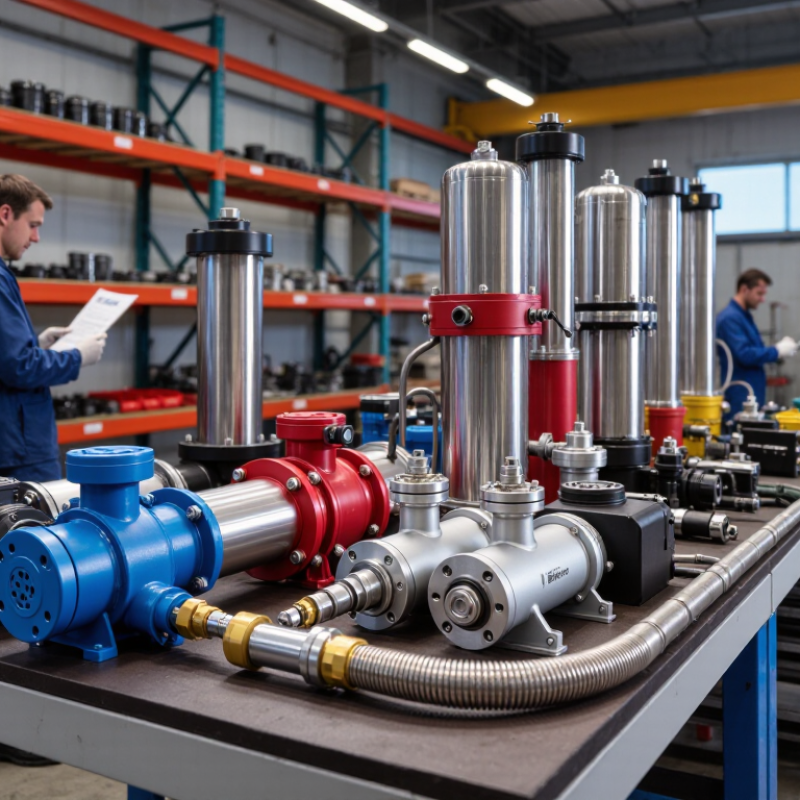
2026 Top Fluid Power Hydraulics Suppliers?

What Defines a Leading Fluid Power Hydraulics Supplier in 2026

What Defines a Leading Fluid Power Hydraulics Supplier in 2026

A leading fluid power hydraulics supplier must prove performance beyond a polished catalogue. MarketsandMarkets’ 2024 Hydraulic Equipment Market report estimates steady growth through 2029, driven by construction, manufacturing, energy, and mobile equipment. That growth raises expectations. Buyers now need verified flow rates, pressure stability, heat management, and documented service life. A useful supplier can explain each figure without hiding behind technical language.

Engineering depth matters on the factory floor. Look for hydraulic circuits tested under cold starts, dusty environments, and repeated pressure cycles. ISO 4413 provides a strong reference for hydraulic system safety and risk reduction. ISO 9001 certification also supports controlled processes, but certification alone proves little. Ask for test records, traceability, contamination-control procedures, and realistic maintenance intervals. Small details matter, such as clean fittings arriving capped and correctly labelled.

Digital support is becoming practical, not decorative. The International Energy Agency continues to highlight efficiency as a major industrial priority. Suppliers should therefore measure leakage, pressure losses, and energy consumption at operating conditions. Remote monitoring can reveal a rising filter differential pressure before an unexpected shutdown. Still, data can mislead when sensors are poorly installed. No supplier gets every decision right. Buyers should challenge optimistic savings claims, request field evidence, and compare total ownership costs. A fast quotation is useful, but dependable engineering judgment is worth more.

Core Products and Technologies Offered by Top Hydraulic Suppliers

2026 Top Fluid Power Hydraulics Suppliers?

Top hydraulic suppliers now provide more than pumps, valves, and cylinders. Their core portfolios include power units, filtration systems, hoses, fittings, and proportional controls. Engineers can select components for mobile equipment, factory automation, marine systems, and heavy industrial machinery. Experienced suppliers pair product selection with circuit design support, load analysis, and commissioning guidance. That pairing matters. A powerful pump cannot correct poor pipe sizing or contaminated oil.

Modern offerings increasingly combine hydraulics with electronic monitoring. Pressure, temperature, flow, and vibration sensors support condition-based maintenance. Embedded controllers can adjust pump displacement and valve response during changing workloads. Remote dashboards may reveal a blocked filter before production stops. Useful technology, but not magic. Data still needs skilled interpretation.

Reliable suppliers document material grades, pressure ratings, test procedures, and service intervals. Traceable serial records help technicians identify replacement parts years later. Factory acceptance tests may include leakage checks, pressure holding, and repeated cycle testing. Field experience also exposes weaknesses that laboratory tests miss. A hose can pass inspection yet fail near a sharp bend. A compact manifold can overheat when installed inside a crowded cabinet.

No supplier gets every decision right. Even a well-specified system may need quieter pumps, cleaner oil, or simpler controls after real operation begins. The strongest technical teams listen to operators, review failures honestly, and revise the design without hiding uncomfortable findings.

2026 Top Fluid Power Hydraulics Suppliers? – Core Products and Technologies Offered by Top Hydraulic Suppliers

Note: Pressure and flow figures are typical commercial ranges and vary according to product design, fluid, temperature, duty cycle, and system configuration.
Core Product Category Common Product Types Key Technologies Offered Typical Operating Range Typical Applications Important Selection Criteria
Hydraulic Pumps Gear, vane, axial-piston, radial-piston, and electro-hydraulic pump units Variable displacement, load-sensing control, pressure compensation, proportional displacement, and low-noise designs Approximately 10–700 bar; flow rates from less than 1 L/min to several hundred L/min Mobile equipment, machine tools, presses, material handling, agriculture, and industrial automation Displacement, pressure rating, efficiency, noise level, speed range, fluid compatibility, and service life
Hydraulic Valves Directional, pressure-control, flow-control, cartridge, manifold, and proportional valves Electrohydraulic proportional control, servo control, integrated manifolds, anti-shock protection, and fail-safe functions Typically 10–500 bar, with specialized designs available for higher pressures Injection molding, construction machinery, presses, lifting systems, and automated production lines Flow capacity, response time, leakage, control accuracy, mounting standard, contamination tolerance, and port size
Hydraulic Motors Gerotor, orbital, gear, vane, axial-piston, and radial-piston motors High-torque low-speed operation, variable displacement, braking systems, integrated sensors, and planetary reduction stages Speed from a few revolutions per minute to several thousand RPM; pressure commonly 100–450 bar Winches, conveyors, drilling equipment, agricultural machinery, tracked vehicles, and mobile drives Starting torque, continuous torque, speed range, thermal capacity, efficiency, shaft configuration, and braking requirements
Hydraulic Cylinders Tie-rod, welded, mill-duty, telescopic, compact, and custom cylinders Position sensing, cushioning, corrosion-resistant coatings, welded construction, and application-specific sealing systems Bore sizes from compact formats to more than 1,000 mm; pressure commonly 70–350 bar Earthmoving equipment, steel mills, agricultural machinery, presses, lifting platforms, and marine systems Bore and rod diameter, stroke length, buckling load, mounting style, side-load exposure, seals, and corrosion protection
Filtration and Fluid Conditioning Suction filters, return-line filters, pressure filters, offline filtration units, breathers, and water-removal systems High-efficiency particulate removal, contamination monitoring, clogging indicators, coalescence, and condition-based maintenance Common filtration ratings from approximately 1–25 micrometres, depending on circuit location and cleanliness target Industrial power units, mobile hydraulics, marine systems, mining, steel production, and high-duty machinery Beta ratio, dirt-holding capacity, pressure drop, flow rate, element life, water removal, and ISO cleanliness target
Hydraulic Power Units Compact power packs, modular power units, mobile power packs, and engineered central systems Variable-speed electric drives, energy-efficient pump control, integrated manifolds, remote monitoring, and thermal management From compact systems below 1 kW to industrial units exceeding several hundred kW Machine tools, presses, elevators, test equipment, factory automation, and special-purpose machinery Motor power, reservoir capacity, duty cycle, heat dissipation, noise, control interface, maintenance access, and footprint
Electro-Hydraulic Controls Proportional amplifiers, servo drives, motion controllers, pressure sensors, position sensors, and control modules Closed-loop control, fieldbus communication, programmable logic control, sensor feedback, and predictive diagnostics Control accuracy and response depend on valve type, sensor resolution, hydraulic stiffness, and application dynamics Robotics, forming machinery, injection molding, automated assembly, mobile machines, and test rigs Control bandwidth, signal compatibility, software support, cybersecurity, sensor accuracy, commissioning tools, and diagnostics
Hoses, Tubes, and Fittings Wire-braid hoses, spiral hoses, thermoplastic hoses, tube assemblies, adapters, quick couplings, and clamps Impulse-resistant construction, abrasion protection, compact routing, dry-break coupling, and leak-reduction connection designs Working pressure commonly ranges from below 100 bar to more than 1,000 bar for specialized hose assemblies Mobile equipment, industrial automation, marine systems, energy equipment, mining, and maintenance applications Working and burst pressure, bend radius, temperature, abrasion resistance, fluid compatibility, routing, and applicable standards
Digital Monitoring and Service Condition sensors, diagnostic software, remote monitoring gateways, contamination analysis, and maintenance services IoT connectivity, pressure and temperature trending, vibration monitoring, cloud dashboards, alarm management, and predictive maintenance Monitoring capability is selected according to pressure, temperature, vibration, contamination, and machine criticality Production lines, wind and energy systems, mining, marine equipment, fleet management, and critical assets Data accuracy, sampling rate, communication protocol, data security, integration with maintenance systems, and service availability

Key Industries and Applications Served by Fluid Power Companies

Fluid power companies support industries where controlled force, compact machinery, and dependable motion matter. Manufacturing plants use hydraulic systems for presses, injection molding, clamping, and material handling. Pneumatic systems often power pick-and-place tools, packaging lines, and robotic grippers. In both settings, engineers examine cycle speed, load demands, air quality, and maintenance access before selecting components.

Construction and agriculture depend on hydraulic power in excavators, loaders, cranes, harvesters, and irrigation equipment. A cylinder may lift several tons while operating near dust, vibration, and changing temperatures. Mining and energy operations require rugged pumps, valves, filtration units, and control systems for demanding environments. Marine equipment also uses hydraulics for steering, winches, deck machinery, and cargo handling. Small leaks can create major downtime.

Transportation companies apply fluid power to braking systems, suspension controls, lifts, and specialized vehicle equipment. Medical and food-processing facilities need cleaner designs, precise movement, and suitable materials. Field experience shows that a powerful system is not always the best system. Excess capacity can increase energy use and stress seals. Even careful designs can underperform when contamination, heat, or poor maintenance is ignored. Engineers should verify pressure ratings, duty cycles, safety controls, and service conditions through documented testing. I have found that maintenance teams often reveal problems that calculations miss. Their feedback deserves attention.

How to Evaluate Supplier Quality, Reliability, and Global Support

2026 Top Fluid Power Hydraulics Suppliers?

How to Evaluate Supplier Quality, Reliability, and Global Support

Choosing a hydraulic supplier requires more than comparing prices. Quality begins with controlled materials, accurate machining, and documented testing. Ask for inspection records, component traceability, and clear acceptance criteria. A credible supplier should explain how failures are investigated. Look for evidence, not polished promises. ISO 9001 certification can support confidence, but it cannot replace process audits. Review sample reports, calibration dates, and pressure-test results before approving production.

Reliability appears during difficult operating conditions. Examine performance data for temperature, pressure, contamination, and duty cycles. Request realistic service-life estimates instead of optimistic figures. Check whether replacement parts remain available for several years. Delivery history also matters. Ask for on-time delivery records and corrective-action examples. One missed shipment may stop an entire assembly line. Small details matter.

Global support needs practical proof. Confirm regional service contacts, technical response times, spare-parts locations, and multilingual documentation. Clarify warranty procedures before signing an agreement. A supplier should support installation, maintenance, and troubleshooting across time zones. Video training helps, but local expertise is better during an urgent repair. No scorecard is perfect. Some evaluations overvalue certificates and undervalue communication. A pilot order can reveal packaging weaknesses, unclear instructions, or slow responses. Record those findings honestly, then adjust the supplier rating. Reliable partnerships grow from transparent evidence and repeated performance, not a single successful shipment.

2026 Top Fluid Power Hydraulics Suppliers: Evaluation Priorities

This reference scorecard assigns a 100-point evaluation weight across the factors most relevant to hydraulic supplier selection. Quality systems should be verified against ISO 9001, product safety and system design against ISO 4413, and global support through documented service coverage, spare-parts availability, lead-time performance, and local technical resources. The percentages are evaluation weights, not company rankings or market-share data.

Notable Fluid Power Hydraulics Suppliers to Watch in 2026

Notable Fluid Power Hydraulics Suppliers to Watch in 2026

The most notable suppliers in 2026 will combine dependable hardware with practical engineering support. Buyers should examine valve response, pump efficiency, seal quality, and filtration performance. These details often determine whether equipment runs smoothly or fails during a busy shift. Suppliers with documented pressure testing deserve closer attention. So do those that provide traceable material records and clear maintenance instructions.

Field experience also shows the value of fast technical service. A supplier may offer excellent cylinders, yet weak troubleshooting can extend downtime. Strong candidates will maintain trained technicians, regional inventory, and useful replacement guidance. They should support condition monitoring, sensor integration, and energy-saving hydraulic circuits. Shorter delivery times matter. However, low prices can hide limited testing or inconsistent component tolerances.

Suppliers developing compact power units may gain attention as factories pursue efficient machinery. Those offering biodegradable fluids and recyclable packaging may also appeal to responsible buyers. Still, sustainability claims need measurable evidence, not attractive wording. Forecasts are imperfect. A promising supplier can struggle with capacity after sudden demand. My review process would include sample inspections, warranty terms, response times, and a controlled pilot installation. No brochure can replace that evidence.

Back To Top