skip to Main Content

2026 Best Recycling Baler Machine for Global Buyers

Choosing the 2026 best Recycling Baler Machine is not simply about buying the largest press. Global buyers need equipment that matches material type, daily volume, labor skills, floor space, and local service conditions. A compact vertical baler may suit a retail warehouse. A fully automatic horizontal model may better serve a busy material recovery facility. The wrong choice can leave expensive steel standing idle.

Recycling equipment specialist David Palmer says, “A baler earns its value when it stays productive, safe, and serviceable.” That practical view matters. Buyers should examine bale density, cycle time, electrical requirements, feeding openings, tying systems, and maintenance access. Imagine a damp cardboard stream arriving every morning. The machine must handle changing moisture, uneven loads, and occasional contamination without constant stoppages. Small details matter.

Safety features deserve equal attention. Interlocked doors, emergency stops, guarding, clear controls, and operator training should never become bargaining points. Supplier support matters too. Ask about spare seals, hydraulic oil guidance, technician response, and documented testing. Certifications should be checked against the buyer’s destination and application requirements.

Performance figures can look impressive on paper. Reality may be less tidy. Published capacity often depends on ideal materials and skilled operators. That is worth questioning. A credible supplier should explain testing conditions and acknowledge limitations. This guide compares leading Recycling Baler Machine options through a buyer-focused lens, balancing throughput, energy use, durability, safety, and lifetime support. No machine is perfect. The best fit is the one that performs reliably in the buyer’s actual working environment.

2026 Best Recycling Baler Machine for Global Buyers

What Is a Recycling Baler Machine and How Does It Work?

What Is a Recycling Baler Machine and How Does It Work?

A recycling baler machine compresses loose recyclable materials into dense, manageable bales. Common feedstock includes cardboard, paper, plastic film, textiles, and aluminum cans.

The U.S. Environmental Protection Agency reported that Americans generated about 67.4 million tons of paper and paperboard in 2018. Around 46 million tons were recycled. That volume explains why compacting equipment matters in busy facilities.

The Operating Cycle

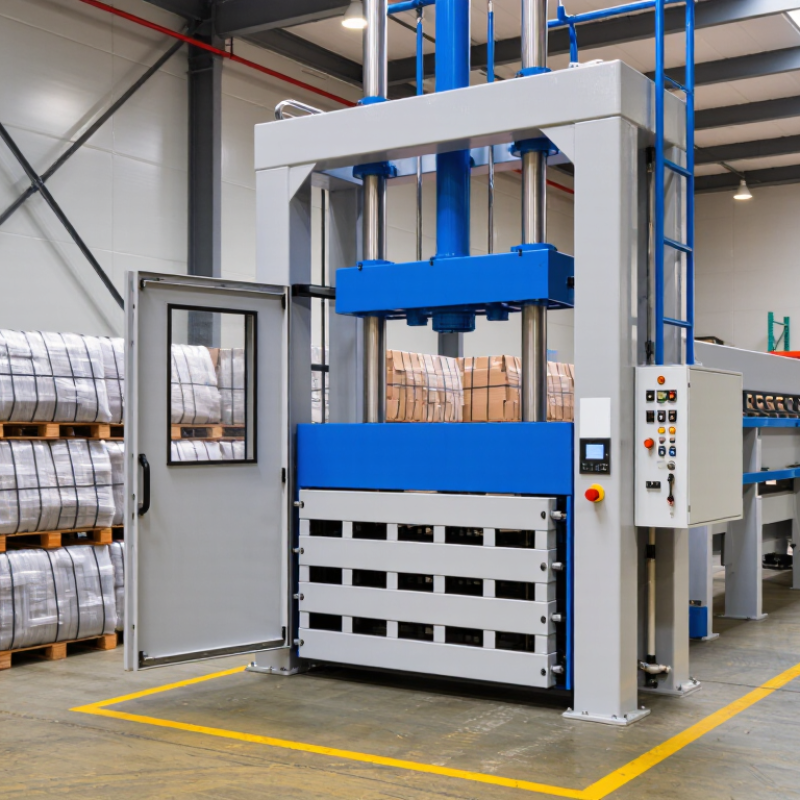
The operating cycle is practical. Workers load sorted material into a chamber. A hydraulic cylinder drives a steel platen downward, reducing the material’s volume. When the bale reaches the selected size, operators secure it with wire or approved strapping. The finished package can then be weighed, stored, and transported more efficiently.

Pressure, moisture, contamination, and feedstock type all affect bale quality. Wet cardboard behaves differently.

Small details matter.

The World Bank estimated that global municipal waste reached about 2.01 billion tonnes annually in its What a Waste 2.0 report. It also warned that at least 33% was not managed safely.

Baling does not replace sorting, collection, or responsible end markets. It only improves material handling after suitable separation. In practice, a poorly adjusted machine may create loose bales, damaged straps, or unnecessary energy use. That is an easy point to overlook.

Buyers should examine cycle time, chamber dimensions, safety interlocks, service access, and verified energy data before selecting equipment. Worker training remains essential, even when the controls appear simple.

Key Types of Recycling Balers for Different Materials

2026 Best Recycling Baler Machine for Global Buyers

Key Types of Recycling Balers for Different Materials

Material determines the baler design, chamber pressure, and tying method. For cardboard, a vertical baler suits shops and warehouses with moderate volume. A horizontal baler handles continuous streams and produces denser, forklift-ready bales. The U.S. EPA reported 67.4 million tons of paper and paperboard waste in 2018, with 46.0 million tons recycled. This volume supports efficient OCC processing, but moisture can weaken every bale.

Plastic film needs a machine with controlled compression and reliable film feeding. Rigid plastic usually requires stronger compaction and careful contamination control. The OECD’s Global Plastics Outlook reported that only 9% of plastic waste was recycled globally in 2019. That figure is sobering. A baler cannot fix poor sorting. For steel and aluminum, metal balers deliver high pressure and durable bale formation. Textile balers need gentle feeding, because tangled fibers can block the chamber.

Tips: Match the baler to daily tonnage, not its maximum rating. Check bale dimensions against truck and storage limits. Ask operators to test wet cardboard, loose film, and mixed loads. Experienced teams also inspect wire channels every shift. A perfect machine rarely exists; maintenance access may matter more than impressive pressure figures. Compare energy use, noise, safety controls, and local service capacity before purchasing. EPA and OECD data reveal the scale, but your material audit should decide the final specification.

2026 Best Recycling Baler Machine for Global Buyers - Key Types of Recycling Balers for Different Materials

Baler Type Best-Suited Materials Typical Feedstock Condition Typical Throughput Typical Bale Size Typical Bale Density Recommended Operation Key Buying Considerations
Vertical Baler Cardboard, paper, textile offcuts, soft plastic film Mostly dry, manually fed, low to moderate contamination 20–250 kg/h 400 × 600 × 300–1,100 mm 80–180 kg/m³ Retail stores, offices, small warehouses, hotels Low footprint, manual loading, cycle time, bale ejection method, electrical requirements
Small Horizontal Baler Corrugated cardboard, mixed paper, PET bottles, aluminum cans Pre-sorted material with continuous or batch feeding 100–600 kg/h 700 × 700 × 500–1,200 mm 100–250 kg/m³ Supermarkets, distribution centers, small material recovery facilities Conveyor compatibility, automatic tying options, hopper size, safety interlocks
Two-Ram Baler Cardboard, mixed paper, OCC, plastic containers, textiles High-volume, variable-density material with moderate contamination 1,000–5,000 kg/h 1,100 × 750 × 750–1,500 mm 350–650 kg/m³ Large recycling facilities and transfer stations High compaction force, automatic wire or strap tying, continuous-feed design, service access
Closed-Door Horizontal Baler OCC, newspapers, office paper, PET and HDPE containers Pre-sorted, relatively dry material requiring dense, uniform bales 500–2,500 kg/h 800 × 1,100 × 600–1,200 mm 250–550 kg/m³ Medium-scale recycling plants and paper stockrooms Door locking system, bale ejection, tying configuration, chamber dimensions, ram pressure
Open-End Auto-Tie Baler OCC, mixed paper, PET bottles, aluminum cans and selected plastics Continuous-feed, sorted or semi-sorted streams 2,000–8,000 kg/h 1,100 × 1,100 × 750–1,500 mm 350–700 kg/m³ High-throughput material recovery facilities Automatic tying speed, PLC controls, conveyor integration, bale stability, wire consumption
Plastic Film Baler LDPE stretch film, agricultural film, shrink wrap and plastic bags Lightweight, flexible material; should be reasonably dry and free of heavy debris 100–1,200 kg/h 700 × 700 × 500–1,200 mm 150–350 kg/m³ Distribution centers, supermarkets and plastics sorting lines Anti-bridging hopper, film retention, tie strength, shredder or perforator compatibility
PET Bottle Baler PET beverage bottles and similar rigid plastic containers Sorted bottles; loose caps and labels may remain depending on recycling process 500–3,000 kg/h 1,100 × 750 × 750–1,200 mm 200–400 kg/m³ Bottle collection centers and plastics recovery facilities Pre-crushing or perforation needs, bale integrity, moisture drainage, contamination tolerance
Metal Scrap Baler Aluminum cans, light-gauge sheet metal, steel cans and non-ferrous scrap Dry or lightly contaminated metal scrap; oversized pieces require pre-cutting 500–4,000 kg/h 300 × 300 × 200–600 mm 500–1,200 kg/m³ Scrap yards, can processing lines and metal recovery plants Press force, wear-resistant chamber, shear protection, feed opening and hydraulic cooling
Textile Baler Used clothing, household textiles, fabric scraps and nonwoven materials Dry, flexible and relatively clean material; sorting improves bale value 200–1,500 kg/h 700 × 700 × 500–1,200 mm 250–500 kg/m³ Donation centers, textile sorting facilities and fiber recovery plants Gentle compression, adjustable pressure, tying method, dust control and fire protection
Agricultural Fiber Baler Straw, hay, cotton stalks, corn residues and selected biomass fibers Pre-dried fibrous material; moisture control is essential for storage 500–3,000 kg/h 700 × 700 × 400–1,200 mm 100–250 kg/m³ Farm cooperatives, biomass collection sites and fiber processors Material moisture, dust extraction, fire prevention, twine or wire tying and storage requirements
Note: Capacity, bale dimensions and density are typical industry ranges. Actual performance depends on material composition, moisture, bulk density, feeding system, compression force, bale-tie pattern and operating conditions.

How to Evaluate Baler Capacity, Automation, and Energy Use

For global buyers, the best recycling baler is not simply the machine with the highest pressing force. World Bank’s What a Waste 2.0 projects municipal waste could reach 3.4 billion tonnes annually by 2050. That growth makes reliable throughput more valuable than impressive specifications. Measure actual tonnes per hour using your own cardboard, plastics, or mixed paper. Moisture, contamination, and uneven feeding can reduce output sharply. Numbers can deceive.

Capacity should match daily volume, storage space, and loading equipment. A high-force baler may produce dense bales, but it can waste time during tying, ejection, or clearing jams. Check bale weight, cycle time, wire or strap consumption, and operator access. The U.S. Environmental Protection Agency reported a 32.1% municipal solid waste recycling rate in its latest comprehensive national dataset. This figure shows why material consistency matters. A machine designed for clean cardboard may perform poorly with flexible packaging.

Automation deserves practical testing. Automatic density control, fault alerts, feed sensors, and remote production logs can reduce repetitive work. However, more sensors also mean more training and maintenance. Energy use should be compared in kilowatt-hours per tonne, not motor size alone. The International Energy Agency notes that motor-driven systems represent a major share of industrial electricity demand. Ask suppliers for measured energy data under realistic loads. A neat spreadsheet can still mislead. Trial runs, service records, spare-parts access, and verified safety documentation provide stronger evidence than promises.

2026 Best Recycling Baler Machine for Global Buyers

How to Evaluate Baler Capacity, Automation, and Energy Use

Typical industry benchmarks show that fully automatic horizontal balers deliver the highest throughput and lower energy use per tonne, while vertical balers are more suitable for smaller recycling operations. Actual results depend on material density, moisture, bale size, feed consistency, and operating hours.

Essential Safety, Maintenance, and Installation Requirements

2026 Best Recycling Baler Machine for Global Buyers

A reliable recycling baler begins with safe installation, not impressive specifications. Before commissioning, inspect the floor, power supply, guarding, and emergency stops. The concrete surface should be level and strong enough for repeated compression cycles. Leave clear space around the chamber, control panel, and service points. Experienced installers also check cable routing and hydraulic connections for leaks. Never bypass an interlock, even during testing. One shortcut can create a serious hazard.

Maintenance protects both output quality and operator safety. Clean loose paper, plastic, and dust from the chamber after each shift. Check hydraulic hoses, cylinder seals, cutting edges, and door locks regularly. Unusual vibration, rising oil temperature, or slower cycle times deserve immediate attention. Keep a written inspection log with dates and findings. Small faults are easier to repair. A rushed repair may hide the real problem. Operators should receive hands-on training and understand the machine’s rated material limits.

Tips: Keep the floor dry and well lit. Test emergency stops at scheduled intervals. Use suitable personal protective equipment, including gloves, eye protection, and safety footwear. Do not place hands inside the chamber. Lock out and isolate all energy sources before servicing. Installation manuals are useful, but local site conditions still require professional judgment. Even experienced teams can miss a loose fitting, so inspect twice before production begins.

How Global Buyers Can Select the Best Recycling Baler in 2026

2026 Best Recycling Baler Machine for Global Buyers

How Global Buyers Can Select the Best Recycling Baler in 2026

In 2026, global buyers should select a recycling baler by operating conditions, not catalog claims. The right choice starts with material analysis. Measure cardboard, paper, plastics, or textile fiber by moisture, contamination, and daily volume. A warehouse producing six tonnes daily needs different capacity from a small sorting center. Ask for verified cycle times, bale weights, chamber dimensions, and power consumption. Request test bales using your own material. This exposes problems early.

Bale density affects transport cost and storage space. However, higher pressure is not always better. Fragile material may need gentler compression, while loose film requires reliable tying and controlled expansion.

Check hydraulic protection, emergency stops, guards, noise levels, and operator access before purchase. Controls should be clear for workers wearing gloves. Electrical compatibility matters across regions. Confirm voltage, frequency, certifications, and installation requirements with qualified local professionals.

A dependable supplier should provide manuals, spare-parts lists, training, and documented service response times. Compare total ownership cost, including maintenance oil, tying wire, downtime, and technician travel.

Do not trust attractive output numbers alone. They may reflect ideal feedstock. In practice, wet cartons and uneven loading reduce performance. I would leave room for uncertainty and budget for adjustments after commissioning. That is not weakness. It is practical planning. Before signing, inspect reference installations and speak with operators who run similar shifts.

Back To Top